A recent Supreme Court decision upholding warrantless home entries during emergencies has ignited debates over constitutional rights and police authority.
Story Highlights
- The Supreme Court ruled that Montana police may enter a home without a warrant.
- The decision reinforces the emergency aid exception, which does not require probable cause.
- Law enforcement sees this as a victory for public safety and rapid response.
- The ruling could reduce the number of suppression motions in future emergency aid cases.
Supreme Court Upholds Emergency Aid Exception
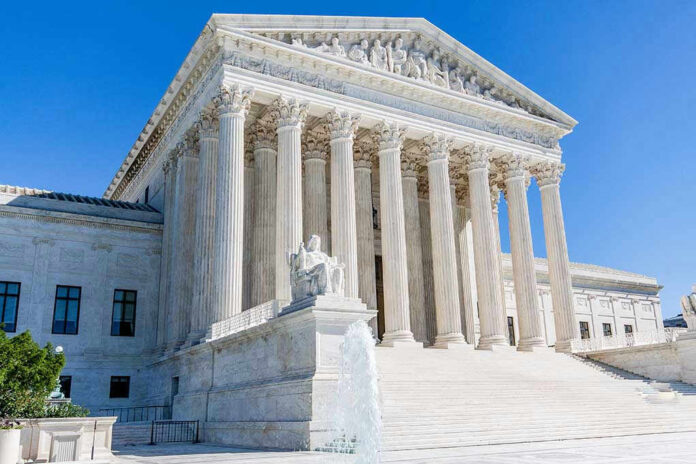
On January 14, 2026, the U.S. Supreme Court unanimously upheld a decision allowing Montana police to enter a home without a warrant during a welfare check. The case, stemming from an incident in Anaconda, Montana, involved police entering William Trevor Case’s home after a report of a potential suicide.
The justices ruled that the emergency aid exception applied, requiring only an “objectively reasonable basis” for believing aid was needed, rather than probable cause.
🚨BREAKING🚨
The Supreme Court just ruled 9-0 that a warrantless "welfare check," where police shot Trevor Case in his own home, was justified in Case v. Montana.
Apparently, police DO NOT need probable cause to break into gun owners' homes WITHOUT WARRANTS & shoot them. https://t.co/S2KHSx3Mos pic.twitter.com/hWrTWu7UqT— Gun Owners of America (@GunOwners) January 14, 2026
Implications for Law Enforcement
This ruling is seen as a significant win for law enforcement agencies, who argue it provides necessary flexibility during emergencies to ensure public safety. Montana Attorney General Austin Knudsen praised the decision, highlighting its importance in enabling police to respond effectively to threats.
The decision resolves previous legal uncertainties and aligns with the *Brigham City v. Stuart* precedent, which allows warrantless entries under similar circumstances.
Critics, however, express concerns about potential overreach and the erosion of Fourth Amendment protections. They argue that such rulings could lead to increased police entries into private homes without sufficient oversight.
Nonetheless, the court’s decision emphasizes the importance of rapid response in life-threatening situations, especially in rural areas where resources may be limited.
Historical Context and Future Impact
The Fourth Amendment traditionally presumes warrantless home entries as unreasonable, with exceptions like emergency assistance first outlined in *Brigham City v. Stuart* (2006). This ruling reaffirms that standard, clarifying legal ambiguities and potentially influencing future cases nationwide.
For communities and law enforcement, this decision reinforces the balance between privacy rights and public safety, aiming to protect individuals in distress more effectively.
Looking ahead, the decision is expected to streamline police procedures during emergencies, reducing the requirement for probable cause in such situations. While the ruling may face criticism, it ultimately strives to ensure that officers can act swiftly when lives are at risk.
An appropriate, unanimous decision. "Supreme Court sides with Montana police on warrant requirements during emergencies"https://t.co/lg294h8Jl9
— Rob Douglas (@RobDouglas3) January 14, 2026
With the Supreme Court’s support, Montana police and others across the country can now operate with clearer guidelines during emergency situations, minimizing legal risks while prioritizing community safety. This precedent underscores a judicial trend that favors practical law enforcement measures when seconds count in saving lives.
Sources:
Supreme Court sides with Montana police on warrant requirements during emergencies
Supreme Court backs warrantless entry in emergencies
Supreme Court Opinion on Case v. Montana
Cornell Legal Information Institute: Supreme Court text on Case v. Montana
Case v. Montana and the General Law