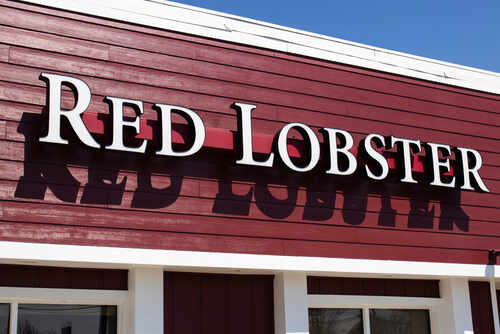
The most famous shrimp in Times Square just learned a hard lesson about what happens when Wall Street landlords, government planners, and construction scaffolding collide.
Story Snapshot
- Red Lobster’s three-story Times Square flagship at 5 Times Square is shutting its doors on June 14 after more than two decades.
- The company blames prolonged construction and a looming office-to-residential conversion that choked off access, visibility, and foot traffic.
- This “one location” story fits a much bigger pattern of urban policy, high rents, and corporate missteps hollowing out familiar chains.
- The closure exposes who really pays when planners experiment and landlords squeeze: workers, customers, and the middle class.
A flagship built for peak America is closing in a very different New York
Red Lobster planted its Times Square flag in 2003, right as the area was becoming a glowing monument to American consumer optimism: bright signs, chain restaurants, predictable comfort for tourists and families.
For 23 years, that three-story seafood palace at 5 Times Square served theatergoers, out-of-towners, and office workers who wanted something familiar in the chaos. Now the company says the last Cheddar Bay Biscuit there will be served on June 14, ending the run of its most recognizable urban location.[3]
The company’s explanation is deceptively simple: prolonged, heavy construction wrapped the building in scaffolding, blocked access, and made the place hard to find and even harder to want to enter.
Red Lobster says that construction “significantly impacted access, visibility and foot traffic,” turning a once-prime corner into an economic dead zone.[4] Any New Yorker who has walked past a sidewalk shed for months on end understands exactly how fast a busy block can start to feel abandoned once you cover it in plywood and tarps.
Construction, conversions, and the quiet power of planners and landlords
Behind the scaffolding is a policy story most headlines skip. The building at 5 Times Square is in the process of being converted from mostly vacant office towers into hundreds of apartments as part of a state-backed push to “reimagine” empty office space.[2]
On paper, that sounds like revitalization. On the street, it meant years of disruption for existing businesses and a corporate tenant concluding that staying put simply no longer made sense. Red Lobster flatly said continued operations at this location were “no longer viable” given the construction and the residential conversion plan.[2][4]
Red Lobster to close Times Square restaurant after more than 20 years https://t.co/1XYXrwVQOm
— FOX Business (@FoxBusiness) June 1, 2026
Empire State Development and city leaders want to turn office floors into housing, yet they rarely talk about what happens to the restaurants that anchored these blocks while government and landlords experiment.[2] Reports say the landlord was seeking multi-million dollar annual rent levels from Red Lobster even as construction limited walk-in traffic and signage.[1]
From a common-sense perspective, this looks like the familiar pattern: policy dreams and aggressive rent assumptions get prioritized, while real-world businesses that employ working people are treated as collateral damage.
Red Lobster’s corporate troubles met New York’s urban reality
Anyone following the restaurant industry knows Red Lobster’s issues did not start at 41st and Seventh. The company filed for Chapter 11 bankruptcy in 2024 after years of unstable ownership, awkward menu experiments, and a disastrous “endless shrimp” promotion that reportedly cost tens of millions of dollars in margin.
Trade reports note that more than 100 Red Lobster locations have closed in recent years as the chain tried to shed underperforming sites and renegotiate leases.[3] Times Square was already on a list of locations that might be shuttered.[3]
This is where the company’s explanation deserves a skeptical but fair reading. On one hand, Red Lobster clearly had chainwide problems long before the scaffolding went up; on the other, Times Square real estate should be the last place you abandon if it is remotely salvageable.
When a flagship in the most tourist-heavy district in America cannot make the math work, that says something about both corporate management and the cost structure baked into modern big-city policy. That combination is poisonous: struggling chains are the least able to survive years of construction and inflated rents.
Who loses when a chain like this disappears from the heart of a city
Red Lobster says employees at the Times Square restaurant will be offered transfers to other locations, plus additional pay to help them through the transition.[1][4] That sounds responsible, and it is better than the usual corporate shrug.
But transfers only go so far when the job you could walk to from your apartment in Queens or Brooklyn suddenly requires a longer commute, and when the company itself is still restructuring. Regular customers lose an affordable, predictable option in a district that increasingly caters only to the ultra-wealthy and the ultra-hip.
🚨 END OF AN ERA:
The Red Lobster in Times Square is closing after 23 years in operation.
The iconic Midtown location will reportedly shut its doors due to ongoing construction impacts in the area.#NYC #TimesSquare #RedLobster #Manhattan #UnfiltNY pic.twitter.com/b6fUSCzEhw
— UnfiltNY | NYC News (@UNFILTNY1) June 1, 2026
Some on social media celebrated the closure, cheering the fall of a chain in favor of more “authentic” local spots. That attitude misses the deeper story.
A safe, mid-priced chain in a central location is not an enemy of culture; it is a signal that a city still welcomes middle-class families, seniors on a fixed income, and tourists who do not want to gamble on a $50 entrée. When those places disappear and are replaced by luxury apartments over boutique concepts, the city sends a clear message about who it is for—and who it is willing to push out.
Sources:
[1] Web – Red Lobster to close Times Square restaurant after more than 20 years
[2] Web – Red Lobster’s Flagship Times Square Restaurant Is Closing After 23 …
[3] Web – Red Lobster to close Times Square location, citing construction
[4] Web – Red Lobster reveals why its iconic Times Square location is closing …