
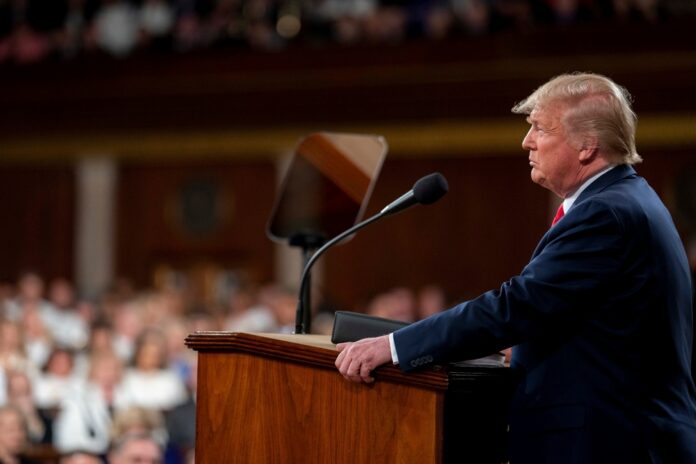
President Trump told his Homeland Security chief to pick up the phone and start talking with Democrats about immigration reform.
Quick Take
- President Trump directed Homeland Security Secretary Markwayne Mullin to begin talks with Democrats on immigration reform.
- Mullin says no decision has been made to change current enforcement policy.
- Mullin flatly rejects amnesty while leaving open a path to permanent legal status for some DACA recipients.
- Conservative allies, including a former Border Patrol chief, call the move a betrayal of the mass-deportation mandate voters gave Trump.
- The fight echoes a decades-old immigration debate dating back to the 1986 law that paired enforcement with legalization.
What Trump Told His Homeland Security Chief
Mullin told Fox News on November 9 that Democrats have been reaching out about immigration legislation, and the president gave him clear marching orders. “I’ve let the president know that those calls are coming in, and the president has said, ‘Let’s start working with them and then let’s meet at some point,'” Mullin said. He added that no conversation has happened yet about changing enforcement policy itself.
That distinction matters. Talking to the other party about a bill is not the same as rewriting how Immigration and Customs Enforcement does its job. Mullin drew that line himself, telling Fox News “we haven’t had that conversation” about policy changes, even as he confirmed the outreach from Democrats was real and ongoing.
The DACA Question And The Amnesty Red Line
Mullin has not ruled out one specific idea: a legislative fix for people brought to the country illegally as children, often called Dreamers. He said Congress could consider whether those under the Deferred Action for Childhood Arrivals program might eventually become “legal permanent citizens or something like this.” In the same breath, he insisted amnesty for the broader population of people here illegally would “never” happen under Trump’s watch.
That split matters because immigration law experts note there is no single legal definition of amnesty. Deferred status, work permits, and a path to citizenship are all different legal tools with different conditions attached. Mullin’s position tries to thread that needle, but the reporting so far does not include a bill number, draft text, or specific eligibility rules that would settle the argument either way.
Conservative Allies Push Back Hard
The backlash came fast. Former Border Patrol Chief Gregory Bovino said flatly that “voters asked for mass deportations,” questioning why the man running Homeland Security was making a public case for reform instead. Commentator Robby Starbuck called Mullin’s posture “a total betrayal.” The Heritage Foundation and the House Freedom Caucus responded with a simple two-word message of their own: no amnesty.
Missouri Representative Bob Onder made his position public as well, writing that there should be no amnesty for people in the country illegally, period. The criticism lands on a real tension. Trump’s base largely backed him on a promise of strict enforcement, and any hint of legalization, even for a narrow group like Dreamers, risks being read as a retreat from that promise regardless of the legal fine print.
Mullin has tried to manage that perception himself. Hours after floating the DACA idea, he posted online that there would be “NO amnesty for illegal aliens. Ever.” Critics say pairing those two messages in the same day makes the administration’s position look muddled rather than principled, even if Mullin sees them as consistent.
An Old Fight With A New Face
This argument is not new. The Immigration Reform and Control Act of 1986 combined tougher enforcement, including penalties for employers who hired people illegally, with legal status for nearly three million people already living in the country. Supporters called it a trade: crack down going forward in exchange for dealing with those already here. Critics later argued the enforcement side never caught up, and the legalization became the lasting legacy.
That history is the backdrop for every version of this debate since, including this one. Pairing enforcement with any form of legal status for a defined group tends to get labeled reform by supporters and amnesty by opponents, no matter the actual terms. Until Mullin or the White House puts real legislative language on paper, both sides will keep arguing past each other using the same disputed word.
For now, the facts are narrower than the noise suggests. Trump told Mullin to open talks. Mullin says enforcement policy has not changed. And amnesty, by Mullin’s own repeated insistence, remains off the table. What happens next depends on whether Congress ever sees an actual bill.
Sources:
foxnews.com, cnn.com, dailywire.com