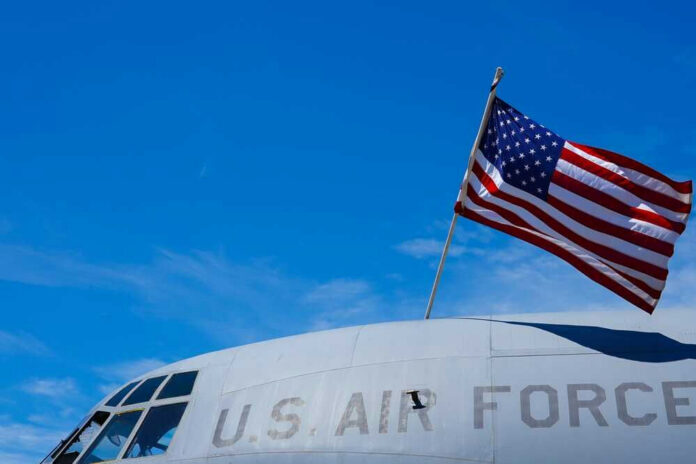
U.S. prosecutors say three Iran-backed operatives plotted a September 2026 attack on RAF Fairford, where American troops and aircraft were present, and they named names.
Story Snapshot
- Grand jury issued an eight-count superseding indictment tied to RAF Fairford.
- Prosecutors identified three suspects and outlined distinct alleged roles
- Alleged coded jail calls relayed instructions through third parties
- British authorities charged two men after a base security incident
U.S. Charges Outline A Specific Base Plot
The U.S. Department of Justice announced an eight-count superseding indictment that centers on a September 2026 plot at Royal Air Force Fairford in England. The base hosted U.S. military aircraft and personnel at the time. Prosecutors say the case is part of a larger campaign of nearly 20 attacks or attempts across Europe and the United States. The new charges name three men and tie them to support for Kata’ib Hizballah and Iran’s Islamic Revolutionary Guard Corps, both listed as terrorist groups by the United States.
Prosecutors said the group targeted a site that matters to U.S. air power and NATO logistics. Officials described an alleged plan to probe base security and prepare an attack path. The indictment puts the Fairford activity in the same network as other overseas plots. That framing shows an effort to map a single operational web, not a string of random actors. The core claim is simple: this was an organized attempt to threaten U.S. forces on allied soil.
Who The Defendants Are And What They Allegedly Did
The indictment identifies Mohammad Baqer Saad Dawood al-Saadi, Mohsen Mohajeri, and Mohammad Ali al-Hassani. Prosecutors attribute leadership of the Fairford operation to al-Hassani. They allege al-Saadi stayed in touch from detention in New York. They describe Mohajeri as an Iranian national within the network. This allocation of roles suggests division of labor: a planner, a communicator, and a linked operator within a broader enterprise. That is how modern proxy warfare often looks in practice.
According to the charges, al-Saadi did not go silent behind bars. Prosecutors say he passed coded messages through third parties during monitored calls and family contacts. They claim those calls carried direction for overseas operations, including activity linked to the United Kingdom base plot. Reporters summarized the filings as showing al-Saadi using simple code words and personal references to guide actions without saying them outright. That alleged method fits known tradecraft for compartmented cells.
British Charges Follow A Real Security Scare
United Kingdom prosecutors charged two men under the National Security Act after a September security incident at Royal Air Force Fairford. The men appeared in a London court in late October. The British case tracks with the U.S. timeline and location, which suggests aligned investigations. News reports said the charges stem from actions at or near the base during the same month U.S. prosecutors cite in the American filing. The Crown Prosecution Service confirmed the case in its court update.
US indictment charges three Iran-backed operatives over a September plot on RAF Fairford, the UK base housing US bombers; prosecutors allege one steered it from a New York jail via coded calls to family. https://t.co/6Ua10qoBzu
— Apex Wigger (@vrilmag) November 11, 2026
The link between the American indictment and the United Kingdom charges highlights a key principle: allied security rises or falls together. When a base that houses U.S. bombers faces a plot, it is not “their problem.” It is ours. That is why common-sense enforcement, tight border checks, and active intelligence sharing matter. American conservative values favor peace through strength. That starts with stopping threats before they reach a runway or a barracks door.
How This Fits A Wider Pattern Of Proxy Pressure
The Department of Justice places the case inside a wider pattern of attacks and attempts spread across the West. This matches public research on how Tehran’s proxies and criminal intermediaries blur the lines between state orders and deniable actors. Analysts describe a “multi-tiered” model that uses expendable cutouts to touch targets while shielding handlers. That structure can complicate proof in a courtroom yet still pose a clear policy threat to bases, synagogues, diplomats, and soft sites.
The indictment is not a verdict, and the defendants are presumed innocent until proven guilty. That said, the charge sheet lays out a direct danger to American troops abroad. The lesson is to harden the seams: jail-call monitoring that flags coded talk, base perimeters that detect probing, and rapid arrest standards that disrupt recruitment and surveillance. When local police, national security teams, and allied services move fast, plots tend to fail on the ground where it counts.
Sources:
justice.gov, cbsnews.com, abc17news.com, reuters.com, apnews.com