
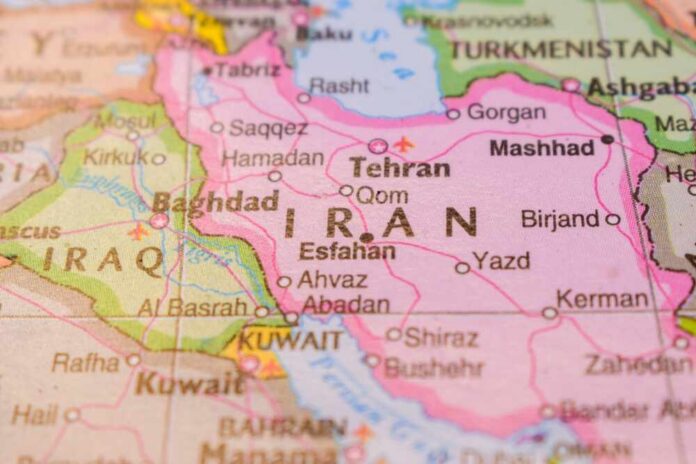
Iran announced a temporary closure of the Strait of Hormuz—a chokepoint for 20% of the world’s oil—while simultaneously sitting down with Trump administration negotiators, demonstrating the regime’s willingness to threaten global energy security as leverage in nuclear talks.
Story Snapshot
- Iran closed the Strait of Hormuz for several hours on Tuesday during live-fire military drills while conducting indirect nuclear negotiations with the U.S. in Geneva
- This marks the first announced closure since Trump threatened military action in January, and the first closure since Iran mined the waterway during the 1980s Iraq-Iran War
- Iranian Foreign Minister claimed negotiators reached an understanding on “guiding principles” but cautioned that no final agreement is guaranteed
- Trump administration deployed USS Gerald Ford to join USS Abraham Lincoln already in the region, while U.S. forces shot down an Iranian drone near American vessels
Iran’s Dangerous Brinkmanship During Nuclear Talks
Iran’s Revolutionary Guard conducted military exercises dubbed “Smart Control of the Strait of Hormuz” on Monday, followed by Tuesday’s announced closure for live-fire drills citing “safety and maritime concerns.” The timing coincided precisely with indirect U.S.-Iran nuclear talks in Geneva that lasted approximately three hours.
This dual-track strategy—military intimidation paired with diplomatic engagement—reveals Tehran’s calculated attempt to strengthen its negotiating position through threats to global energy markets. The closure announcement came after Trump threatened military action and began deploying additional naval assets to the region in January.
Iran partially closed the strategically vital Strait of Hormuz on Tuesday, state media reported, citing “security precautions” as Tehran’s Revolutionary Guards conduct military drills in the waterway. https://t.co/0Wbx7GQzce pic.twitter.com/HudTsdibth
— CNBC (@CNBC) February 17, 2026
The Strait’s Critical Role in Global Energy Security
The Strait of Hormuz represents one of the world’s most strategically vital waterways, with approximately 20% of global oil supplies passing through this narrow chokepoint. Iran’s geographic control over portions of the strait provides the regime with enormous leverage over international energy markets and shipping.
Any prolonged disruption or actual military conflict in the waterway would immediately spike oil prices and create supply chain chaos, affecting consumers worldwide. This vulnerability explains why Tehran repeatedly returns to threats against the Strait as its ultimate pressure tactic when facing international opposition to its nuclear ambitions.
Trump Administration Responds With Military Buildup
President Trump stated he believes Iran “wants to make a deal” and fears “the consequences of not making a deal,” while simultaneously rushing military assets to the region. The USS Gerald Ford is joining the USS Abraham Lincoln and accompanying guided-missile destroyers already stationed in the area for over two weeks.
U.S. forces shot down an Iranian drone that approached the USS Lincoln during the recent tensions. This combination of diplomatic engagement and overwhelming military presence demonstrates Trump’s approach of negotiating from a position of strength, forcing Iran to recognize the risks of continued nuclear escalation while keeping diplomatic channels open.
Background: How We Got Here
The current standoff emerged from escalating tensions following Israel’s 12-day military campaign against Iran in June 2025, which halted months of U.S.-Iran nuclear negotiations. During that conflict, the U.S. bombed Iranian nuclear sites, likely destroying centrifuges enriching uranium to 60% purity—just a short technical step from weapons-grade levels of 90%.
Israel’s strikes also decimated Iran’s air defenses and targeted its ballistic missile arsenal. Before the June war, Iran had been enriching uranium dangerously close to weapons capability while claiming its nuclear program serves only peaceful purposes. The regime’s credibility on this claim remains highly questionable given its pattern of deception.
Mixed Signals From Tehran Regime
Iranian Foreign Minister Abbas Araghchi expressed cautious optimism after the Geneva talks, stating “a new window has opened” for reaching a sustainable negotiated solution and claiming negotiators reached an understanding on “guiding principles.” However, he simultaneously warned that Iran “remains fully prepared to defend itself against any threat or act of aggression” with consequences extending beyond Iran’s borders.
Supreme Leader Ayatollah Ali Khamenei issued more threatening rhetoric, warning that “the strongest army in the world might sometimes receive such a slap that it cannot get back on its feet.” This divergence between diplomatic optimism and hardline threats suggests internal Iranian debate over negotiation strategy and the regime’s uncertainty about Trump’s resolve.
What’s at Stake for America
The outcome of these negotiations carries enormous consequences for American interests and global stability. If talks succeed, they could constrain Iran’s nuclear program and reduce regional military tensions that threaten our allies and global energy security. If negotiations fail, Trump may face the choice between allowing Iran to acquire nuclear weapons capability or taking military action to prevent it.
Iran’s deadly crackdown on protesters in late January—with activists reporting at least 7,015 deaths—demonstrates the regime’s brutality and willingness to use violence to maintain power.
The presence of IAEA Director-General Rafael Grossi in Geneva providing technical advice suggests serious negotiations are underway, but Iran’s military posturing reveals the regime’s attempt to extract maximum concessions through intimidation rather than good-faith diplomacy.
Sources:
Iran Partially Closes Strait of Hormuz Amid Nuclear Talks With US – WBZ NewsRadio