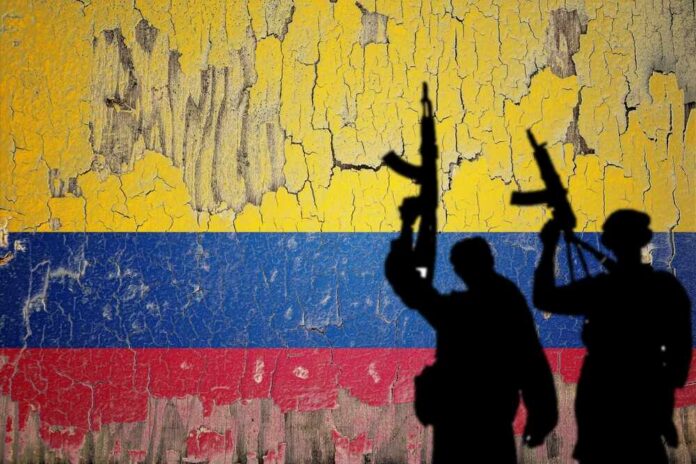
A bus full of civilians became the latest battlefield casualty in Colombia’s reignited drug war, as an explosive device slaughtered 20 innocent people on a major highway while FARC dissidents wage territorial war over coca routes that fund their rejection of peace.
Story Snapshot
- Explosive device killed 20 people (15 women, 5 men) and injured 36 others on a civilian bus traveling the Pan-American Highway in Cauca department, southwest Colombia
- Attack attributed to FARC dissident factions led by “Iván Mordisco” and Jaime Martínez, fighting for control of lucrative drug trafficking corridors to Central America and Europe
- Bombing occurred during a coordinated three-day wave of over two dozen attacks involving road blockades, vehicle hijackings, and explosive devices across the coca-rich region
- Governor Octavio Guzmán declared three days of mourning while military commanders labeled the Saturday attack an act of terrorism against unarmed civilians
- Five minors among the injured remain hospitalized, with three victims in intensive care as forensic specialists work to identify the dead
Terror on the Pan-American Highway
The explosive device detonated Saturday in the El Túnel sector of Cajibío as the bus traveled between Popayán and Cali, two major cities connected by this vital commercial artery. Witnesses described chaos as the blast tore through the vehicle, killing predominantly female passengers in what authorities characterized as an indiscriminate attack on civilians.
Initial casualty reports fluctuated wildly, from seven dead to fourteen, before stabilizing at twenty confirmed fatalities by Sunday. The confusion reflected the remote location and ongoing security threats that delayed emergency response and accurate reporting from the scene.
Gen. Hugo López, Colombia’s Armed Forces Commander, wasted no time assigning blame to specific FARC dissident networks operating in Cauca. The factions under Iván Mordisco and Jaime Martínez have rejected the 2016 peace accord that officially ended decades of civil war, instead doubling down on coca cultivation and cocaine trafficking.
These groups view civilian infrastructure not as sacred ground but as strategic assets in their competition for dominance over drug routes stretching from South American coca fields to consumption markets in North America and Europe.
The Failed Promise of Peace
Cauca department has become ground zero for Colombia’s post-peace deal nightmare scenario. When the Revolutionary Armed Forces of Colombia signed their historic 2016 agreement, many fighters laid down arms and entered civilian life.
Dissident commanders like Mordisco chose a different path, recognizing that Colombia’s geography and global cocaine demand created profit opportunities worth more than any government reintegration program.
The department’s combination of ideal coca-growing conditions, established smuggling infrastructure, and weak state presence transformed it into contested territory where violence serves as currency and civilians pay the price.
Death toll from bus bombing in southwest Colombia rises to 20 during a wave of violence https://t.co/ZLhtcOyuxR
— CTV News (@CTVNews) April 26, 2026
The Saturday bus bombing represents merely one incident in a seventy-two-hour assault on normalcy across the region. More than two dozen attacks unfolded over three days, including two previous bombings on Friday. Armed groups hijacked civilian vehicles, erected roadblocks decorated with FARC graffiti, and deployed explosives with apparent impunity.
This coordinated campaign suggests strategic planning rather than opportunistic violence, a calculated demonstration of power designed to intimidate rivals, challenge government authority, and assert territorial dominance over communities caught in the crossfire.
Mourning and Military Response
Governor Guzmán’s declaration of three days of mourning acknowledged both immediate grief and deeper despair within communities that have endured generations of conflict. The victims, predominantly women traveling for routine purposes on public transportation, embodied the ordinariness that violence shatters.
Five injured children hospitalized after the attack represent futures now shadowed by trauma, physical wounds that may heal faster than psychological scars. The Institute of Legal Medicine deployed specialists to identify remains, a grim bureaucratic necessity that provides closure to families while documenting the human cost of strategic territorial disputes.
Military and security forces mobilized in response, though their effectiveness remains questionable given the dissidents’ demonstrated ability to execute complex, coordinated operations across wide geographic areas. T
he challenge extends beyond simple force deployment to fundamental questions about state capacity in regions where drug profits fund better-equipped irregular forces.
President Gustavo Petro’s administration faces mounting pressure to deliver security without abandoning peace process principles, a balancing act that satisfies neither hardliners demanding military solutions nor progressives advocating negotiated settlements.
Meanwhile, Cauca residents navigate daily life in territories where wrong turns encounter roadblocks and routine travel risks become fatal.
The Pan-American Highway closure following the attack inflicted economic damage beyond immediate casualties, disrupting commercial traffic that sustains regional economies. Trade routes doubled as targets demonstrate how dissidents weaponize infrastructure, transforming economic lifelines into leverage points.
Long-term implications extend beyond Cauca’s borders, as escalating violence threatens broader Colombian stability and complicates international counternarcotics cooperation that depends on functional state authority in coca-producing regions.
Sources:
Death toll from bus bombing in southwest Colombia rises to 20 during a wave of violence
Colombia bus bombing death toll rises to 20