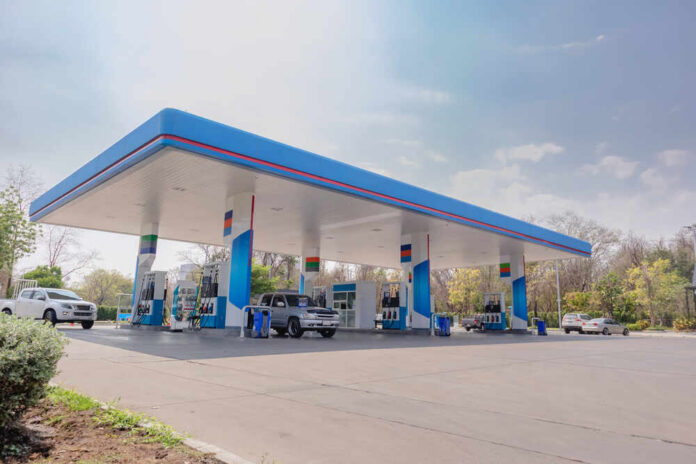
Diesel just punched through a fresh U.S. record, and the reason traces to a narrow waterway half a world away.
At a Glance
- U.S. on-highway diesel set a new national record, topping its 2022 peak.
- Tight supply, not only crude prices, drove the surge as refining margins hit extremes.
- Disruptions tied to the Iran war and the Strait of Hormuz squeezed global diesel flows.
- Farmers, truckers, and small businesses face higher costs as harvest and shipping seasons ramp.
Record Diesel Prices Land In An Election Year
United States diesel prices have climbed past the last cycle’s ceiling, setting a new national high and reviving a hard truth: diesel moves the economy, so when it spikes, everything gets more expensive.
The Energy Information Administration’s federal series set the benchmark with a $5.810 per gallon weekly record in June 2022, a mark now breached in current reporting. Business media also flagged a fresh record this month as supply fears mounted, confirming retail pain at the pump.
Retail pain ties to wholesale stress. United States ultra-low sulfur diesel futures have jumped on war headlines more than once this year, showing how fast product markets react to risk. The chain is simple: high wholesale prices pull retail higher.
When that happens during harvest and peak freight, trucking companies pass through fuel surcharges, and grocery and hardware prices creep up.
Households feel it in lawn care, heating oil cousins, and delivery fees. Campaigns feel it too, because diesel hikes are billboard-sized reminders of supply insecurity.
Why Diesel, Not Just Oil, Is The Pressure Point
Diesel scarcity came from the middle of the barrel, not only from the wellhead. Multiple analysts stress that refining capacity and product flows, not only crude supply, have tightened the market.
The United States “diesel crack” — the margin between crude cost and diesel price — hit an all-time high above $100 per barrel, a sign of extreme product tightness.
That gap widens when refineries go offline or face export snags, pushing diesel higher even if crude looks tame. That mismatch is why drivers see pain when headline oil prices seem less dramatic.
Conflicts have stressed refineries and shipping lanes. Attacks and outages have removed barrels of refined products and choked routes that move diesel and the components needed to make it.
Analysts have warned that closures or slowdowns through the Strait of Hormuz, the world’s key energy chokepoint, can take months to unwind and lift product prices faster than crude benchmarks.
Traders price that risk into diesel first, because diesel markets are thinner, inventories are leaner, and substitutes are limited compared with gasoline.
The Strait Of Hormuz Turns A Tight Market Into A Squeeze
Escalation around Iran and the Strait of Hormuz has added a direct kink in supply lines. Oil and products that usually pass that chokepoint faced fresh hurdles after new military actions and shipping restrictions, driving a one-two hit: fewer barrels on the water and higher insurance and freight costs on those that move.
Energy economist Philip Verleger has estimated that disruptions at the strait could slice several million barrels per day of diesel supply from the global system, a cut large enough to shock retail prices. Some monitors described flows through the strait plunging from normal volumes to a trickle during peak tension.
2 PM Top-of-the-Hour News
Gas prices have jumped 13 cents in the past week. Triple-A pegs the national average at $4.32 a gallon.
This driver on New York's Long Island has had it.: “Honestly, it's hard to keep up with it. I'm working 3 jobs just to put gas in my car. It's out of… pic.twitter.com/Is5YOFHFBX— Worldwide News Network (@WorldwideNNX) September 14, 2026
These conditions explain why United States diesel prices can set a record even when crude lags prior peaks. Traders bid up refined products because they fear not getting finished fuel when and where they need it.
That shows up first in wholesale hubs and then at truck stops and farm co-ops. It also shows up in political talk.
Voters do not parse crude curves or refinery yields; they read the price on the sign and ask who is in charge. Leaders who value stable supply chains and strong domestic industry should take note.
What Common Sense Policy Would Do Now
Policy can help on three tracks without magic thinking. First, protect lanes: keep the strait open to energy traffic with allied patrols and clear red lines that deter attacks on tankers. Stability lowers the “risk premium” baked into diesel prices.
Second, expand capacity: streamline permits to restart or upgrade domestic refineries and encourage seasonal flexibility to maximize diesel output when agriculture and heating demand collide.
Third, build buffers: refill and regionalize distillate inventories so a single chokepoint does not hold Main Street hostage.
The market is screaming about refining and logistics. When the diesel crack pays triple-digit margins, the fix is more barrels of finished fuel and more reliable routes, not lectures about demand.
Voters hauling freight, harvesting crops, and running small fleets want practical action that brings prices down, fast and for real.
Sources:
theguardian.com, bbc.com, reuters.com, cnbc.com, brookings.edu, finance.yahoo.com