Putting common-sense protection at the center of the national conversation, Florida’s bold plan to deploy armed drones in schools is igniting fierce debate over safety, technology, and the future of student security.
Story Snapshot
- Armed drones equipped with non-lethal deterrents will be piloted in three Florida school districts starting fall 2025.
- FAA-certified pilots remotely operate drones and can reach any campus location within 15 seconds.
- This initiative follows years of frustration with traditional security measures and rising concerns about school shootings.
- Experts and parents are divided, raising questions about privacy, effectiveness, and the normalization of high-security environments for children.
Florida’s Armed Drones: Technology Meets Urgency
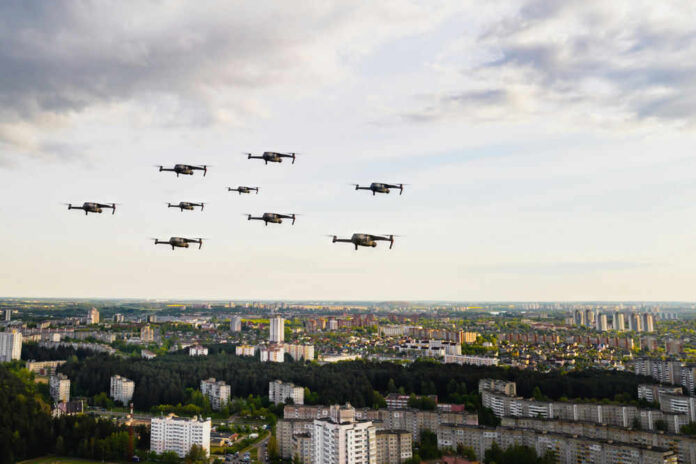
Starting fall 2025, three Florida school districts will be the first in the United States to pilot armed drones as a rapid-response tool to stop active shooters.
Developed by Texas-based Campus Guardian Angel, these drones carry non-lethal pepper spray pellets and are stored in secure boxes on campus.
Once a silent alarm is triggered, the drones are remotely launched by FAA-certified pilots based in Texas, streaming real-time video to law enforcement and school officials.
The state has funded the pilot with $557,000, reflecting a political imperative to deliver results after years of tragic school shootings and ineffective policies.
The urgency behind this program is rooted in the aftermath of the 2018 Parkland shooting, which galvanized Florida’s push for innovative school security.
Since then, over 60 school shooting incidents have occurred in the state, fueling public demand for faster, more robust protection. The drones—capable of reaching any point on campus within 15 seconds—are designed to “buy time” and disrupt shooters before law enforcement arrives.
Miami-Dade County, the largest school district in Florida, has already completed successful test runs, demonstrating the system at both AcadeMir Preparatory High School and John A. Ferguson Senior High School. The pilot’s scope and funding signal a shift toward high-tech deterrence in the ongoing battle to secure schools.
Stakeholders and Power Players: Who’s Behind the Pilot?
The deployment involves a network of influential actors: Campus Guardian Angel as system developer and operator; the Florida Department of Education and Governor’s office as funders and overseers; local school districts like Miami-Dade as implementers; and law enforcement as critical partners in emergency response.
The state government’s decision to fund and champion the initiative reflects pressure to address voter frustration over rising violence and perceived government inaction.
Meanwhile, Campus Guardian Angel stands to expand its commercial footprint if the pilot succeeds, while local officials hope for a breakthrough in school safety.
Law enforcement agencies value the instant intelligence and coordinated response that drones can provide, further integrating technology into frontline security measures.
Despite broad support from some quarters, other voices urge caution. Security technology experts acknowledge the speed and surveillance benefits of drones but warn that technology alone can’t address the root causes of school violence.
Critics describe the drone program as “security theater,” arguing it may create the appearance of safety without fundamentally reducing risk. These concerns highlight the ongoing tension between quick fixes and comprehensive solutions—especially when children’s lives are at stake.
Impact and Controversy: Security or Overreach?
The pilot’s immediate effects include a stronger security presence and the promise of rapid, non-lethal intervention during active shooter incidents.
For many parents and educators, this brings reassurance, but it also raises the stakes in debates over privacy, surveillance, and the militarization of school environments.
The costs are significant: each box of six drones runs $15,000, with ongoing operational expenses of $1,000 per month per 500 students. If the pilot proves effective, Florida could expand the program statewide or even influence national school security standards, further accelerating the adoption of advanced technologies.
Yet, expert analysis reveals that most school incidents involve fights or bladed weapons rather than firearms, casting doubt on whether drones address the most prevalent threats.
Some professionals advocate a balanced approach, blending technology with community engagement and mental health support. The broader debate now centers on whether such high-tech interventions protect constitutional rights and conservative values—or risk normalizing government surveillance and eroding freedoms in the name of security.
Armed drones designed to neutralize school shooters in seconds are being tested in several Florida districts https://t.co/8AcLo205Qr pic.twitter.com/6cmRuY03XN
— New York Post (@nypost) August 25, 2025
Ultimately, Florida’s armed drone initiative stands as a test case for the nation: will high-tech deterrence truly keep students safe, or will it usher in an era of unprecedented surveillance and control in America’s schools?
As the pilot unfolds, parents, educators, and policymakers will be watching closely—demanding not just action, but answers that respect both safety and liberty.
Sources:
Florida schools will test armed drones this fall to thwart shooters
Technologies designed to prevent school shootings create ‘security theater,’ advocate says
Armed Drones to Be Deployed at Schools to Stop Mass Shooters