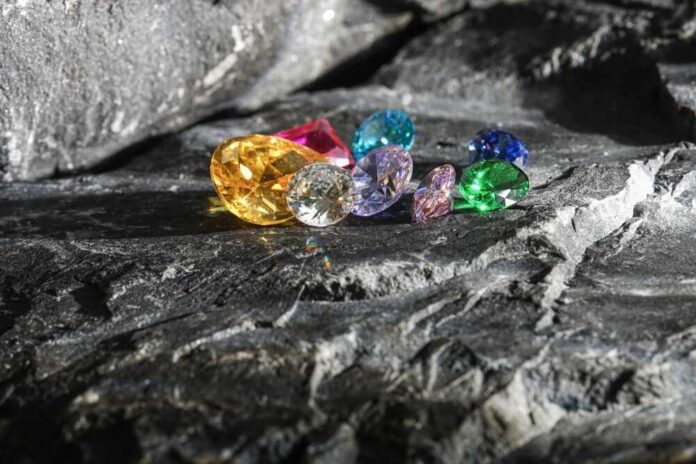
As inflation memories linger and trust in paper wealth gets shaken, America’s wealthy are quietly moving money into something they can hold in their hand: high-end colored gemstones.
Story Snapshot
- High-net-worth buyers in 2026 are treating ruby, emerald, and sapphire as “portable wealth,” especially as lab-grown diamonds pressure traditional diamond pricing.
- New grading emphasis and stricter standards are increasing premiums for stones that are untreated or minimally treated, especially “no heat” and “no oil.”
- Prices for investment-grade stones vary widely, with top-tier rubies commanding the highest per-carat ranges, followed by emeralds and sapphires.
- Traceability and “ethical sourcing” claims are increasingly tied to value, driving demand for documented origins and transparent supply chains.
Why “Portable Wealth” Is Back in Style for High-End Buyers
Wealthy consumers in 2026 are increasingly approaching fine jewelry less like a luxury splurge and more like a compact store of value.
Market reports describe a growing preference for naturally rare colored stones—especially ruby, emerald, and sapphire—because these assets can be physically controlled, transported, and insured.
That mindset has gained momentum as investors respond to volatility in mainstream assets and as diamonds face pricing pressure from lab-grown supply.
Lab-grown diamonds have changed the psychology of the jewelry market by making “big” stones more accessible while reducing the exclusivity that historically supported high prices for natural diamonds.
By contrast, premium natural colored gemstones are still defined by scarcity and by characteristics that are hard to replicate in a mass-market pipeline.
The result is a shift in what affluent buyers consider “safe” in the jewelry category, with more attention paid to rarity, provenance, and resale credibility.
Wealthy consumers are turning to jewelry as an investment, especially colored gemstones https://t.co/wXqVQ43KKq
— CNBC (@CNBC) March 22, 2026
What’s Driving Premiums: Treatments, Saturation, and Documentation
Pricing in the colored gemstone market is increasingly tied to what can be proven, not just what looks good under showroom lighting.
Multiple 2026 guides highlight expanding premiums for untreated or minimally treated stones, with “no heat” rubies and “no oil” emeralds repeatedly cited as commanding major multiples over treated equivalents.
Strong color descriptors also matter, with vivid or intense saturation described as adding sizable premiums in top-tier grades.
Published 2026 price ranges show how wide the market can be depending on quality, origin, and certification. Ruby is commonly listed at roughly $10,000 to $100,000+ per carat at investment levels, while emerald is often cited around $6,000 to $60,000 per carat, and sapphire around $4,500 to $40,000 per carat.
Those broad bands underscore why serious buyers focus on lab reports, treatment disclosure, and consistent grading language before treating any stone like an “investment.”
New Standards and “Transparency” Claims: Useful, but Not a Substitute for Due Diligence
Industry coverage frames 2026 as a turning point year because grading, disclosure, and origin narratives are becoming more standardized, with added focus on documentation that supports value.
That shift benefits disciplined buyers because clearer standards can improve market confidence and reduce ambiguity in private sales.
At the same time, the trend places more power in the hands of certifiers, retailers, and platforms that interpret quality, making it essential for consumers to understand what any report does and does not guarantee.
Alternatives to the “Big Three” and the Reality of Liquidity
As prices climb for top rubies, emeralds, and sapphires, several reports point to “second-tier” colored stones—such as spinel and tsavorite—as potential value plays, sometimes priced at a fraction of the Big Three while still benefiting from the broader demand wave. Other commentary highlights alexandrite for its color-change rarity.
The common thread is that “cheap” does not automatically mean “undervalued,” because investment performance depends on quality, documentation, and buyer demand.
Liquidity remains the part many glossy headlines skip. Auction houses and major dealers can help establish benchmarks, but most owners will still face spreads, selling fees, and a smaller buyer pool than they’d find with traditional financial assets.
That’s why sources repeatedly emphasize certification and long-term holding periods over quick flips. For conservative investors who value tangible assets, the appeal is understandable—but the discipline looks more like collecting with standards than day-trading with hype.
One limitation in the available research is that much of the discussion is trend-based rather than tied to a single, independently audited dataset of transaction prices across the whole market.
Even so, the direction is consistent across multiple industry sources: buyers are paying up for stones with verified quality, minimal treatment, and credible origin stories.
For Americans tired of financial gimmicks, that preference for real scarcity and documentation reads like a back-to-basics response to years of unstable, engineered markets.
Sources:
https://gemsandmore.com.au/colored-stone-price-trends-2026-guide/
https://onestepgems.com/blogs/news/gemstone-trends-2026-top-colors-cuts-jewelry-styles-to-watch
https://christopherduquet.com/trending-gemstone-colors-market/
https://www.gemsroot.com/blogs/guide/10-best-gemstones-to-invest
https://jewelry-appraisal-denver.com/the-colored-gemstone-gold-rush-2026/
https://kirangemstone.com/investment-grade-rare-gemstones-market-trends-2026/