
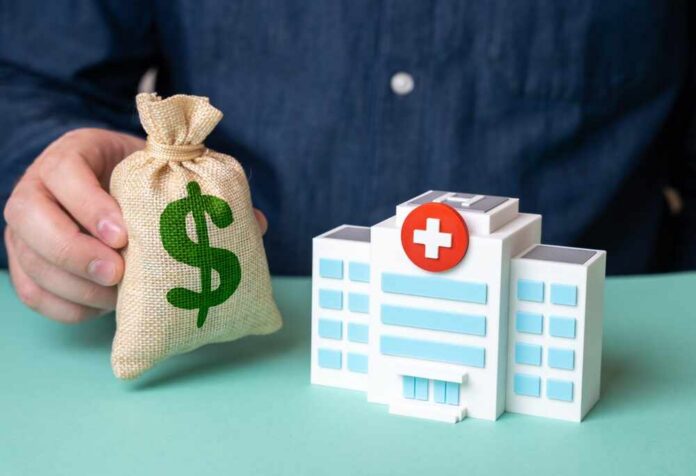
Hospitals are asking patients for money before treatment more often, and rising deductibles are pushing that shift into sharper view.
Quick Take
- Hospitals say upfront billing helps them collect what patients already owe under insurance plans.
- Rising deductibles and other out-of-pocket costs have made patient balances bigger and harder to collect later.
- Many hospitals now ask for payment before surgery, before discharge, or at the time of service.
- The change has turned a billing step into a bigger fight over price, timing, and fairness.
Why Hospitals Want Payment Before Care
Hospitals have a simple reason for the push: money is harder to collect after the bill goes out. One industry podcast on the trend said collecting after treatment costs hospitals both time and money, which is why many now prefer payment up front.
CBS News reported the same basic pressure, noting that hospitals are collecting larger shares of what patients owe while deductibles keep rising.
The trend of hospitals asking for money up front represents a double whammy for patients. https://t.co/fzo3BqGvs7
— CBS Miami (@CBSMiami) August 12, 2026
The change is not limited to one kind of care. Reporting has described hospitals and surgical centers asking patients to settle their full deductible before treatment, and some facilities want payment before discharge.
That means the financial conversation now starts before the medical one is over. For patients, the shock often comes not from the procedure itself, but from the bill that arrives before the work begins.
Why the Bill Feels So Much Bigger Now
High-deductible insurance plans changed the game. Under those plans, patients pay more out of pocket before insurance begins to cover the rest. That leaves hospitals chasing balances that can run into the thousands of dollars, and collection rates often fall as the amount grows.
A more recent study found that patient repayment of hospital bills has been incomplete and has fallen in recent years.
That is why upfront payment requests are spreading. Hospitals are not only trying to avoid bad debt. They are also trying to avoid the slow, costly process of billing, follow-up calls, payment plans, and collections work after care is already finished.
In plain terms, they are trying to move payment to a point when the patient is still standing at the front desk instead of mailing in promises later.
How Common the Practice Has Become
This is no longer a rare billing tactic. National reporting has said that many doctors’ offices and hospitals now estimate patients’ out-of-pocket costs and try to collect before service.
Industry estimates cited in coverage put the share of health care and hospital systems asking for payment at the time of service at roughly three-quarters. A study of hospitals also found that upfront cost-sharing requirements are already common in elective care.
That does not mean every hospital uses the same approach. Some ask for a copay, some ask for the deductible, and others ask for a percentage of the expected bill.
The size of the request depends on the service, the insurance plan, and how well the hospital can estimate what the insurer will pay. That estimate is often messy, which is one reason patients sometimes feel blindsided even when the hospital says it is only trying to avoid surprise debt.
What This Means for Patients
For patients, the practical problem is timing. A family may be ready for surgery, imaging, or an outpatient visit, only to learn that the hospital wants money now. That can force a hard choice between delaying care, scrambling to pay, or signing up for a payment plan.
Supporters of upfront billing say this creates price awareness. Critics say it shifts financial risk onto sick people who may already be under stress.
The bigger story is not that hospitals invented a new charge. It is that the cost of care keeps moving closer to the patient, while the patient’s ability to pay does not rise at the same speed. That is why this billing practice keeps expanding.
It sits at the intersection of insurance design, hospital cash flow, and household budgets. Once that balance tips, the front desk becomes a financial checkpoint as much as a place to check in.
Sources:
pnhp.org, wsj.com, fiercehealthcare.com, abc15.com, nbcnews.com, pmc.ncbi.nlm.nih.gov, crowe.com, pubmed.ncbi.nlm.nih.gov, kffhealthnews.org, npr.org