
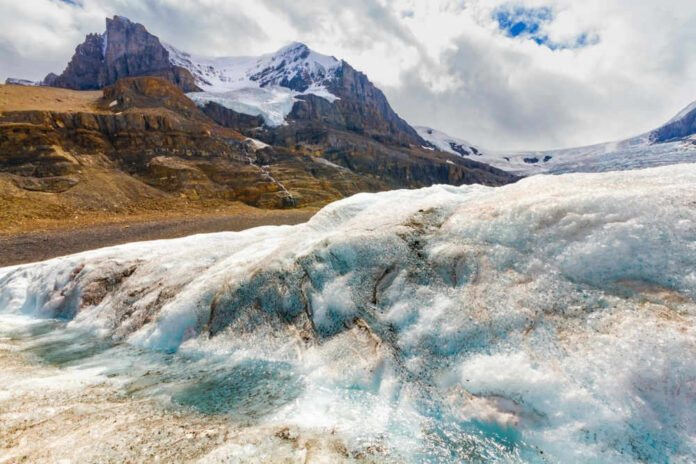
A shrinking Swiss glacier just handed two Belgian families the answer they waited 34 years to hear.
Story Snapshot
- A hiker discovered two bodies on the Trift Glacier on July 26, 2026.
- Police recovered the remains and sent them for forensic identification in Sion.
- DNA matched two Belgian climbers missing since 1992, closing a decades-old case.
- Retreating Alpine ice has revealed several long-missing people in recent years.
Two Men Lost, Then Found As The Ice Let Go
Regional police in the Swiss canton of Valais said a hiker reported two bodies on the Trift Glacier on July 26, 2026, near the Italian border. Recovery teams reached the site and moved the remains to the Institute of Forensic Medicine at the Wallis Hospital in Sion for analysis.
The bodies matched two Belgian mountaineers who vanished in 1992 after entering the high country and never returning. Police said the glacier’s melt exposed the remains after decades locked in ice.
Officials relied on standard steps to confirm identity. Teams documented and recovered the remains, preserved them cold, and then ran DNA analysis. The genetic profile tied the remains to the missing Belgians, according to news reports that cited police.
That match turned a long missing-person file into a closed case, giving families the one thing time could not: certainty. The chain from field recovery to lab confirmation followed the playbook used in glacier cases worldwide.
A thawing Swiss glacier has given up the bodies of two Belgian climbers who vanished more than three decades ago. Police in the canton of Valais on Wednesday said a hiker spotted… https://t.co/UmLKH15fou
— Newser (@Newser) August 19, 2026
Why Glaciers Keep Giving Up Their Dead
Swiss glaciers are shrinking fast, and the ice is thinning and moving downhill. As layers peel back, the mountains return what they took: lost climbers, hikers, even planes. That is not a one-off story.
Recent years brought similar finds, including a German climber missing since 1986 who surfaced near the Matterhorn once melt accelerated. Reporters and scientists warn that more remains will likely appear as the pace of melt stays high in the Alps.
For police and forensic teams, each discovery is a race against sun and time. Ice preserves, but thaw destroys. Best practice is simple and strict: document on site, recover fast, keep cold, and transport to a lab.
Skipping steps risks losing evidence that helps families and closes files. Studies of remains in shifting cold environments stress how heat, water flow, and movement break down clues once the ice lets go. Speed and care protect those clues for a final answer.
Closure, Costs, And Common Sense In The High Country
Local agencies spend real time and money on each recovery. Helicopters, trained teams, and lab work are not cheap. But the return is moral and practical.
Families finally learn the truth, and authorities can update records, death certificates, and statistics. That order matters as it respects the dead, supports the living, and keeps public safety data honest.
The bodies of two Belgian climbers who disappeared in the Swiss Alps 34 years ago have been found, freed from the melting Trift Glacier, police said. https://t.co/pOlgjVz4iz
— CBS News (@CBSNews) August 19, 2026
Alpine communities also face a duty to warn. Trails, huts, and glacier routes change as crevasses open and seracs collapse. Clear signs, updated maps, and guide advisories help weekend hikers who do not read ice like guides do.
That is not alarmism; it is prudence. Personal responsibility starts with accurate risk information. When the mountain changes, the rules change with it. Prepared hikers and climbers make better choices, and rescue teams get fewer calls they can never answer.
Sources:
cbsnews.com, snowbrains.com, nampa.org, 20min.ch