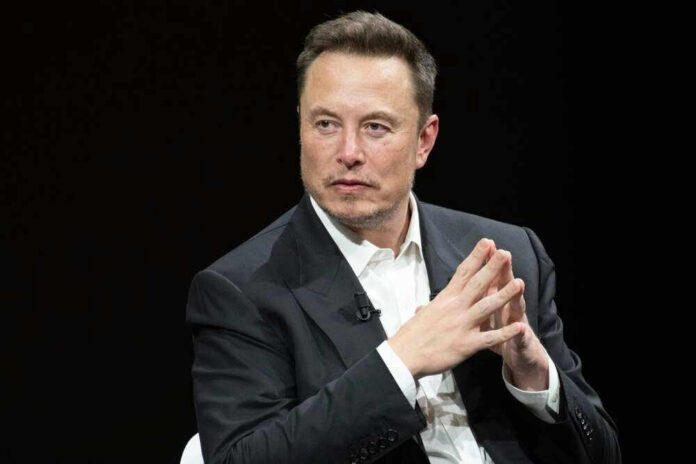
Elon Musk’s push for massive federal ‘universal high income’ checks risks exploding government spending and eroding the American work ethic amid AI job disruptions.
Story Highlights
- Musk proposes federal government checks for “universal HIGH INCOME” to counter AI-driven unemployment projected at 17-25 million U.S. jobs.
- Claims AI productivity will prevent inflation by outpacing money supply growth, but lacks details on funding or amounts.
- Critics like Vivek Ramaswamy warn it could bankrupt the nation and ignore job creation, favoring self-reliance over handouts.
- Revives debates on dependency versus reskilling, frustrating conservatives who see it as big-government overreach.
Musk’s Proposal Sparks National Debate
On April 16, 2026, Elon Musk posted on X that “Universal HIGH INCOME via checks issued by the Federal government is the best way to deal with unemployment caused by AI.” The Tesla and SpaceX CEO pinned the statement to his profile, arguing that AI and robotics would generate goods and services that would exceed any increase in the money supply, thereby avoiding inflation.
This idea builds on his long-standing warnings about AI displacing jobs, now amid Boston Consulting Group forecasts of 17-25 million U.S. positions lost by 2031. With President Trump’s America First agenda emphasizing energy independence and fiscal restraint, Musk’s call raises alarms about unchecked federal expansion.
Elon Musk says Universal High Income from the Federal government is the best way to deal with AI-driven unemployment.
"AI/robotics will produce goods & services far in excess of the increase in the money supply, so there will not be inflation." pic.twitter.com/TAmw5QlWM1
— The Crypto Times (@CryptoTimes_io) April 17, 2026
Stakeholders Divide on Handouts Versus Hard Work
Andrew Yang endorsed the concept, tweeting AI should fund it “ASAP,” echoing his 2020 UBI campaign. Futurist Peter Diamandis supported a variant, claiming AI-driven cost reductions—like halving expenses in food, energy, and healthcare—would make modest checks prosperous without inflating payments.
Conversely, Vivek Ramaswamy criticized it sharply, warning of national bankruptcy and advocating new job creation over government dependency. Experts like Karl Widerquist praised the feasibility due to AI lowering UBI costs relative to GDP, while James Ransom urged reskilling to capture productivity gains.
Economic Risks Challenge Conservative Principles
Musk’s “universal high income” escalates beyond traditional UBI, aiming for affluent lifestyles rather than basic needs, with no specifics on eligibility, amounts, or funding sources. Projections show AI accelerating layoffs in low-skill sectors, affecting millions of workers already strained by past inflation and immigration pressures.
Research indicates unconditional cash grants reduce work incentives, potentially worsening joblessness as automation advances. This proposal threatens to divert resources from limited government ideals, fostering a culture where hard work yields less than federal checks. Taxpayers face the burden, amplifying frustrations with elite-driven policies.
Both conservatives wary of woke fiscal mismanagement and liberals decrying inequality share distrust of D.C. elites promising abundance without accountability. Musk’s optimism assumes distributed AI gains, yet history—from Alaska’s dividends to Finland’s trials—shows limited scale and unproven long-term effects.
Ramaswamy’s rebuttal highlights power dynamics, with Musk’s X platform amplifying the idea to over a billion users while policymakers remain silent.
This is literally the most socialist thing I have read in some time. We have tens of millions of illegals in the US doing menial jobs that are our soon to be unemployed
Elon Musk backs ‘universal high income’ to combat AI job losseshttps://t.co/s1e0j3AKfx
— Smokey Bear (Charles M.) (@Smokey_Bear2024) April 18, 2026
Broader Implications for American Self-Reliance
Short-term, the proposal reignites UBI debates, pressuring Trump’s administration on AI policy amid rising tech restructurings. Long-term, adoption could shift the U.S. to a post-labor economy, risking social dependency and fiscal strain on future generations.
As frustrations mount across political lines over a government prioritizing reelection over real fixes, Musk’s untested assumptions underscore the need for common-sense scrutiny over utopian promises.
Sources:
Musk Pushes ‘Universal High Income’ to Tackle AI Job Loss
Musk Proposes Universal High Income to Offset AI Job Loss
Elon Musk: Government Checks Are ‘Best Way’ to Deal With AI Job Losses
Elon Musk backs ‘universal high income’ to combat AI job losses