
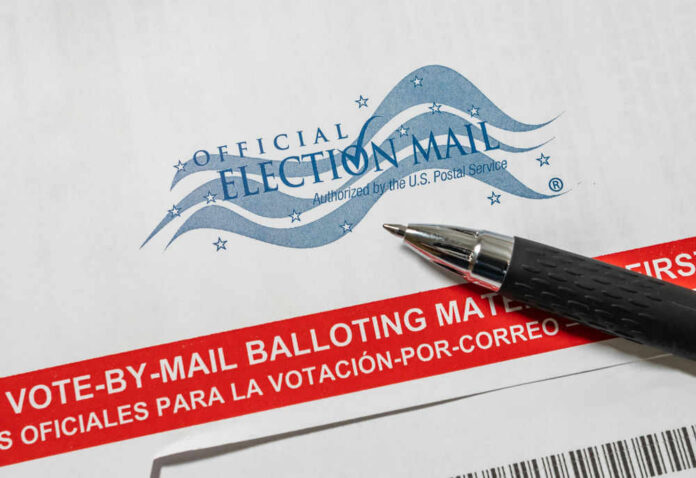
The Supreme Court now sits between millions of mail ballots and a White House order that could change how they move.
Story Snapshot
- The Justice Department asked the Court to let new mail-ballot rules take effect before more ballots go out.
- The filing says several states are already mailing ballots, raising urgent timing concerns.
- The administration argues it needs uniform, national compliance now while legal fights continue.
- The Court already granted limited relief once but has not ruled on the order’s legality.
What the administration is asking the Supreme Court to do
The Justice Department filed an emergency request that seeks permission to enforce President Trump’s mail-ballot order nationwide before more states mail ballots. The request asks the Court to pause lower-court blocks that prevent the rule in 23 states and Washington, D.C.
The filing frames the policy as a federal operations rule, not a new voting law, and says delay fuels confusion for voters and officials. The government wants a clear, uniform standard while lawsuits proceed on normal timelines.
Solicitor General John Sauer highlighted a tight calendar. North Carolina already started mailing ballots, with Alabama and several other states close behind, according to the filing. The government argues that uneven rules will harden if courts do not act now.
The request calls for an administrative stay to signal that the Postal Service rule applies nationwide. That message, they say, would push officials to comply and keep the election mail flow predictable for voters.
BREAKING: The Trump administration makes another appeal to the Supreme Court to allow mail ballot restrictions. https://t.co/j7mizn0PWs
— The Associated Press (@AP) September 6, 2026
What the order would change in mail voting
The administration describes a two-part framework. First, it calls for a federal list of eligible voters, built from state data, to guide how mail ballots are addressed and delivered.
Second, it sets standards for ballot envelopes and processing so the Postal Service delivers ballots only to people on that list.
Supporters say this reduces misdelivery and tightens chain of custody. They argue federal oversight of the Postal Service supports a single standard for handling election mail.
Opponents argue these steps go beyond running the mail. They say it would coerce states to change their systems and let federal agencies refuse to deliver lawful ballots. They also warn the plan would burden eligible voters, especially if rolled out this close to the election.
A recent district court ruling echoed those concerns and questioned whether the Postal Service had shown it was ready to execute the plan without errors or delays that could affect turnout.
How the Supreme Court has handled this fight so far
The Supreme Court granted the administration a preliminary procedural win in late August. That order lifted one judicial hurdle and allowed some planning to move forward. The Court did not decide whether the order is legal. The legal merits will come later.
The administration views that step as proof that its approach is at least compatible with the Court’s usual concern about chaotic, last-minute changes. Voting-rights groups see it as a narrow, temporary move with no bearing on core claims.
Trump administration petitions Supreme Court to allow mail ballot restrictions | https://t.co/4YCwQtyBIB https://t.co/hdyLoMJcPy
— Woody (@dw2025rmeat) September 6, 2026
Lower courts remain split or skeptical. One judge said the record lacked basic Postal Service declarations on how the system would work at scale. Reuters reported the absence of agency proof of widespread mail-ballot fraud to justify the change. That is a real gap.
A strong record from the Postal Service, and evidence tied to known risks, would better align the policy with those core principles.
What matters next and why timing rules the battlefield
The Court faces a classic election dilemma. Doing nothing preserves current systems but locks in differences across states as ballots move. Acting now could create a more uniform rule but risks disruption if agencies are not ready.
The justices will weigh stability against federal authority over federal operations. The administration argues clear national direction will prevent confusion. Critics say a late federal shift causes the very confusion everyone wants to avoid.
Three things will likely decide the outcome. First, whether the administration can provide concrete Postal Service plans, error rates, and readiness proof. Second, whether the government can show the rule prevents specific, documented problems without blocking eligible voters.
Third, how closely the justices hew to their long-standing warning against changing election rules too close to voting. Voters deserve secure mail systems and clear rules. The Court now must choose which path best delivers both.
Sources:
aclum.org, politico.com, aclu.org, aljazeera.com, reuters.com, apnews.com