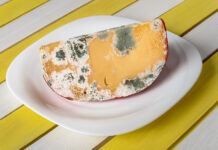

A microscopic parasite hiding in everyday salads has now sickened more than 2,600 people in Michigan and still no one can say exactly which greens to blame.
Story Snapshot
- 2,640 lab-confirmed cyclosporiasis cases and 44 hospitalizations in Michigan, the most ever recorded in the state
- Health officials say lettuce or salad greens are the leading suspect, but no specific product or brand has been named
- Case counts exploded from 170 to 572 in four days and now span at least 26 states, with Michigan at the center
- Weak national tracking and missing lab tools make it hard to pin the outbreak on any one grower or supplier
Michigan’s record-breaking outbreak and what we know so far
Michigan is in the middle of what health officials say is likely the largest cyclosporiasis outbreak in United States history, with 2,640 lab-confirmed cases as of the latest update and 44 hospitalizations reported by the state health department.
Typically, Michigan sees around 50 cases per year, so this surge is not a seasonal bump; it is a complete break from the norm. The outbreak began in late June, when officials first noticed a jump to 170 cases, and the curve has been climbing fast ever since.
The pace has been startling. In just four days, reported cases shot from 170 to 572, more than triple the usual yearly total. That kind of spike tells you something in the food supply changed in a big way.
State officials now say the outbreak spans at least 26 states, from Maine to Oregon, but Michigan remains the clear hot spot.
Cyclosporiasis is caused by the parasite Cyclospora cayetanensis, which infects the small intestine and can cause weeks of severe diarrhea, stomach cramps, nausea, and weight loss if left untreated.
Why lettuce and salad greens are under the microscope
So far, investigators have interviewed roughly 900 sick people, digging through grocery lists and restaurant meals to hunt for patterns.
Michigan’s chief medical executive, Dr. Natasha Bagdasarian, says the “leading hypothesis” is contamination in fresh produce, and early data show lettuce and salad greens recurring in patient interviews.
The Michigan Department of Health and Human Services has gone public with that working theory, warning people to handle raw salad ingredients with extra care while it continues its investigation.
A statewide outbreak of a parasitic illness that can cause “explosive” diarrhea may be linked to lettuce or salad greens, health officials say: https://t.co/hNzxr5ujwV pic.twitter.com/PEeVpBXzqQ
— WOOD TV8 (@WOODTV) July 13, 2026
At the same time, officials stress they have not nailed down a single product, grower, or brand. As of early July, the state says no specific type of produce, supplier, or farm has been confirmed as the source. National history backs their suspicion about leafy produce.
Federal food safety reports show that past cyclosporiasis outbreaks in the United States have repeatedly been traced back to ready-to-eat items such as bagged salad mixes, mesclun lettuce, cilantro, basil, raspberries, and snow peas.
The uncomfortable truth: science still struggles to connect parasite to product
The public wants a simple answer: which lettuce, which store, which farm? The problem is the science is not there yet. Researchers and federal reviews have been blunt about this gap: there are still no fully validated molecular tools that can extract Cyclospora from a patient’s stool sample and cleanly match it to a specific food source.
That missing link has derailed almost every major cyclosporiasis traceback effort over the past decade, even when hundreds of interviews and strong patterns point to produce.
In Michigan, that structural problem is now colliding with a huge outbreak. The state’s public health lab is doing genetic fingerprinting and whole-genome sequencing on human samples in hopes of linking clusters and, if it can find contaminated produce, comparing the strains.
That work may give clearer answers later. But until scientists can reliably say “this exact Cyclospora strain in your gut came from this exact box of salad,” officials are stuck relying on interviews, shopping records, and probability instead of hard matches.
National blind spots, complex supply chains, and what this means for consumers
This Michigan event also exposes a national blind spot. Cyclosporiasis cases across the country have increased about threefold since 2016, largely tied to leafy herbs and ready-to-eat salads, yet tracking systems have not kept pace.
Experts have criticized cuts to federal foodborne illness surveillance and the removal of Cyclospora from some national monitoring programs, arguing that these choices weaken early-warning and traceback efforts when outbreaks occur. That is a classic example of short-term savings in Washington leading to long-term risk for regular families.
Michigan IDs ‘Lettuce or Salad Greens as Potential Source of #Cyclospora. Outbreak. While Michigan has the most infections in the country, #CDC reports 843 confirmed illnesses in 31 states, and 86 hospitalizations.https://t.co/LaOF2q5mxa
— Empowering Main St. Before Wall St. (@EmpowerMainSt) July 14, 2026
The food system itself adds another layer of difficulty. Fresh salad greens may be grown in one state or overseas, processed in another, and shipped through several distributors before landing in a Michigan grocery store or restaurant.
When the same product flows to dozens of chains and independent kitchens, it becomes hard to follow the trail backward from a sick person to a single field.
Some consumers are already adjusting, saying they are skipping chain-store lettuce and buying from local growers they trust while the investigation continues.
That reaction makes sense, but it also reflects a deeper worry: if thousands can get sick and no recall is issued, confidence in the big commercial supply takes a hit.
Sources:
abcnews.com, michigan.gov, npr.org, youtube.com, freep.com, techtimes.com, pritzkerlaw.com, fox2detroit.com, fsis.usda.gov, pmc.ncbi.nlm.nih.gov, fda.gov, cidrap.umn.edu, criver.com, facebook.com