
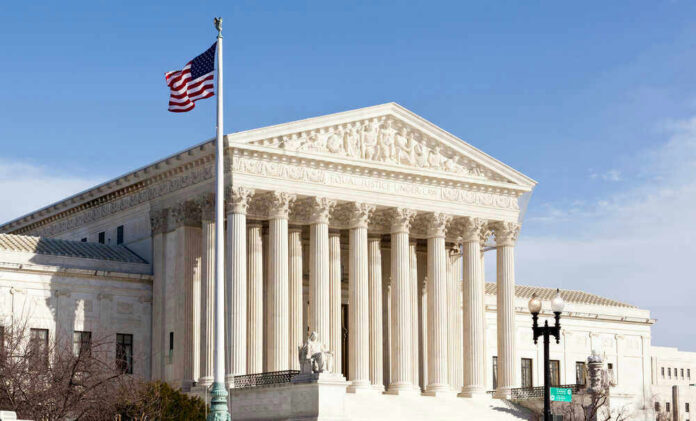
Chief Justice John Roberts kept hammers swinging on President Trump’s $400 million White House ballroom—for now—while the Supreme Court weighs the fight over who gets to say yes.
Story Snapshot
- Roberts allowed construction to continue while the Supreme Court reviews an emergency request.
- A lower court and an appeals court said Congress must approve the project first.
- The administration asked the Court to pause those rulings during the appeal.
- Republican lawmakers are pushing a bill to fund and authorize the build.
What Roberts’ “for now” actually means
Chief Justice Roberts granted a temporary stay that lets work continue while the full Supreme Court considers the administration’s emergency application. This is a procedural bridge, not a final win.
The order signals the case is serious enough to merit high court review, but it does not settle who holds the power over major changes to the White House. The clock is now the construction crew’s friend and the litigants’ enemy until the justices decide the next step.
Supreme Court chief justice allows work on Trump’s $400M White House ballroom to continue for nowhttps://t.co/4HBmPx7mKM
— Phil Stripling (@civex) August 21, 2026
The Trump administration asked the Supreme Court to let the project proceed during the appeal. The request argues the government faces real costs and security risks if work stops. That pitch aims to reframe the ballroom as part of safety and mission needs, not luxury.
The application came days after a federal appeals court kept a halt in place and stressed that only Congress can greenlight a project of this scale on federal property.
Why lower courts hit the brakes
A federal judge first ordered a pause, finding the President could not tear down the East Wing and replace it with a new 90,000-square-foot ballroom without Congress approving it. The appellate panel agreed.
The judges framed the issue around the Constitution’s control of federal property by Congress and said a sweeping redesign is not “Executive self-help.” Their bottom line was simple: a president is a tenant, not an owner, and big structural moves require a vote on Capitol Hill.
The National Trust for Historic Preservation led the lawsuit and pressed the same point to the Supreme Court. The group said the administration has no unilateral legal authority to build the ballroom until Congress expressly approves.
It also urged a halt while legally required public reviews occur. The Trust’s stance is consistent across filings and press statements: follow the law, then build if Congress says yes. That clarity has helped shape the courts’ early rulings.
Congress steps in to claim the pen
Senate Republicans moved to cut through the legal knot by writing a bill to authorize and fund the project. The measure would provide $400 million and, in their telling, answer the courts’ criticism in one stroke.
Supporters stress security needs and continuity of government as core reasons to proceed. If Congress passes the bill and the President signs it, the legal fight over authority fades fast. The dispute then becomes one of design, oversight, and dollar discipline.
From a common-sense view, the path is plain. Big federal builds must rest on clear law and accountable spending. If the ballroom is essential to security and statecraft, Congress should say so in statute and in the budget.
That keeps separation of powers intact, protects taxpayers, and turns a court fight into a governed choice. Roberts’ limited order keeps options open, but lasting legitimacy will come from a roll-call vote, not an emergency motion.
What to watch next
First, watch for the Supreme Court’s response to the emergency application. The justices could keep the stay, lift it, or set swift arguments. Second, track Congress. If authorization and funding advance, litigation may shift to compliance and oversight rather than basic authority.
Third, note how the administration documents security needs. The stronger the record, the easier it is to win wary votes and withstand scrutiny. The endgame likely hinges less on scaffolds than on statutes.
Sources:
apnews.com, bbc.com, reuters.com, congress.gov, washingtonpost.com