The Federal Reserve’s message was simple and sharp: if inflation does not cool quickly, policy will get tighter.
Story Snapshot
- Fed Chair Kevin Warsh tied policy to clear, faster progress toward 2% inflation.
- Personal Consumption Expenditures inflation ran at 3.7% year-over-year and 4.1% over six months.
- Markets raised odds of a near-term rate hike after the Jackson Hole speech.
- Warsh said short-term rates remain the main tool to fight inflation.
Warsh’s Standard: Faster Disinflation Or More Tightening
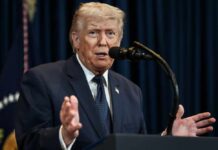
Federal Reserve Chair Kevin Warsh set a bright line at Jackson Hole. He said the Fed must be confident inflation is moving to 2% “clearly and at sufficient speed,” or “we have work to do.” The phrase was not theater.
It defined the test that will guide the next steps. He put it plainly that inflation still runs above the 2% goal. He said that goal is firm and not up for debate.
Fed Chair Kevin Warsh is putting Wall Street on notice: Interest rates could be heading higher.
Warsh said Friday that inflation is still too high, warning that while recent data shows some cooling, the underlying trend hasn’t improved enough.
“We have work to do,” Warsh said,… pic.twitter.com/1jDNxGSe1k
— FOX Business (@FoxBusiness) August 28, 2026
Warsh pointed to the Fed’s preferred gauge. The 12-month change in the Personal Consumption Expenditures price index was 3.7%. The six-month change ran even hotter at 4.1%.
Those numbers matter because they show price pressure has not faded enough. He also pushed back on feel-good takes from early summer. He said recent better readings did not change his view of the underlying trend.
Why Markets Heard “Higher For Longer”
Traders priced the speech like a tightening signal. Bond yields climbed and odds of a near-term hike rose. National Public Radio reported that investors saw a possible rate increase as soon as next month. The message landed because Warsh did not blur lines.
He tied policy to proof, not hope. When the scorecard is inflation at 3.7% and momentum at 4.1%, a central bank that guards price stability has few soft options.
Warsh also clarified the main tool. He said short-term interest rates do most of the work to meet the dual mandate. That tells households and businesses what to watch: the policy rate path.
When a chair links policy to results and names the tool, expectations shift fast. Markets moved because the speech reduced ambiguity. It raised the bar for pausing and lowered the bar for action if progress on inflation stalls.
The Breadth Problem Keeps Pressure On Policy
Inflation’s reach across the basket adds weight. Warsh’s prepared remarks referenced broad price gains across key components. He highlighted that core measures remained elevated.
He emphasized that progress must be evident across the data, not just in a few months or categories. That stance values real-world prices families face.
That lens also respects work and savings. High inflation punishes paychecks and erodes nest eggs. A firm 2% target is not a slogan; it is the anchor that keeps the dollar trustworthy.
When leaders defend that anchor, they protect the middle class. They tell Washington that budgets must live in the real world. They tell Wall Street that easy money cannot paper over price pain on Main Street.
What Comes Next On The Policy Path
The Federal Open Market Committee did not vote at Jackson Hole, and the speech did not set a date for a hike. Coverage across outlets still converged on the same takeaway: the door to higher rates remains open if inflation fails the test.
That is how central banking works when inflation sits above target. Words move expectations, and expectations move markets. The Fed uses that channel to pull prices back toward the goal without drama.
The 10-year Treasury yield just hit its highest level in 19 months.
The benchmark yield climbed to roughly 4.76%, extending the bond selloff that accelerated after Warsh reopened the door to further Fed tightening.
Now oil is adding another layer of pressure.
Renewed U.S.-Iran…
— Market Pulse Research (@MarketPulseHQR) August 31, 2026
Households and business owners should focus on three signals in the weeks ahead. First, watch the next Personal Consumption Expenditures releases to see if the twelve-month rate drops and the six-month momentum cools.
Second, watch wage growth and hiring to gauge demand pressure. Third, listen for consistent language from other policymakers. If the data do not cooperate, Warsh already told us the plan: more work, likely with rates, until 2% is back in sight.
Sources:
cnbc.com, reuters.com, theguardian.com, youtube.com, federalreserve.gov