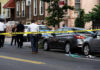
A 28-year-old nurse named Jiayi Zheng finished an overnight shift and was killed crossing Third Avenue; the driver sped off.
Story Snapshot
- Police say the crash happened at 55th Street and Third Avenue in Sunset Park.
- Zheng was heading home from an overnight shift at a Brooklyn hospital.
- The driver fled; police released a vehicle description and are searching.
- Her death renewed calls to fix the deadly Third Avenue corridor.
A fatal hit-and-run after a night of caring for others
New York City police say 28-year-old nurse Jiayi Zheng was struck and killed while crossing Third Avenue at 55th Street in Sunset Park on a Saturday morning. She had just finished an overnight shift and was walking home when the driver hit her and fled, according to local officials and reporters on the scene.
Initial reports described a dark Cadillac sedan fleeing south on Third Avenue; news clips and police briefings repeated the make and model as investigators worked leads. Police continue to search for the driver.
Reporters and officials said Zheng worked at NYU Langone Hospital-Brooklyn and was heading home when the crash occurred. Surveillance video circulated by local outlets showed the moment of impact and the escape route under the elevated highway near the Brooklyn-Queens Expressway.
The collision happened shortly after sunrise, a time when shift workers cross wide, fast corridors designed for truck traffic, not people on foot. The New York City Police Department said the driver left the scene before first responders arrived.
Third Avenue’s deadly pattern and why it persists
Third Avenue below the Gowanus Expressway has a long record of severe crashes, including multiple pedestrian deaths in recent years.
Advocates and local leaders have pushed for slower speeds, safer crossings, and a redesign of the corridor, noting repeated fatalities and hit-and-runs within a few dozen blocks.
City data under the Vision Zero banner show traffic deaths have fallen since 2014, but dangerous “priority locations” like this corridor still produce serious harm year after year. That pattern turns single tragedies into a grim series.
A Brooklyn nurse was struck and killed in a hit-and-run after working the night shift at NYU Langone Hospital. Surveillance video shows Jiayi Zheng waiting at the light at 3rd Ave and 55th St before she was struck by a southbound Cadillac sedan. pic.twitter.com/zhW8AE9nHq
— FOX 5 NY (@fox5ny) August 31, 2026
Local news accounts linked Zheng’s death to fresh calls for speed cameras, daylighting, and concrete protection at crossings along Third Avenue. Those proposals align with basic common sense: slow the cars, protect the crosswalks, and enforce the rules.
New Yorkers should be able to walk home from work without risking their lives at an intersection built for highway flow. Leaders who delay fixes on proven danger strips make a choice that leaves workers and seniors exposed on their daily paths.
How hit-and-run cases move from outrage to charges
Police often identify a suspect vehicle quickly, but charges can lag. Brooklyn prosecutors have explained that to prove leaving the scene, the state must show beyond a reasonable doubt that the driver struck the victim and knew, or should have known, what happened before driving away.
That legal bar, while proper, can slow an arrest even when the public sees clear video. It also explains why early reports stress “fled the scene,” while case files build more slowly.
Other Sunset Park cases show that accountability is possible when evidence meets that standard. In a separate Third Avenue fatal crash, a driver faced counts including manslaughter and leaving the scene after investigators tied him to the wreck that killed two pedestrians.
That history matters here because it sets expectations: when police collect video, witness accounts, and vehicle forensics, prosecutors can move. Families deserve that follow-through, and so do the workers who cross these streets at dawn.
What safety looks like tomorrow morning at 55th and Third
New York City touts a 31 percent drop in traffic deaths since Vision Zero began in 2014, but that citywide number means little to families on a corridor that still maims and kills.
Safety at 55th Street and Third Avenue will come from simple, proven steps: shorter crossings with concrete islands, slower approach speeds, signals that give people a head start, and steady enforcement that actually changes driver behavior. Each step cuts crash risk. Together, they turn a danger strip into a normal street.
One nurse walking home after a long shift should not have to wager her life on a gap in speeding traffic. New Yorkers know the fix list. City Hall and the Department of Transportation know it, too.
The only open question is speed—how fast leaders move to harden crosswalks, lower speeds, and back the police with tools that stick. That is not a partisan view. It is a basic promise: if you work hard and follow the rules, your city should get you home alive.
Sources:
abc7.com, longisland.news12.com, brooklyn.news12.com, youtube.com, cbsnews.com, nyc.gov, crashcount.nyc