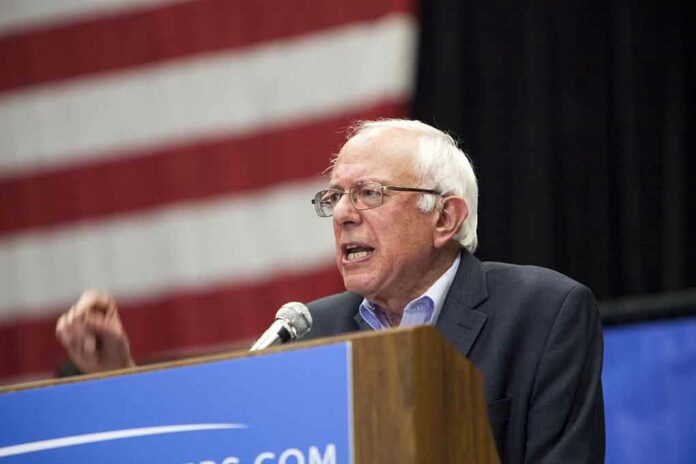
Bernie Sanders is cutting checks from his own $23 million campaign account to help Democrats win Senate seats this November.
Story Snapshot
- Sanders’ campaign had nearly $23 million on hand as of July 1 and is now sending hundreds of thousands of dollars to candidates in battleground states.
- Minnesota Lieutenant Governor Peggy Flanagan is getting direct cash support for her Senate bid.
- Sanders is also helping Florida state lawmaker Angie Nixon and Minnesota attorney general candidate Keith Ellison.
- Sanders has already endorsed seven candidates for the 2026 midterms and says more endorsements could come.
A Self-Described Socialist Becomes A Campaign Bank
Senator Bernie Sanders built a $23 million campaign war chest largely through small-dollar donations from supporters nationwide. Now he’s spending it.
His campaign confirmed it is actively transferring hundreds of thousands of dollars to Peggy Flanagan’s Senate campaign in Minnesota, according to Politico, which cited Sanders’ campaign and a second source familiar with the transfer.
EXCLUSIVE: Bernie Sanders is cracking open his war chest.
The Vermont senator is putting hundreds of thousands of dollars toward key campaigns and has raised $2.8 million for his preferred candidates this cycle.https://t.co/rtKlmhEVgN
— POLITICO (@politico) September 30, 2026
Sanders told reporters he wants three specific Senate races to go blue this cycle. Michigan, Minnesota, and Florida top his list, and he has named the candidates he considers the strongest bets to flip or hold those seats.
Florida state Representative Angie Nixon is one of them, a race progressive activists say national party leaders had largely written off before Sanders stepped in.
Money Follows Momentum He Already Built
This financial push did not come out of nowhere. Sanders spent months traveling the country campaigning for progressive candidates in Democrat primaries, according to Political Wire, and many of those candidates won.
Now he is following up with cash, turning his fundraising list and bank account into a direct pipeline for the candidates he already vouched for on the trail.
NBC News reports Sanders has endorsed seven candidates for statewide office and Congress ahead of the midterms, spanning both safe seats and true battlegrounds.
One Democrat strategist told the outlet that a Sanders endorsement alone generates “a huge tangible impact” by driving early grassroots energy and donor attention toward a campaign before it even needs the money.
The Fundraising Numbers Behind The Strategy
Sanders pulled in $11.5 million between January and March of this cycle, putting him among the top Democrat fundraisers nationally, according to The Hill’s review of the numbers. That haul, combined with money raised in earlier quarters, is what built the reserve he is now redirecting.
Federal Election Commission rules allow campaign committees to transfer unlimited funds to party organizations and use disbursements to support other campaigns, so the mechanics here are legal and well established.
Not Every Democrat Is Cheering The Strategy
CNN reported that some senior Democrats in Washington are frustrated, arguing Sanders’ primary endorsements forced the party to spend scarce cash fighting itself instead of saving it for Republicans in November.
That tension reflects a real divide inside the party over whether progressive primary challenges help or hurt Democrats’ odds in swing states. Sanders’ current spending appears aimed at healing that rift by backing the eventual nominees regardless of primary battles.
Sanders has also been vocal about the flood of outside money in this cycle, warning that corporate-backed super PACs have already spent more than $517 million in the 2026 midterms, according to a letter he sent Democrat leaders and CBS News reported.
He has also raised alarms about artificial intelligence industry groups planning to spend more than $300 million, arguing that unchecked outside cash from any source distorts elections.
His own direct campaign-to-campaign transfers stand in contrast to that super PAC model, since the money comes from his own committee rather than an outside group he cannot legally coordinate with directly.
What This Means Heading Into November
Whether conservative voters see this as grassroots solidarity or a socialist senator buying influence in races far from Vermont, the facts are straightforward. Sanders raised real money from real donors, and he is spending it exactly where he said he would: Michigan, Minnesota, and Florida.
Those three states will help decide Senate control, and Sanders bets that his brand of economic populism, backed now by real dollars, can move the needle in places Democrats cannot afford to lose.
Republicans watching this development should take it seriously rather than dismiss it. A senator with a proven small-dollar donor army and a track record of primary wins is now writing checks with real strategic intent, and that combination of grassroots money and targeted battleground spending is exactly the kind of organizing conservatives should study, not underestimate, in the months before the midterms.
Sources:
politico.com, politicalwire.com, nbcnews.com, thehill.com, washingtonexaminer.com, beincrypto.com, cnn.com, cbsnews.com