The Pentagon just told its cyber warriors to help guard the midterms from foreign meddling—no excuses, no do-overs.
Story Snapshot
- Defense Secretary Pete Hegseth issued a memo prioritizing election defense against foreign threats.
- U.S. Cyber Command and military intelligence will hunt, disrupt, and block foreign interference.
- The plan stresses protection of voting rights while staying within strict election laws.
- Lawmakers pressed the Pentagon to keep troops away from polling places under long-standing laws.
What Hegseth Ordered And Why It Matters
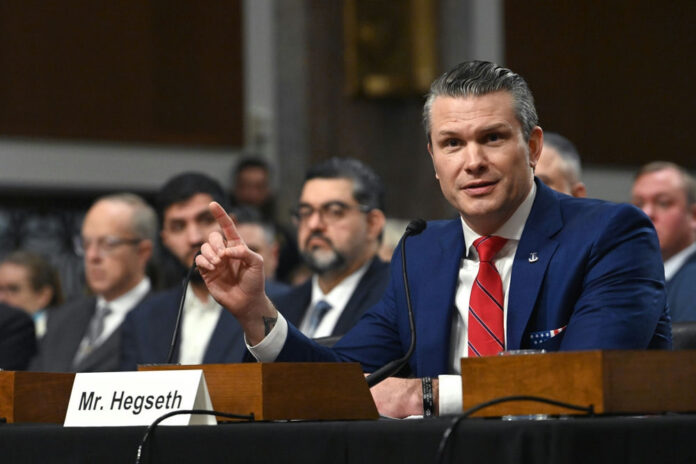
Defense Secretary Pete Hegseth directed the Department of Defense to use advanced intelligence and cyber capabilities to find, disrupt, and neutralize foreign efforts to target the 2026 elections.
A September 22 memorandum set this as a priority task for United States Cyber Command and the Defense Intelligence Enterprise.
Reporting describes the order as focusing on foreign state and proxy activity, with an emphasis on speed and coordination across agencies. The operational goal is clear: protect election systems without touching the act of voting itself.
Hegseth says national security, military cyber forces will guard US election systems during midterms https://t.co/cL1ZLhfIVx
— Private Officer (@privateofficer) September 29, 2026
The memo assigns detection and response roles to cyber forces and military intelligence while pushing tighter links with civilian partners. Outlets summarized direction to collect foreign threat intelligence, share it fast, and preempt malicious campaigns before they can spread.
Coverage also highlights a “no-fail” tone in the guidance. The bottom line is deterrence: make foreign actors think twice, then block them if they try. The practical work ranges from tracking phishing and malware to spotting covert influence networks.
The Legal Guardrails That Define The Mission
Federal law draws a bright line around elections. Congress has long barred the use of federal troops at polling places except to repel armed enemies. Legal scholars call this barrier a core feature of American democracy, designed to keep voting free from military pressure.
The Pentagon’s directive operates on the far side of that wall—outside polling places, focused on foreign activity in cyberspace and abroad, not on domestic vote counts or in-person voting.
Members of Congress pressed this point in recent months. Senator Elissa Slotkin asked Hegseth to affirm that the Pentagon will not send troops to the polls or seize election materials. Her letter cites the century-and-a-half legal ban on such actions.
That insistence mirrors guidance from major legal groups that warn against any armed federal presence at voting sites. The memo’s foreign-only scope aligns with those limits.
How Military Cyber Defends Without Running Elections
United States Cyber Command’s role builds on several election cycles of experience. Since 2018, the military has executed operations to pressure foreign operatives and to disrupt hostile infrastructure tied to election interference.
Congress and the Executive Branch also expanded authorities for online defense during election windows. The current directive fits that arc: find hostile servers, break kill chains, and expose covert operators before they influence American voters or hit state systems.
🇺🇸 Defense Secretary Pete Hegseth has ordered the Pentagon to use intelligence, cyber operations and advanced AI to detect and disrupt foreign interference in upcoming U.S. elections.
The September 22 directive tells U.S. Cyber Command and defense intelligence agencies to… pic.twitter.com/E1arggIHgv
— Military Summary (@MilitarySummary) September 29, 2026
The plan’s power lies in intelligence. Military sensors can map adversary command-and-control networks and spot coordinated bot activity earlier than most civilian systems.
The department can also surge analysts during peak threat windows, such as early voting and final ballot tabulation. Coordination with the Department of Homeland Security and state partners helps bridge gaps. Done well, this keeps the military outside the ballot box while making foreign attackers miss their mark.
The Case: Strong Borders In Cyberspace Too
Foreign regimes have tried to warp American debates, steal voter data, and hack political targets. The memo’s foreign focus tells adversaries that America will defend its house, but it also signals to citizens that the military will not run elections. That is the right line: hard on threats, hands off the polls.
What To Watch As The Midterms Near
Execution now matters more than messaging. Clear lanes for Cyber Command, fast information-sharing with the Department of Homeland Security, and regular briefings for state officials will decide success.
Transparent after-action reports, stripped of sensitive details, can also build confidence. One sentence sums up the mission: stop foreign interference without touching a single ballot. If the Pentagon holds that line and frustrates attackers, voters win and trust grows where it counts most.
Sources:
insidedefense.com, nextgov.com, thehill.com, forth.news, x.com