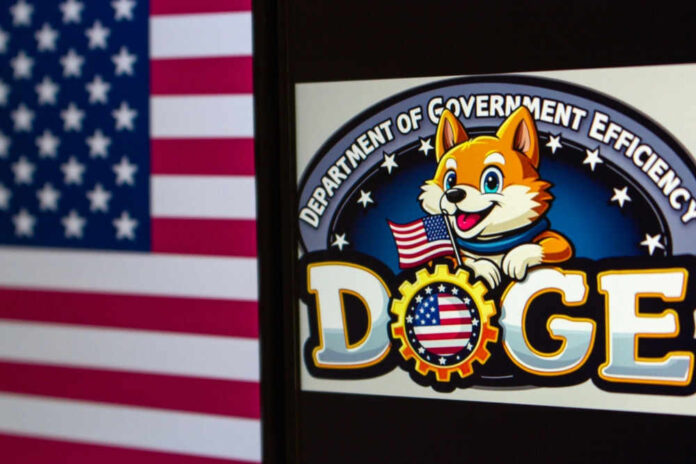
President Trump’s bold government downsizing effort has quietly ended months before its mandate, raising questions about the future of fiscal discipline and constitutional protections in Washington.
Story Snapshot
- Trump’s Department of Government Efficiency (DOGE) has been disbanded, ending its initiative to slash federal bureaucracy ahead of schedule.
- Many DOGE functions and staff have shifted to other agencies, including a newly formed National Design Studio focused on government website reform.
- The hiring freeze and aggressive job cuts hallmark to DOGE have been lifted, signaling a strategic pivot in federal workforce management.
- Despite claims of tens of billions saved, the lack of public accounting leaves the impact of DOGE’s cost-cutting efforts disputed.
Trump’s DOGE Disbanded Before Mandate Ends
President Donald Trump’s Department of Government Efficiency, or DOGE, has been dissolved with eight months left on its original charter.
Launched in January 2025 as a centerpiece of Trump’s commitment to reduce government waste, DOGE’s abrupt end was confirmed by Office of Personnel Management Director Scott Kupor, who stated publicly, “That doesn’t exist.”
The move marks a significant shift away from the aggressive federal downsizing that characterized the early months of Trump’s second term, when the agency rapidly shrank departments and redirected government priorities toward Trump’s agenda.
From Reuters | #DOGE 'doesn't exist' with eight months left on its charter pic.twitter.com/6EuWgA2QRL
— CNBC-TV18 (@CNBCTV18Live) November 24, 2025
DOGE’s closure is notable given the administration’s initial fanfare and months of public attention, including high-profile endorsements from Trump, cabinet members, and social media influencers like Elon Musk.
Musk, who spearheaded DOGE’s inception, famously wielded a chainsaw at the Conservative Political Action Conference to symbolize the agency’s mission to cut federal jobs.
Despite DOGE’s claims of slashing tens of billions in expenditures, outside financial experts found it impossible to verify these numbers due to the lack of detailed public accounting.
The White House maintains that Trump “continues to actively deliver” on his mandate to reduce waste, fraud, and abuse, but the absence of transparency leaves taxpayers questioning the true impact.
Key DOGE Functions Shifted to Other Agencies
With DOGE no longer a centralized entity, the Office of Personnel Management has absorbed many of its responsibilities, managing federal workforce changes and efficiency initiatives.
Former DOGE staff, including prominent members, have transitioned to critical roles within the administration. Joe Gebbia, co-founder of Airbnb and a member of Musk’s DOGE team, now leads the National Design Studio—an executive-order-created body tasked by Trump to overhaul the “visual presentation” of government websites.
Other ex-DOGE staff have secured influential positions, such as the chief technology officer at the Department of Health and Human Services and the chief of the Office of Naval Research, demonstrating Trump’s commitment to reshaping government operations with private-sector expertise.
The National Design Studio has already rolled out new web platforms for recruiting law enforcement officers and promoting the president’s drug pricing policy. Gebbia’s appointment and the studio’s focus on modernization reflect Trump’s emphasis on streamlining government and leveraging technology.
Meanwhile, Republican-led states like Idaho and Florida are launching local entities inspired by DOGE, aiming to replicate the federal government’s efficiency drive at the state level. These decentralized efforts suggest the conservative push for limited, accountable government remains strong even as federal restructuring evolves.
Hiring Freeze and Workforce Cuts Lifted
The administration’s hallmark hiring freeze—an aggressive measure that barred new federal appointments except for essential roles in immigration and public safety—has ended. Previously, agencies were ordered to hire “no more than one employee for every four” departing employees, with DOGE’s approval.
Kupor now confirms there is “no target around reductions,” signaling a strategic shift in how the federal workforce is managed. This move has sparked debate among constitutionalists and fiscal hawks, who see aggressive job cuts as vital for reducing government overreach and curbing spending.
The lifting of restrictions may relieve pressure on federal agencies, but it may also reignite concerns about bloated bureaucracy and fiscal responsibility.
Former DOGE team members continue to influence policy from new posts. For example, Scott Langmack, previously DOGE’s representative at the Department of Housing and Urban Development, is now tasked with creating custom AI applications to analyze and streamline federal regulations.
Trump’s broader agenda to “delete the mountain” of government regulations persists, as the administration works to identify and eliminate burdensome rules through advanced technology.
Elon Musk has reentered the Washington scene, attending high-level events and maintaining connections as the administration pursues deregulation and innovation.
Ongoing Push for Conservative Government Reform
Trump’s abrupt termination of DOGE does not signify a retreat from his broader goals of government reform, deregulation, and constitutional protection. The administration continues to prioritize policies that defend individual liberty, curb government overreach, and promote common sense in federal operations.
Conservative Americans frustrated by years of unchecked spending, regulatory excess, and leftist agendas can see progress in the ongoing effort to streamline government and reinforce traditional values.
While the full impact of DOGE’s cost-cutting claims remains unclear, the shift toward decentralized efficiency and technology-driven reform aligns with the principles of limited government and fiscal accountability championed by Trump’s supporters.