President Trump proposes capping credit card rates at 10%, but partnering with Elizabeth Warren risks handing progressives a regulatory win that could empower government overreach and hurt free-market principles cherished by conservatives.
Story Snapshot
- Trump floated a 10% credit card interest rate cap for one year, echoing Sen. Bernie Sanders’ bill S.381 introduced in February 2025.
- Sen. Elizabeth Warren criticized Trump’s affordability record in a Monday speech, then revealed he called her to discuss legislation on rates and housing.
- Warren urged Trump to push Congress for permanent caps, despite Republican control making passage a tall order.
- Bank stocks dipped immediately, signaling Wall Street fears of profit losses from heavy-handed regulation.
- Consumers could save billions short-term, but long-term precedents threaten financial innovation and individual choice.
Trump’s Unexpected Proposal Sparks Bipartisan Talk
President Donald Trump proposed capping credit card interest rates at 10% for one year late Friday. This move targets high rates burdening American families amid lingering inflation from past fiscal mismanagement. Trump aims to deliver relief, positioning it as a populist win to save cardholders billions annually.
The announcement revived long-standing progressive pushes, drawing immediate reaction from Democrats. Bank stocks fell in response, reflecting market concerns over potential revenue hits. Consumers, especially low-income households, stand to gain from lower debt costs if enacted.
Sen. Elizabeth Warren says Trump called her(!) after her speech at @PressClubDC and they talked about capping credit card interest rates and her housing bill. pic.twitter.com/L9LPMzOPCH
— bryan metzger (@metzgov) January 12, 2026
Warren’s Speech and Surprise Trump Call
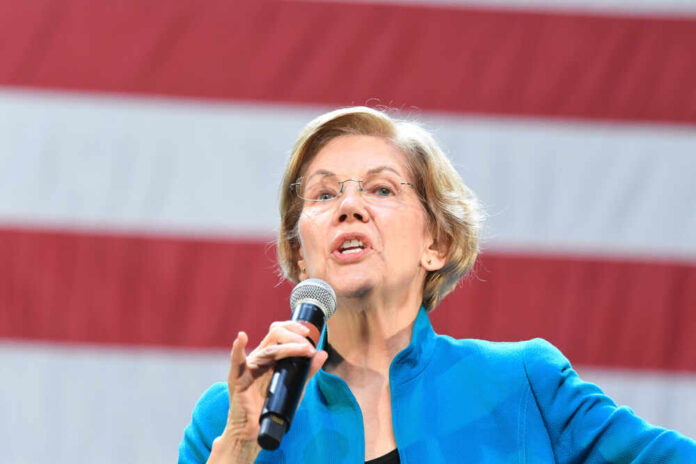
Sen. Elizabeth Warren delivered a Monday morning speech blasting Trump’s affordability record while calling for credit card rate caps. She later disclosed Trump called her post-speech. During the discussion, Warren pressed him to back congressional action on rate caps and the ROAD to Housing Act, which enjoys unanimous Senate support.
This outreach highlights rare pragmatism amid their history of sharp exchanges. Warren stated Congress could pass legislation if Trump fights for it. The call underscores Trump’s willingness to engage across the aisle on consumer issues.
Sen. Bernie Sanders introduced S.381, the 10 Percent Credit Card Interest Rate Cap Act, on February 4, 2025. The bill proposes a cap until January 1, 2031, with enforcement by the Consumer Financial Protection Bureau and Federal Trade Commission.
Penalties include interest forfeiture and private lawsuits. Trump’s idea mirrors these specifics, fueling talk of alignment. The bill sits referred to the Senate Banking Committee with no further action.
Republican Congress Holds the Line
A Republican-controlled Congress faces pressure to act, but passage remains challenging. House Republicans serve as key gatekeepers, wary of expanding government intervention in private lending.
Progressives like Warren and Sanders champion the caps for consumer protection. Banks oppose, prioritizing profits amid stock dips post-proposal. This tests bipartisanship in a divided landscape. Trump’s executive push lacks legislative teeth so far, leaving outcomes uncertain.
Power dynamics favor Republicans, who hold leverage to block or reshape the bill. Trump’s phone call to Warren shows outreach, but his silence on details leaves questions. The finance sector braces for regulation risks, potentially spurring broader caps. Limited data exists on Trump’s full response or bill progress.
Consumer Relief vs. Market Risks
Short-term enactment could ease affordability pressures, boosting spending by reducing debt servicing for millions. Low-income families, hit hardest by high rates, would benefit most.
Long-term, S.381 sunsets in 2031 but risks setting precedents for more controls, eroding free enterprise. Banks face compliance costs and lost revenue, as evidenced by market reactions. Socially, it addresses inflation-era strains without addressing root causes like past overspending.
Sources:
Sen. Elizabeth Warren says Congress could work with Trump to cap credit card rates
Trump proposes 10% credit card interest rate cap
S.381 – 10 Percent Credit Card Interest Rate Cap Act