
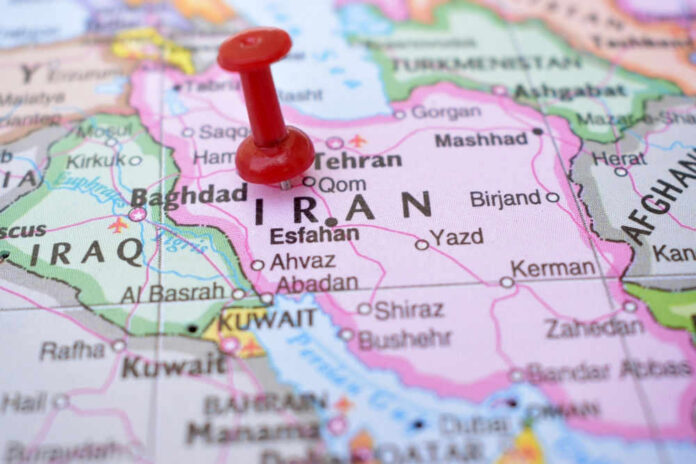
After years of weak “manage the problem” thinking in Washington, the Trump administration is now publicly demanding Iran’s unconditional surrender—and Defense Secretary Pete Hegseth says Tehran will have “no choice,” whether it admits it or not.
Quick Take
- Defense Secretary Pete Hegseth told CBS News’ 60 Minutes that Iran will eventually surrender as U.S. operations intensify.
- Hegseth said the Iranian Navy is “largely no more” and argued U.S.-Israeli air superiority is decisive.
- Officials say about 3,000 targets inside Iran have already been struck, even as Hegseth says operations are “only just beginning.”
- Iran’s president publicly rejected surrender demands, while leadership uncertainty follows the announced death of Supreme Leader Ali Khamenei.
Hegseth’s Message: Surrender Isn’t a Negotiation
Defense Secretary Pete Hegseth used a high-profile interview to define the Trump administration’s end state in plain terms: Iran will surrender, and the United States will set the terms.
In the administration’s telling, this is asymmetrical warfare where Washington controls the pace, targets, and escalation ladder. Hegseth’s language leaves little room for the kind of open-ended diplomacy that marked earlier eras of Iran policy.
“Whether they know it or not, they will be combat-ineffective. They will surrender,” Defense Secretary Pete Hegseth says of Iran. https://t.co/2z3DIZjW5t pic.twitter.com/US2K2SZNtR
— 60 Minutes (@60Minutes) March 8, 2026
That posture also reflects a political reality at home. After years of voters watching overseas threats grow while Washington obsessed over domestic ideological crusades, the administration is signaling it will not treat a nuclear-armed Iran as a bargaining chip.
The key factual point from the available reporting is not a timetable, but a declared policy line: unconditional surrender is presented as the intended conclusion, not a hypothetical outcome.
Battlefield Claims: “Iranian Navy Is Largely No More,” Airspace Dominance
Hegseth’s argument hinges on capability collapse. He said Iran’s Navy is “largely no more,” framing Iran’s ability to project power at sea as rapidly diminishing. He also emphasized the combined power of the U.S. Air Force and the Israeli Defense Forces, describing them as overwhelming compared to Iran.
Those statements outline why U.S. leaders believe Iran’s options narrow over time as infrastructure and platforms degrade.
At the same time, the research provided does not include independent damage assessments or third-party verification of the specific scale of Iranian naval losses or the operational status of Iran’s remaining air defenses.
What is clearly documented is that top U.S. officials are publicly staking the strategy on sustained air and strike dominance. For Americans wary of mission creep, the stated theory is straightforward: pressure and control, not occupation, drive the result.
Operations Timeline: 3,000 Targets Struck, Yet “Only Just Beginning”
Reporting tied to the 60 Minutes interviews describes a conflict that accelerated after earlier strikes on Iran’s nuclear capabilities in June 2025 under Operation Midnight Hammer.
In early March 2026, the U.S. reported striking roughly 3,000 targets inside Iran as operations described as Epic Fury and Roaring Lion began. Despite that number, Hegseth said operations are “only just beginning,” implying a larger campaign still ahead.
That tension—thousands of strikes already, yet more to come—matters for accountability. The public has heard “mission accomplished” rhetoric before, and even in this coverage there’s a split in tone: House Speaker Mike Johnson suggested the mission is “nearly accomplished,” while Hegseth cautioned against declaring victory prematurely.
The reporting also indicates Hegseth has not ruled out ground forces, leaving the outer boundary of the operation undefined.
Iran’s Response and Leadership Volatility After Khamenei’s Reported Death
Iran’s leaders are not signaling compliance. Iranian President Masoud Pezeshkian dismissed U.S. surrender demands as fantasy, calling them “a dream” to be taken “to their grave.”
Meanwhile, the announced March 1, 2026 death of Supreme Leader Ali Khamenei adds uncertainty about who actually makes decisions in Tehran and how succession politics affect the chain of command. That instability could complicate both escalation control and negotiations.
The available research also points to wider geopolitical friction, including reporting that Russia has provided intelligence support to Iran regarding U.S. positions and movements.
The practical takeaway is that Americans should separate what is confirmed—official U.S. statements, strike counts as reported, and Iran’s public refusal—from what remains unverified in the provided materials, such as the exact extent of Iran’s remaining combat capability and how quickly a surrender scenario could materialize.
Sources:
Defense Secretary Pete Hegseth says Iran will have ‘no choice but to surrender’
Hegseth discusses Iran war plans in 60 Minutes interview
US defence chief says Iran will have no choice to surrender
Iran live updates: Trump says major combat operations have begun (ABC7 News)
Iran live updates: Trump says major combat operations have begun (ABC7 Chicago)