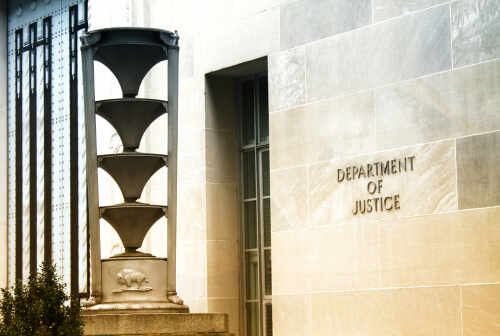
A federal judge just told the Trump Justice Department it cannot turn grand jury subpoenas into a political weapon against Minnesota.
Story Snapshot
- A Bush-appointed federal judge quashed subpoenas against Governor Tim Walz and other Minnesota officials, calling them retaliation, not real law enforcement.
- The Justice Department tried to use a grand jury and a Civil War-era conspiracy law to force state leaders to help with an aggressive immigration crackdown.
- The judge said the subpoenas targeted constitutionally protected speech and policy choices, with “extremely weak to nonexistent” links to any crime.
- This fight exposes a bigger clash: federal immigration power versus state sovereignty and free speech in the age of “sanctuary” politics.
How a grand jury fight became a showdown over power
Federal prosecutors did not quietly ask Minnesota leaders for help; they dropped grand jury subpoenas on the governor, the attorney general, the mayors of Minneapolis and St. Paul, and county officials in Ramsey and Hennepin.[9] These subpoenas were tied to a sweeping immigration operation in the Twin Cities, part of the Trump administration’s big-city “metro surge” enforcement blitz.[9]
Border Patrol commander Greg Bovino boasted that more than 10,000 people in the country illegally were arrested in Minnesota in a year, including 3,000 in just six weeks during the surge.[9] That kind of operation creates huge pressure on local jails, courts, and police. When state and city leaders pushed back, the Justice Department claimed they were not just disagreeing, but obstructing.
Instead of relying on ordinary immigration tools, federal lawyers reached for a Civil War-era conspiracy statute that has been used in recent years against organized groups like the Oath Keepers and Proud Boys for hindering federal officers.[3]
They framed the case as a criminal probe into whether Walz, Minneapolis Mayor Jacob Frey, and others “conspired to impede immigration officers” by refusing to help and by criticizing the crackdown in public.[3][9]
The subpoenas demanded internal communications, policy records, and other documents that would reveal how Minnesota chose to allocate its resources and how officials talked about federal immigration enforcement. That is not a small ask; it reaches straight into the core of state self-government and political speech.
What the judge actually said about the subpoenas
United States District Judge Patrick Schiltz, who was appointed by President George W. Bush, did not nibble around the edges.[5] In a 30-page decision, he ruled that the “dominant purpose” of the subpoenas was to coerce Minnesota officials into assisting with civil immigration enforcement and to harass and retaliate against them for refusing.[2][7]
He found the Justice Department’s claimed investigative basis “extremely weak to nonexistent,” saying the links between the requested records and any possible criminal violation were essentially absent.[2][5][7] In plain English: this did not look like a real criminal investigation; it looked like punishment for political defiance.
Judge Schiltz went further and attacked how the Justice Department was using the grand jury itself.[2][3] He wrote that the department was “not conducting a criminal investigation” at all, but instead using the grand jury process for other “unlawful purposes.”[2][3] That is a sharp rebuke.
Grand juries have enormous power to demand records and testimony, but that power is supposed to serve criminal law, not political leverage. The judge also noted that the subpoenas reached materials that “largely if not entirely relate to constitutionally protected conduct,” including public criticism of federal immigration actions and policy decisions about state resource use.[2][5][7]
Under the Tenth Amendment, Minnesota has the right to decide it will not spend its own time and money enforcing federal civil immigration law, and Washington cannot simply bully the state into changing that choice.
Immigration crackdowns, state resistance, and common sense
For many, strong borders and serious immigration enforcement are non-negotiable. The numbers from Minnesota’s metro surge—thousands of arrests in weeks—show federal officers were not sitting on their hands.[9] But serious enforcement has to stay inside constitutional lines.
A Justice Department that stretches criminal conspiracy laws to rope in governors and mayors for how they speak and set policy crosses a line that should bother anyone who cares about limited government. Today those tactics target a Democratic governor; tomorrow they could be used against a Republican governor who resists a progressive agenda.
Federal judge has halted the Trump administration effort to subpoena Minnesota Gov. Tim Walz and others in an immigration enforcement probe.https://t.co/gekujqp1MM
— Gary Buckley™ (@myrddenbuckley) June 22, 2026
Schiltz’s ruling fits into a broader pattern that legal scholars have started to track. Research on the immigration subpoena power shows that federal immigration agencies, especially Immigration and Customs Enforcement, have used subpoenas to pierce “sanctuary” policies and push local governments into becoming “unwilling partners” in arrests and detention.[17]
These studies describe thousands of subpoenas, some paired with gag orders, aimed at making cities help enforce immigration rules even when their voters and leaders chose another path.[17]
The Minnesota case adds something new: a conservative federal judge calling this kind of pressure “overwhelmingly” unlawful and tying that call to basic First Amendment and federalism principles.[18] For readers who care about both secure borders and real limits on Washington, this is the tension to watch.
Sources:
[2] Web – DOJ subpoenas Walz amid immigration enforcement crackdown in …
[3] Web – Federal judge halts Trump administration effort to subpoena Walz in …
[5] YouTube – Court Kills Trump DOJ’s Subpoenas Against Minnesota …
[7] Web – Justice Department subpoenas Walz, 5 others in immigration …
[9] Web – Justice Department subpoenas Walz and others in immigration …
[17] Web – Federal judge rules subpoenas linked to immigration crackdown …
[18] Web – THE IMMIGRATION SUBPOENA POWER – Columbia Law Review