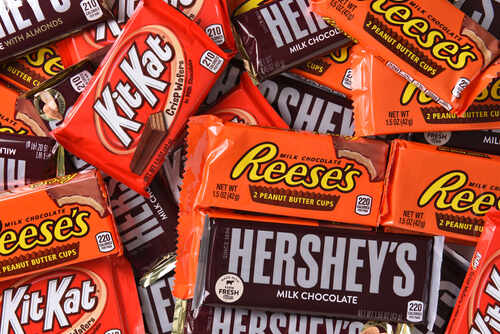
Hershey’s brazen recipe swaps in Reese’s products betray a cherished American family legacy, substituting cheap ingredients for premium ones amid falling cocoa prices.
Story Snapshot
- Brad Reese, grandson of Reese’s inventor H.B. Reese, accuses Hershey of replacing milk chocolate with compound coatings and peanut butter with crème in multiple products.
- Reese calls recent Reese’s Mini Hearts “not edible,” citing vegetable oils over real chocolate and peanut butter.
- Hershey defends the changes as innovations in new shapes, claiming the core Peanut Butter Cups remain unchanged despite consumer complaints.
- FDA labeling loopholes allow “chocolate candy” labels to dodge strict milk chocolate standards, enabling cost-cutting.
Founder’s Grandson Sounds Alarm
Brad Reese published an open letter on LinkedIn, targeting Hershey’s ingredient changes in Reese’s products. He specifically calls out Reese’s Mini Hearts, Take5, and Fast Break bars for using compound coatings instead of milk chocolate and peanut butter-style crème over real peanut butter.
Reese described the purchased Mini Hearts as inedible because they contain vegetable oils and fats. This family insider’s critique carries weight from his direct tie to the brand’s origins.
Grandson of the inventor of Reese's Peanut Butter Cups accuses Hershey of cutting corners | Click on the image to read the full story https://t.co/8kVZMyTKNW
— WTAE-TV Pittsburgh (@WTAE) February 19, 2026
Historical Legacy Under Threat
H.B. Reese founded his company in 1919 after working at Hershey and invented Peanut Butter Cups in 1928 using milk chocolate and peanut butter. The family sold to Hershey in 1963, preserving a legacy of quality. Now, Brad Reese argues corporate profit motives erode that heritage through substitutions.
Consumers echo his concerns, frequently telling him that products no longer taste as good, a claim that clashes with Hershey’s claims of an unchanged essence. This dispute spotlights tensions between tradition and modern business pressures.
Cocoa prices surged in 2024, forcing industry recipe tweaks, followed by Hershey’s July 2025 price hikes. Prices dropped by 2026, yet retail costs linger due to supply lags.
Hershey ties adjustments to new shapes like Valentine’s Mini Hearts, b. Still, Reese’s opportunism in exploiting FDA rules requiring 10% chocolate liquor, 12% milk solids, and 3.39% milk fat for true milk chocolate—sidestepped via “chocolate candy” labels.
Hershey’s Corporate Defense
Hershey insists classic Reese’s Peanut Butter Cups use the original recipe. The company acknowledges recipe tweaks and new sizes as innovations to maintain what makes Reese’s unique.
CFO Steven Voskuil noted extensive consumer testing showed no impact. European versions openly list “milk chocolate-flavored coating” and “peanut butter crème,” which Reese flags as evidence of U.S. practices. Brad Reese declares he cannot represent the brand amid these shifts, calling products “total bunk.”
The clash highlights power imbalances: Hershey controls production, while Reese wields moral authority as the founder’s grandson. No independent lab tests verify claims, leaving disputes to statements.
Consumers face opaque labels that can alter taste without notice, as anecdotal reports mount against testing data.
Broader Impacts on Trust and Market
In the short term, media coverage from CBS News and Fox Business amplifies risks to Hershey’s reputation, prompting scrutiny of its labeling practices.
Long-term, persistent criticism could tarnish the Reese’s name, built on trust, and open the door to premium competitors. Shareholders face stock volatility from backlash.
The saga underscores the industry’s reliance on cocoa volatility, where legal shortcuts harm loyalty—a reminder that even compliant cost cuts can fracture bonds with loyal American families who value authenticity over endless corporate expansion.
Sources:
CBS News: Hershey Reese’s Peanut Butter Cup Ingredients Grandson Brad Reese
Fox Business: Grandson Reese’s Inventor Blasts Hershey Alleged Recipe Changes Threw Garbage