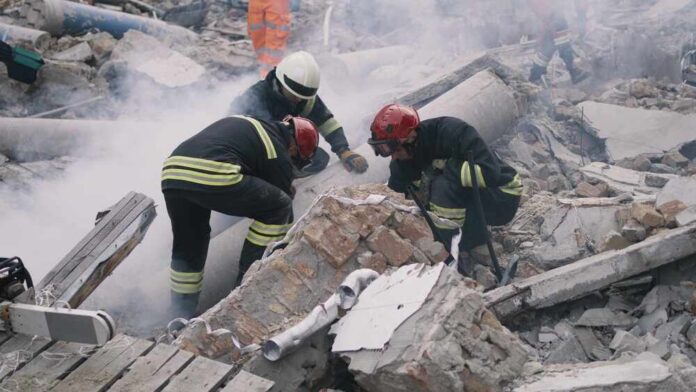
In the dark before dawn, a war-damaged apartment block in Gaza City gave way and buried families as they slept.
Story Snapshot
- A six- or seven-story residential building collapsed in southwest Gaza City overnight, killing many.
- Rescue crews from the Palestinian Civil Defense dug for survivors with limited heavy equipment.
- Casualty counts vary across outlets, but the death toll is significant and rising.
- Displaced families had taken shelter in the weakened structure amid a wider pattern of damaged housing.
What happened and when
Shortly after 2 a.m. local time, a residential building in southwest Gaza City collapsed, crushing people inside and nearby. Local medical sources reported at least eight dead and more than 15 injured in the first hours.
Other outlets soon raised that toll, with several reporting 11 to 19 dead as the day wore on. Palestinian Civil Defense responders arrived fast, but they faced a mountain of concrete and not enough machinery. Crews pulled survivors by hand while neighbors formed bucket brigades.
At least 20 people killed and dozens missing after war-damaged building collapses in Gaza, local rescue teams say https://t.co/7kDFDGdrli
— BBC Breaking News (@BBCBreaking) September 16, 2026
Reporters on the scene described a six- or seven-floor structure that had been hit earlier in the war and left unstable. Displaced families moved in because they had nowhere else to go. When the floors pancaked, tents and makeshift shelters around the base were crushed as well.
A wire-service item cited 11 dead at one point. The Associated Press reported 19 dead and 25 injured, with rescuers digging for dozens more. These are early counts, and they often change as recovery continues.
Why the toll kept shifting
Conflicts warp the clock. Rescue teams work through dust and danger, and numbers lag reality. In Gaza, shortages of fuel, cranes, and excavators make it worse.
That delay creates a familiar pattern: the central fact is clear—a building failed and many died—while totals move as bodies are found and survivors are counted. Officials try to balance speed and accuracy. Families demand news now.
That tension does not weaken the core event. It explains why reliable outlets can post different figures from the same collapse. It also underlines a harsh truth of war zones: the dead are often recovered last.
The living come first, and the first reports reflect that priority. Readers should expect revisions in the next 24 to 72 hours as crews reach deeper layers and hospitals update their logs.
The rescue battle in a broken city
The Palestinian Civil Defense led the response and called for heavy equipment to lift slabs and pierce voids. Every hour without a crane turns rescues into hand-dug races against time. Gaza’s damaged roads, debris fields, and fuel limits slow everything.
In past months, the same constraints emerged after storms shook already cracked buildings. Search teams pulled bodies days later because gear and access were scarce. The same bottlenecks likely shaped this operation and may shape the final toll.
Neighbors described children among the trapped. Medics set up triage under shattered balconies. Ambulances ferried the injured to surviving clinics. Power cuts forced crews to use flashlights and phones to peer into gaps. People listened for tapping sounds below the rubble.
Some responders believe many more were inside when the structure fell. At press time, no single bulletin confirmed the final number of missing, but several outlets cited “dozens” unaccounted for.
How a single collapse fits a wider pattern
This collapse is not random. It sits inside a broad map of damage. Independent assessments and satellite analysis say a huge share of Gaza’s buildings have been destroyed or damaged since late 2023.
When you weaken walls and remove columns, the risk does not end when the smoke clears. It lingers for months, then strikes without warning, often at night when families huddle together for sleep.
People displaced by earlier strikes seek any roof they can find, even if that roof leans. That hard math—fewer safe homes, more people in each—loads stress on structures already cracked. When floors go, they go fast. Rescue becomes recovery.
Policy debates can wait, but basic steps cannot: stabilize the most at-risk shells, clear debris corridors for ambulances, and stage heavy gear in neighborhoods flagged as fragile. Those moves save lives in the next collapse, not just the next war briefing.
What to watch next
Expect the death toll and injury count to change as crews move deeper and hospitals reconcile lists. Watch for a formal incident summary from the Palestinian Civil Defense with a timeline of calls, rescues, and recoveries. Look for hospital updates on admissions and morgue tallies.
Satellite and street-level images could help identify the building’s failure points. A basic engineering read—missing shear walls, failed columns, overloaded slabs—would guide triage at other nearby damaged sites.
Sources:
apnews.com, reutersconnect.com, abcnews4.com, ap.org, en.abna24.com