
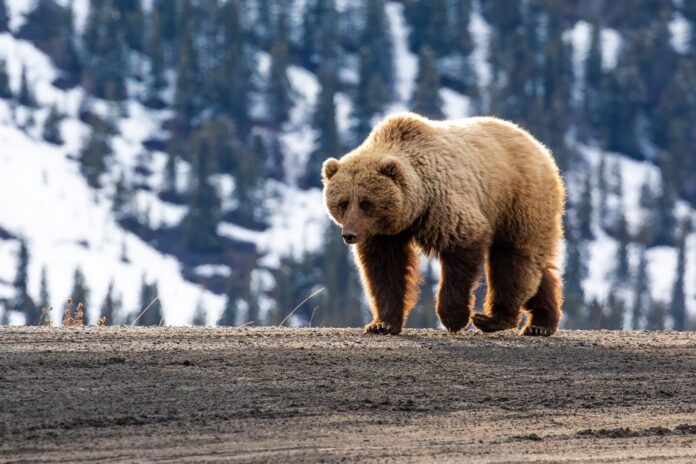
Two women vanished on a quick neighborhood walk and were found dead days later on a trail where signs pointed to a bear.
Story Snapshot
- Search teams found a mother and daughter dead near Bella Coola, British Columbia.
- Investigators reported scene evidence suggesting an animal was involved.
- Officers launched traps, patrols, and warnings while seeking the bear or bears.
- A recent history of bear-human conflicts in the area raised alarms.
Coordinated Search Leads to Two Tragic Recoveries
Family members reported Jennifer Balcarras and her daughter, Selah Reed, missing when they did not return from a short afternoon walk close to home near Bella Coola. The British Columbia Conservation Officer Service and the Royal Canadian Mounted Police organized a search of the Snooka West Trail area. Crews located Balcarras’s remains on Monday and found Reed’s remains on Tuesday in the same trail zone, focusing attention on a narrow stretch of forest familiar to locals.
The scene drew seasoned officers and trackers who know how to read sign in thick coastal woods. Investigators from the British Columbia Conservation Officer Service said the evidence at the site suggested an animal may have been involved. Officials did not issue a final cause of death, but the working theory of a bear attack shaped the immediate response. That response centered on two goals: protect people right now and find the animal or animals that posed a threat.
Active Safety Measures Signal a Serious Wildlife Threat
Officers set traps and conducted night patrols on and around Snooka West Trail, while community leaders urged people to avoid trails. The Nuxalk Nation recommended a curfew as a layer of caution, and police stepped up visibility after dark. Conservation officers said they were searching for any bears that might have been involved and would use forensic tools, including potential DNA, to link an animal to the scene if possible.
Authorities treated the situation as dynamic because bears move with food sources, weather, and human activity. The goal was to stabilize the area so hikers, families, and workers could stay safe. The patrols, the trail warnings, and the traps sent a message that public safety came first, even while investigators continued to build the evidence chain. That dual track—safety and proof—matches standard wildlife-conflict practice across western North America.
Known Hotspot Adds Weight to the Working Theory
The Bella Coola Valley holds many grizzly bears and has seen rare but severe encounters. Reporting noted a prior attack that injured members of a school group, and the bear from that earlier case was not conclusively identified. Provincial data describe fatal grizzly attacks as uncommon across British Columbia, yet a cluster in one valley can make risk feel, and sometimes become, more local and immediate for residents planning everyday walks and hunts.
Conservation officers also acknowledged an unresolved question: whether one bear or multiple bears were involved in this case. That matters for strategy. One bold bear can be tracked and tested against biological samples. Several bears using the same food sources can force broader closures and longer patrols. Officials worked through those scenarios while searchers finished recovery and investigators logged findings from the trail and nearby drainages.
Plain Facts, Practical Lessons, and Community Resolve
The facts are stark. Two people left for a nearby walk and did not come home. Search teams found both in the same area. Investigators saw signs that pointed to an animal, likely a bear, and took steps to protect the public while seeking a match between evidence and a specific animal. A final coroner’s ruling and any laboratory matches will clarify details, but the public-safety steps followed a clear chain of common sense and field craft.
A mother and daughter have been found dead after a suspected grizzly bear attack near Bella Coola, B.C.
Jennifer Balcarras, 48, and her daughter Selah Reed, about 20, were reported missing after a walk on the Snooka West Trail.
Conservation officers say evidence suggests a… pic.twitter.com/D5tucelpwv
— YEGWAVE (@yegwave) November 4, 2026
Simple choices can also lower risk in bear country. Make noise on trails with thick brush. Hike in small groups, not alone. Carry bear spray where legal and know how to use it. Secure attractants at homes and camps. Keep dogs leashed; a dog that runs out and back can lead a bear straight to you. These habits do not remove wild risk. They tilt the odds in your favor. They respect the land and the animals that live there.
Sources:
thecanadianpressnews.ca, 13newsnow.com, backpacker.com, dailyhive.com, cbc.ca