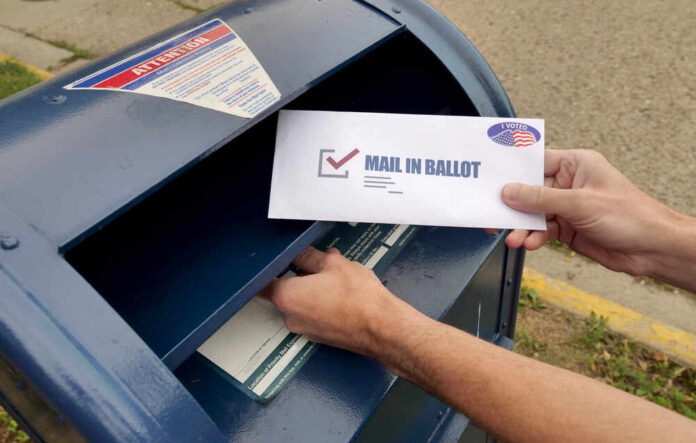
The Supreme Court cleared the way for President Trump’s mail-voting order to advance nationwide, and the clock is now the story.
Story Snapshot
- The Court lifted key injunctions, saying states lacked standing to block parts of the order.
- The order directs agencies and the Postal Service to tighten mail-ballot procedures.
- Lower courts had called major pieces unconstitutional, so more fights are coming.
- The ruling arrives weeks before midterm voting windows open in many states.
What The Supreme Court Actually Did
The Supreme Court issued an unsigned order that stayed lower-court blocks against parts of the administration’s mail voting plan. The Court said the states that sued lacked standing to challenge a section that, in the Court’s view, “does nothing to them.”
The order allows federal agencies to move forward for now, without a final ruling on whether the plan is lawful. That narrow, procedural lane still changes the terrain before ballots start moving.
Headlines called it a big win, and in practice it is. Nationwide election operations run on strict calendars, not wishes. When the Court lifts an injunction in late August, agencies gain time and leverage.
That does not end the lawsuits. It does tilt the field toward implementation, at least in part, unless another court steps in fast. Even critics admit the ruling did not decide the merits, but it unlocked the next phase.
What The Executive Order Seeks To Change
The March directive frames itself as safeguarding mail integrity and setting uniform standards. It directs the Postmaster General to start a rulemaking for consistent ballot handling through the United States Postal Service.
It also pushes a federal effort to align voter information across databases, with the aim of cleaner lists and more controlled ballot delivery. The White House cast this as basic stewardship: know the voter, track the ballot, and treat election mail as a protected class.
Supporters view this as common sense. The Postal Service moves ballots, but it has not set the rules about who may vote by mail. Advocates argue federal leadership can raise the floor on security without telling states how to count or canvass.
They point to long backlogs and vague local rules that confuse both clerks and voters. They also argue that citizenship checks and uniform handling close gaps that bad actors could exploit, even if fraud rates are low in most cycles.
The Supreme Court handed President Trump a victory, allowing his administration to enforce his "election integrity" executive order restricting mail-in voting ahead of the November midterms.
The ruling clears the way for the Trump administration to move forward with restrictions… pic.twitter.com/7dKrOV28i5
— Fox News (@FoxNews) August 24, 2026
The Legal Pushback That Still Matters
Several courts said earlier this summer that the president cannot use the Postal Service to referee who gets a ballot. One federal judge declared key parts of the order unconstitutional and beyond presidential power.
The judge said state legislatures and Congress set federal election rules, not the White House, and that the Postal Service lacks authority to impose binding voting regulations. Those rulings stalled agency steps and forced the fight to the appeals courts.
Reporters tracking the cases note that the Supreme Court did not bless the policy. It only removed a procedural roadblock. That leaves the merits open for future rulings, including on whether the Department of Homeland Security can compile national voter lists and whether the Postal Service can gate ballot delivery.
The narrow win still means logistics can shift now, even if a court strikes parts down later. Elections often hinge on what rules are in place when ballots go out.
What Changes Before The Midterms
Agency leaders can move on planning, training, and communications that were frozen. Even partial steps matter: clearer labels, priority handling, or better tracking can change delivery times.
If agencies try to condition ballot processing on new lists or certifications, more emergency motions will hit the courts. States that relied on the earlier injunctions may now face fast operational choices. Voters will see the results not in speeches, but in their mailboxes and drop boxes.
🚨 Important context missing from the headlines: The Supreme Court has NOT ruled that Trump can ban or restrict mail-in voting nationwide.
It lifted an injunction in one lawsuit largely because the states’ challenge was considered premature. A separate nationwide injunction…
— Lance Lachlan ✌🏻 (@lancelachlan) August 25, 2026
The federal government protects the mail, secures identity in countless programs, and sets standards when goods or benefits cross state lines. Ballots cross those lines in practice through a single carrier.
When the Supreme Court says a state cannot block a section that does not regulate the state, that matches basic standing doctrine and common sense. Let agencies do their job; let courts judge the law after facts, not fears.
Sources:
apnews.com, supremecourt.gov, cnn.com, theguardian.com