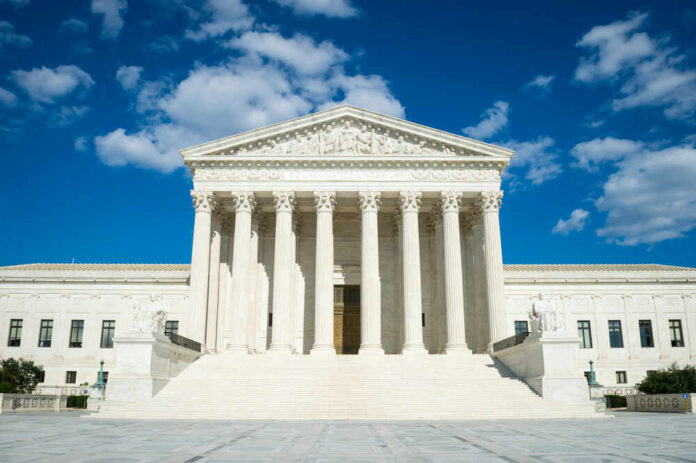
President Trump asked the Supreme Court to keep the $400 million White House ballroom project alive while the court fight rages.
Story Snapshot
- The administration filed an emergency request to lift a construction halt during appeal.
- Lower courts said major work needs approval from Congress, not the White House alone.
- The case tests who controls federal property changes: Congress or the President.
- The outcome sets a rule for future presidents, not just this project.
What Happened And Why It Matters Now
The Trump administration asked the Supreme Court to let construction continue on a new White House ballroom during its appeal of a lower-court order that stopped the work. The emergency filing says pausing now would stall major above-ground phases and drive up costs, after demolition and groundwork already advanced.
The legal fight matters because it is not only about a ballroom. It is about who gets to decide big changes to America’s most famous building, and under what law.
Two courts have already thrown up red lights. A federal district judge said no statute “comes close” to giving the President the power claimed for this build and ordered construction to halt unless Congress approved it.
A panel of the United States Court of Appeals for the District of Columbia Circuit later upheld a stop, stressing that Congress must sign off on a “massive ballroom” at the White House. Those rulings set the stage for the Supreme Court request.
The Administration’s Case To Keep Building
The administration argues it has authority to manage and improve the Executive Residence and that stopping now would lock in waste. It says major construction has a narrow weather window and that delay would risk safety and cost overruns.
The emergency ask aims to freeze the lower-court halt while the case gets full review. From a rule-of-law lens, the strongest thread here is continuity of government operations and avoiding midstream waste that taxpayers would have to absorb.
The White House also leans on the idea that presidents need flexibility to secure and maintain the complex. That theme, raised publicly, resonates with common-sense stewardship: fix, modernize, and keep the place mission-ready.
But flexibility stops where Congress’s purse and property powers begin. Even strong executive functions must run along the tracks that statutes lay down. That is why the appeal focuses on what the law allows for upkeep versus what counts as a new structure.
The Counterargument: Congress Holds The Keys
Opponents, led by the National Trust for Historic Preservation and allied groups, say the Constitution puts federal property decisions in Congress’s hands.
Their filings argue Congress never authorized or funded the demolition of the East Wing or a replacement ballroom, so the Executive cannot do it alone.
The appeals court echoed that view, writing that each President is a temporary tenant, not the owner, and that Congress must decide on a project of this size.
The plaintiff-side claim also draws a clear line between maintenance and major construction. Routine repairs and interior upgrades are one thing. Razing a wing and building a 90,000-square-foot hall is another.
The lower courts accepted that split so far, reading the statutes to allow upkeep but not fresh construction without express approval.
What The Supreme Court Will Weigh
The justices will not decide the full case in this emergency phase. They will decide whether to pause the lower-court halt while appeals play out.
That means weighing likely success on the merits, claimed harm from delay, and the public interest in the rule of law and in careful spending. Prior precedent on stays points the Court to those factors in fast-moving disputes like this one.
Trump has reframed argument as a national security issue. The fight over the ballroom is currently before the Supreme Court.
Mind you, there was barely a peep when Obama build a basketball court at the White House. But build a permanent ballroom so America can host state dinners… pic.twitter.com/2g4cfhv7x7
— 𝓑𝓸𝓫 𝓢𝓶𝓲𝓽𝓱 (@akita77) August 17, 2026
On the merits, the cleanest path points back to Congress. Federal property, especially in Washington, sits under statutes that demand explicit authorization for new structures. The appeals court cited that principle in plain terms.
If Congress wants a ballroom, Congress can say so, fund it, and set guardrails. If Congress stays silent, the safer course is to stop. That stance guards the purse and avoids executive overreach while still leaving room for normal repairs.
What Comes Next And Why It Lasts Beyond This Presidency
If the Supreme Court grants the stay, crews could restart while the fight continues, but the merits would still wait for full briefs and arguments. If the Court denies the stay, work remains paused, and the administration must win on appeal or get Congress to act.
Either way, this case will shape how future presidents treat iconic federal property. Clarity here helps everyone: the White House staff, taxpayers, and the next occupant who inherits the keys.
Sources:
apnews.com, reuters.com, pbs.org