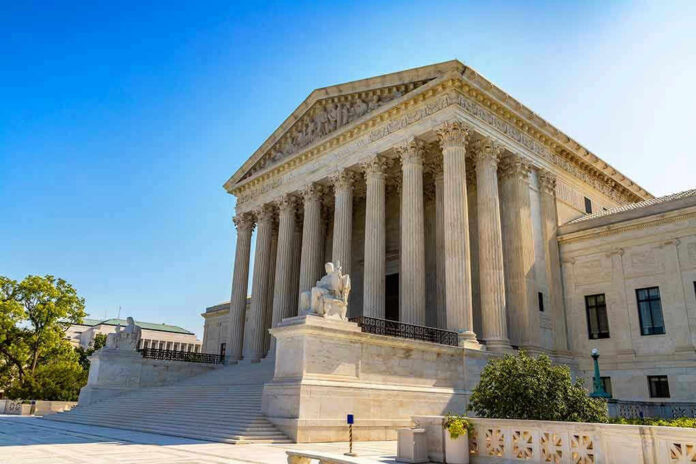
The Supreme Court will decide whether President Trump can end automatic citizenship for children of illegal immigrants, a landmark case that could restore constitutional order to America’s broken immigration system.
Story Overview
- Supreme Court agrees to hear Trump’s birthright citizenship challenge in 2026
- Executive order targets children born to illegal immigrants and temporary visitors
- Lower courts have blocked the order, claiming constitutional violations
- Case could end decades of birthright citizenship exploitation by illegal immigrants
Trump Takes Bold Action on Day One
President Trump wasted no time addressing America’s immigration crisis, issuing an executive order on January 20, 2025, that challenges automatic citizenship for children born to illegal immigrants.
The order specifically targets babies born more than 30 days after its signing, denying citizenship documents when parents are temporary visitors or in the country illegally. This decisive action represents Trump’s commitment to restoring immigration law and order after years of border chaos.
🚨The Supreme Court announced Friday that it will hear arguments regarding Trump’s executive order that would revoke the automatic guarantee that any child born on U.S. soil—even to an illegal immigrant parent—would be an American citizen. @FredLucasWH https://t.co/aDOgZG1c5t
— The Daily Signal (@DailySignal) December 5, 2025
Constitutional Battle Lines Drawn Over 14th Amendment
The legal fight centers on the 14th Amendment’s Citizenship Clause, which states “All persons born or naturalized in the United States, and subject to the jurisdiction thereof, are citizens of the United States.”
Trump’s order challenges the liberal interpretation that has granted automatic citizenship regardless of parents’ legal status. The administration argues that children of illegal immigrants may not fall under proper U.S. jurisdiction, potentially closing a loophole that has incentivized illegal border crossings for generations.
The executive order specifically denies citizenship recognition when the mother was unlawfully present and the father lacks citizenship or permanent resident status. It also applies when mothers have temporary legal status, but fathers are neither citizens nor permanent residents.
This targeted approach addresses the exploitation of birthright citizenship that has encouraged illegal immigration and undermined border security efforts.
Liberal Courts Resist Immigration Reform
Predictably, several federal district judges and two circuit courts have blocked Trump’s order through injunctions, claiming constitutional violations. These judicial interventions reflect the same activist approach that has consistently undermined immigration enforcement and border security.
The resistance demonstrates how liberal courts continue prioritizing illegal immigrant interests over American sovereignty and constitutional interpretation that serves the nation’s founding principles.
The Supreme Court’s decision to hear this case in 2026 offers hope for constitutional clarity on this critical issue. With a conservative majority, the Court has the opportunity to end decades of birthright citizenship abuse that has rewarded illegal entry and strained American resources.
This case represents a pivotal moment for restoring immigration law enforcement and protecting American citizenship from exploitation.