Donald Trump’s bold nuclear revival at Three Mile Island delivers a crushing win over Biden’s failed green fantasies, securing America’s grid just as AI demand explodes.
Story Highlights
- Energy Secretary Christopher Wright demands that grids be built to handle peak demand to prevent blackouts and deaths from unreliable renewables.
- The Trump administration unlocks a $1B loan to restart Three Mile Island Unit 1 by 2027, powering Microsoft’s AI data centers with a reliable nuclear baseload.
- Constellation Energy praises federal support, framing this as a nuclear renaissance against past policy stagnation.
- Surging demand from AI, manufacturing, and storms exposes grid risks, with NERC forecasting 20.2 GW winter peak growth.
Energy Secretary Wright Champions Peak Demand Reliability
Energy Secretary Christopher Wright stated on Fox Business that U.S. electricity grids must prioritize peak-demand design to ensure reliability during extreme events.
This approach counters intermittent renewables, which fail to deliver capacity when needed most, such as winter storms. Wright highlighted how gas, coal, and nuclear power dominate during peak demand, preventing hospital closures and deaths. His comments align with conservative priorities for dependable energy over subsidized wind and solar experiments from the Biden era.
Three Mile Island Restart Fueled by Trump Federal Loan
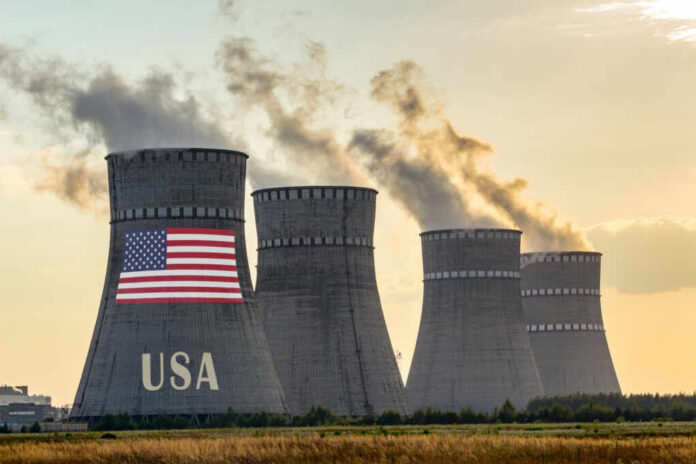
Constellation Energy plans to restart Three Mile Island Unit 1 in Pennsylvania by 2027, decades after the 1979 accident at Unit 2. A $1B federal loan from the Trump administration enables this revival.
Constellation SVP Dan Eggers praised Secretary Wright, Interior Secretary Burgum, and President Trump for their support. The plant will supply carbon-free, 24/7 power under a deal with Microsoft to meet AI data center needs. This restores lost capacity to Pennsylvania’s grid.
Surging Demand from AI and Storms Tests National Grid
NERC forecasts U.S. winter peak demand rising 20.2 GW, or 2.5%, outpacing generation amid AI data centers, re-industrialization, and electrification. Executive Order 14262 addresses these tech-driven surges.
Recent Winter Storm Fern prompted DOE to issue emergency orders under FPA Section 202(c), unlocking coal, gas, and oil backups—boosting coal by 25%, gas by 47%, and oil by 1,953%. The 2021 Texas freeze precedent underscores the risks posed by the absence of dispatchable power sources.
Pennsylvania communities stand to regain jobs and stable capacity from the TMI restart. Tech giants like Microsoft secure a reliable supply, enabling AI growth without blackouts. Consumers benefit from avoided outages, though debates persist over reliance on fossil fuels.
Energy secretary says grid must be built for ‘peak demand’ as Three Mile Island plans return https://t.co/CguSjK11mV
— FOX Business (@FoxBusiness) February 20, 2026
Trump Policies Shift Away from Biden Renewable Subsidies
Biden-era wind and solar tax credits drew criticism from Wright for failing to meet peak needs, adding no real capacity during crises. Trump policies favor nuclear and coal renaissance, partnering with industry against intermittent sources.
Short-term, DOE actions reduce emergency risks; long-term, they counter 20%+ demand growth over the decade. This prioritizes American energy independence, individual liberty through affordable power, and limited government over wasteful green mandates.
Sources:
Energy secretary says grid must be built for ‘peak demand’ as Three Mile Island plans return
Energy Secretary calls for more emphasis on fossil fuels to keep power on in winter storms
What Energy Secretary Wright gets wrong about the US grid
Congressional Document on Grid Risks
Fact Sheet: Energy Department Prevented Blackouts, Saved American Lives During Winter Storms
Energy Secretary Prevents Closure of Coal Plant, Provided Essential Power During Winter Storm