The Federal Reserve just raised interest rates for the first time in three years, ending a long stretch of rate cuts and pauses to take direct aim at inflation that refuses to fade.
Story Overview
- The Federal Open Market Committee raised its target rate by a quarter point to 3.75%-4.00%, the first hike since 2023
- Every voting member backed the move, a unanimous 12-0 decision
- The Fed said inflation “remains elevated” and the hike should speed a return to its 2% goal
- Fed projections point to at least one more rate increase before year’s end
A Quarter-Point Move Ends A Multi-Year Pause
The Federal Open Market Committee met September 15 and 16, 2026, and voted to raise the federal funds rate by 25 basis points, pushing the target range to 3.75%-4.00%.
It marks the Fed’s first rate hike since July 2023, closing out a period of holds and cuts. The move officially took effect right after the meeting, according to the Fed’s own calendar and statement records.
The federal funds rate affects nearly every loan Americans take out, from credit cards to car payments to adjustable mortgages.
When the Fed raises this rate, banks typically raise their own rates too. That ripple effect is why this decision, even a small quarter-point move, gets national attention the moment it’s announced.
No Dissent Among Fed Officials
Every voting member of the committee backed the hike, resulting in a 12-0 tally with no recorded objections.
That kind of unity suggests the Fed’s leadership sees inflation as a shared problem demanding a shared response, not a split decision forced through by a narrow majority.
Unanimous votes carry extra weight with markets because they signal institutional confidence rather than internal disagreement.
Fed led by Trump-picked chair raises rate despite Trump’s calls to lower them https://t.co/VVJQ3Mz2Cs
— TIME (@TIME) September 17, 2026
The committee’s post-meeting statement laid out its reasoning in plain terms. Officials said inflation remains elevated relative to their 2% target, and framed the rate hike as a way to get inflation back under control sooner rather than later.
That language echoed statements from earlier meetings this year, showing the Fed has stayed consistent in how it describes the problem.
The Economy Backdrop Behind The Decision
The Fed didn’t describe an economy in crisis. Officials pointed to solid consumer spending, strong productivity growth, robust business investment, and job growth that has kept pace with the workforce.
That matters because it means the hike wasn’t an emergency brake pump. It was a calculated response to inflation in an otherwise healthy economy, a distinction the Fed made a point of highlighting.
Updated Fed projections show core inflation, the measure that strips out volatile food and energy prices, running higher than earlier forecasts. One tracked estimate put core inflation at 3.4% for 2026, up from a prior projection of 3.3%.
Officials also signaled the median expected rate could climb to 4.1% before the year ends, meaning this hike likely won’t be the last one.
What Higher Rates Mean For Household Budgets
For everyday families, this decision translates into higher costs almost immediately. Mortgage rates, auto loans, and credit card interest tend to climb alongside the Fed’s benchmark rate.
Savers may see a modest upside through better returns on savings accounts and certificates of deposit, but for anyone carrying a balance or shopping for a big purchase, borrowing just got more expensive.
A Decision With Political Undertones
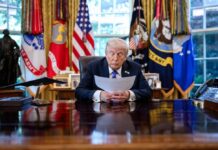
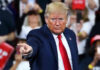
The hike arrived even as President Trump had pushed publicly for the Fed to lower rates rather than raise them. The Fed operates independently of the White House by design, and this decision shows that independence in action.
Whatever one thinks of the politics, an independent Fed acting on its own read of inflation data, rather than bowing to political pressure, is exactly how the system is supposed to work.
5 AM Top-of-the-Hour News
The federal reserve has raised interest rates by a quarter of a percent for the first time in three years.
Fed Chair Kevin Warsh said the hike was necessary in order to get inflation closer to the central bank's target of 2 percent. President Trump has… pic.twitter.com/DjZhxSyU47— Worldwide News Network (@WorldwideNNX) September 17, 2026
History offers a caution here too. Economic researchers who studied past tightening cycles have found that rate hikes aimed at taming inflation have rarely avoided a slowdown or recession afterward.
That doesn’t mean this cycle will follow the same path, but it explains why markets reacted with real caution the moment the announcement hit.
Sources:
feedpress.me, federalreserve.gov, kiplinger.com, reuters.com