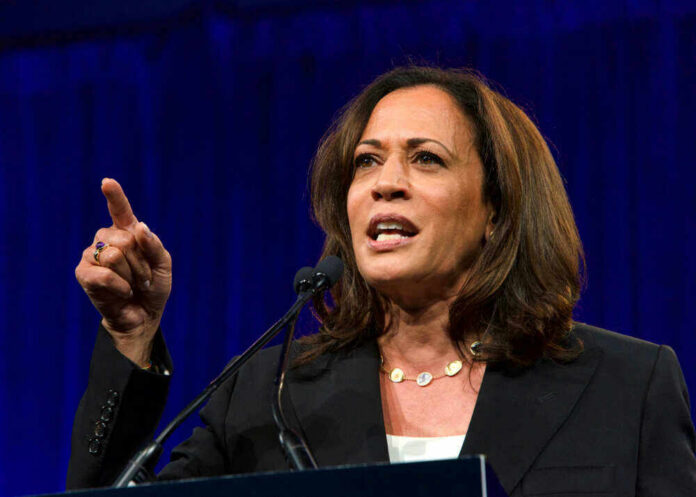
Kamala Harris called President Trump’s media ban “absolutely abhorrent,” and the clash just reset the fight over power, press, and the people’s right to see both.
See the video below.
At a Glance
- Trump announced bans on CNN, MS NOW, and Politico over “fake news” coverage.
- Reporters were denied access and had credentials seized after the ban.
- The outlets sued, calling it unconstitutional retaliation against reporting.
- GOP leaders framed the move as a stand for fair coverage, not logistics.
What Trump Did And Why It Matters
President Trump said he banned CNN, MS NOW, and Politico from the White House because of what he called constant “fake news.” He posted the decision and tied it to negative coverage, not to security or limited space.
He also claimed Politico took $8 million from the prior administration, using that to question independence. The move drew a fast legal and political response because it targets entire outlets and speaks directly to viewpoint and access.
Former Vice President Kamala Harris shares thoughts on Trump's ban of news outlets from the White House after an event with Abdul El-Sayed in Detroit Tuesday:
"It's absolutely abhorrent." Video by David Guralnick, TDN. https://t.co/XzS52wg7aq pic.twitter.com/woOw7tvBsR
— The Detroit News (@detroitnews) September 23, 2026
White House reporters from the three outlets were then blocked on site. Several accounts reported badges were disabled and passes seized after the announcement.
That detail matters because it turns a post into a policy, and a claim into a concrete barrier to newsgathering on public grounds.
Once the White House opens its press facilities, courts have often scrutinized actions that look like punishment for coverage rather than neutral rule enforcement.
The Lawsuit And The First Amendment Fight
CNN, MS NOW, and Politico sued to restore access. Their filings argue the government cannot exclude them for their reporting or viewpoints and must follow basic due process to revoke credentials.
They asked for immediate relief, calling the ban a direct assault on press freedom and the public’s right to independent journalism. That framing sets up a clean legal test: was this about space and rules, or was it about coverage the president disliked?
Courts have long frowned on viewpoint-based restrictions once a press system is in place. They have also said the White House can enforce reasonable, content-neutral rules.
The ban faces long odds if it rests on displeasure with reporting rather than a documented policy, consistent standards, and notice with a chance to respond. This case will likely turn on evidence about motive, criteria, and process.
What Supporters Say—And The Holes They Must Fill
Republican leaders backed the ban as a push for honest reporting. Senator John Barrasso argued that the press must be fair and cited past media failures as proof of bias against conservatives.
That argument resonates with many who see a double standard in mainstream coverage. But the administration did not point to a single specific factual error as the trigger, nor a written neutral policy that was violated, which weakens the claim that this is evenhanded enforcement.
The administration also leaned on a conflict-of-interest claim about Politico’s alleged funding under President Biden. If proven and relevant to access rules, that could matter. But even strong concerns about bias do not by themselves justify viewpoint-based bans.
What Happens Next And Why It Affects You
Discovery and public records could reveal who decided to ban the outlets, what they relied on, and whether there was any neutral standard. If the record shows retaliation for coverage, the courts will likely restore access quickly.
If the White House can show a written policy, consistent enforcement, and fair procedures, it gains ground. Either way, the decision shapes how future presidents handle criticism and how the public gets information inside the building that our taxes fund.
Harris’s “absolutely abhorrent” label may rally her base, but the real test will be in court papers, emails, and badge logs. The lesson for any administration is simple: if you want trust, publish the rules and stick to them.
If you want better coverage, answer tough questions, expand briefings, and flood the zone with facts. The press should report hard and fair. The White House should welcome the heat and show its work.
Sources:
cnbc.com, nbcnews.com, aljazeera.com, cnn.com, npr.org, theguardian.com, politico.com, journalrecord.com, yahoo.com, lawcommentary.com