
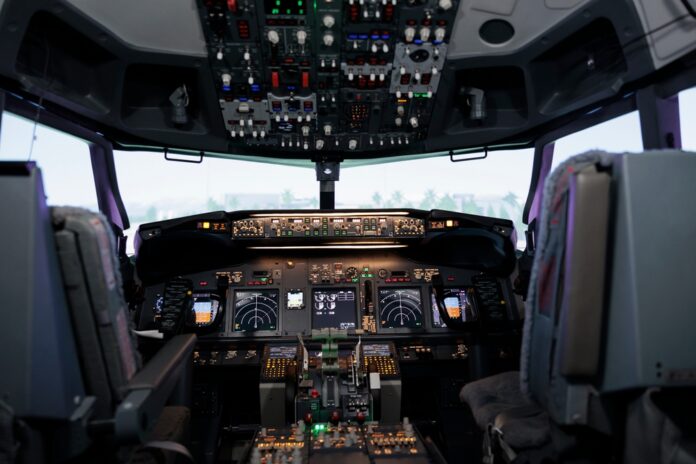
Another cockpit saw flames; the pilot said “mayday,” and the jet still made it home under its own power.
Story Snapshot
- American Airlines Flight 3230 returned to Phoenix and landed safely under its own power.
- A SkyWest crew radioed that they saw flames from one engine soon after takeoff.
- The American pilot reported a hydraulic problem and declared an emergency.
- American removed the Airbus A319 from service for a maintenance inspection.
Mayday, a warning of flames, and a swift return
American Airlines Flight 3230 departed Phoenix Sky Harbor for Portland on November 19, 2026. Soon after liftoff, air traffic control relayed a report from a following SkyWest crew. They said they saw flames from one of the Airbus A319’s engines and possible leakage. The American captain declared “mayday” and told the tower they were working a hydraulic problem while turning back toward the airport. The crew landed minutes later and taxied to the gate under the jet’s own power.
American Airlines called it a “mechanical issue” and said there was no evidence of a fire on inspection. The airline confirmed the aircraft was taken out of service for a detailed maintenance check. That is the sober, by-the-book response you want from a large carrier. Identify a problem. Secure the airplane. Get the people to safety. Put the machine in the penalty box until technicians clear it.
What the radio and records tell us
The controller’s transmission captured the spark that changed the flight plan: another cockpit saw flames. The American crew’s reply focused on hydraulics, which power flight controls, brakes, and other systems on an Airbus A319. That pairing—possible flames observed outside and a hydraulic fault reported inside—fits a common aviation pattern. Crews report what they can verify in the cockpit, while observers report what they see outside. The mayday call triggered priority handling back to Sky Harbor.
The timeline was tight and professional. Reports identify the flight as 3230 on an Airbus A319 from Phoenix to Portland, with departure and return within about 20 minutes, a standard window for an immediate-turn emergency recovery. Passengers later transferred to another aircraft to continue to Portland, which confirms the situation did not escalate on the ground and the airport’s response worked as designed.
Why “no evidence of fire” and “we saw flames” can both appear
Aviation history shows how fluid leaks, hot exhaust, or momentary combustion can look like flame from another aircraft yet leave little to find later. Investigators in past cases have traced events to hydraulic or oil leaks striking hot surfaces, or to brief fuel ignition that self-extinguished, leaving minor or no damage to inspect after landing. Those technical differences matter to safety teams, but to a pilot in the air, a bright flash near an engine reads as “flame” for good reason.
Airlines choose careful words until mechanics sign a logbook entry. “No evidence of fire” usually means technicians did not find burn marks, soot, melted parts, or other hard proof. That statement does not accuse the reporting crew of error. It signals that any flame, if it occurred, did not leave lasting damage. The conservative play—declare the emergency, return, and ground the jet for checks—aligns with common sense and the safety culture fliers should expect.
Risk managed, not minimized.
Declaring mayday is not drama; it is discipline. The captain faced a reported external hazard plus an internal system alert. That combo warrants priority handling and a short flight back to pavement. The Airbus A319 is designed to fly with one engine or with degraded systems. Crews train for these calls in simulators. The safe landing and normal taxi show the procedures and hardware did their jobs when it counted. One caveat remains: the airline did not identify a specific failed part in public reports.
🚨 AMERICAN AIRLINES FLIGHT 3230 DECLARES MAYDAY AFTER ANOTHER PILOT REPORTS FLAMES COMING FROM ITS ENGINE!
An American Airlines flight bound for Portland, Oregon, was forced to make an emergency return to Phoenix Sky Harbor International Airport on Thursday, November 19, after… pic.twitter.com/XQJPRzYCLo
— Mighty News (@Mighty__News) November 21, 2026
Future documentation could tie the reported hydraulic issue to what the SkyWest crew saw. Regulators and operators often review cockpit audio, maintenance data, and crew reports to close that loop. Such reviews have, in other cases, linked leaks, heat, and brief flame with little trace left after shutdown. Until then, the facts stand firm: another crew warned of flames, the American crew declared an emergency, the jet returned safely, and maintenance sidelined the aircraft for inspection.
Sources:
foxbusiness.com, azfamily.com, ca.news.yahoo.com, scottsdalesignal.com, thetravel.com, thedailybeast.com, wideopencountry.com