
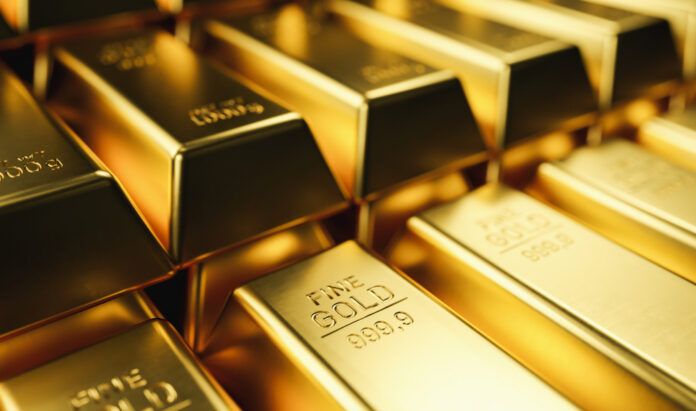
Gold just hit its lowest price in more than a year, and the reason is the one thing every American already feels at the checkout counter: inflation won’t quit.
Quick Take
- Spot gold fell more than 2% to $3,483.59 an ounce, its lowest level since September 2025, after new inflation data came out.
- The October Personal Consumption Expenditures price index rose 0.3% for the month, following a 0.5% jump in September.
- December gold futures dropped 2.3% to $3,482.50, showing the sell-off hit both spot and futures markets.
- Traders now fully expect the Federal Reserve to raise rates in December, which makes gold less attractive to hold.
A Familiar Metal Hits a New Low
Gold sank to its lowest price in more than a year after fresh government data showed inflation climbing again. Spot gold dropped over 2% to $3,483.59 per ounce, its weakest mark since September 2025. December futures fell right along with it, down 2.3% to $3,482.50 an ounce, confirming the move wasn’t limited to one corner of the market.
The trigger was the Commerce Department’s Bureau of Economic Analysis report on the Personal Consumption Expenditures price index, a key inflation gauge the Federal Reserve watches closely. It rose 0.3% in October, month over month, after climbing 0.5% in September. That’s two straight months of rising prices, a pattern that tends to make investors nervous about how the Fed will respond.
Why Hotter Inflation Spooks Gold Investors
Gold pays no interest. When inflation runs hot, the Federal Reserve typically leans toward raising interest rates to cool the economy down. Higher rates make bonds and savings accounts more rewarding compared to gold, which just sits there. That shift in appeal, not the inflation number alone, is what usually pushes gold prices lower.
This pattern showed up again days earlier. October’s Consumer Price Index rose 0.4% month over month, beating the 0.3% forecast, while core prices rose 0.3% against a 0.2% estimate. Spot gold fell 2.62% to $4,030.56 after that release. Two separate inflation reports, two separate gold drops, same underlying story playing out twice in a matter of days.
The Fed’s Fingerprints Are All Over This
New York Federal Reserve President John Williams said persistently high inflation pointed toward tighter monetary policy, though he noted that future decisions still depend on incoming data. Traders weren’t waiting for certainty. Markets had already priced in a full 25-basis-point rate hike for December, treating it as close to a done deal.
That expectation, not an actual rate decision, is doing a lot of the work behind gold’s slide. Rate-hike odds reflect what traders bet will happen, not what the Federal Reserve has officially announced. Still, when nearly everyone on Wall Street leans the same direction, gold tends to move in anticipation, well before any official vote takes place.
More Than One Factor Pushing Gold Down
Inflation data didn’t act alone. Reporting around the same period pointed to a stronger U.S. dollar, rising Treasury yields, and broader investor selling across precious metals as additional forces weighing on gold. Just over a week before the November 25 drop, gold had already touched a 14-month low amid the same dollar and rate pressures.
Decades of research back up this multi-factor picture. Federal Reserve economists in Chicago found that a one-percentage-point rise in real long-term interest rates lines up with roughly a 13% drop in real gold prices. Their work also shows gold’s link to inflation shifts over time, meaning no single data point tells the whole story on its own.
What This Means for Savers and Investors
For everyday Americans, the lesson is simple: inflation isn’t just a headline, it’s a force that moves real money in real time, including the gold some families hold as a hedge against hard times. When Washington’s spending and monetary policy keep prices climbing month after month, the ripple effects reach commodities, savings accounts, and retirement portfolios alike. Stable prices matter, and this episode shows exactly why.
🥇 Gold fell below $3,500 today for the first time since September 2025.
The trigger was US inflation.
Core PCE rose to 3.3% in October, against a 3.2% forecast and 3.1% in September.
Headline PCE came in at 3.8%.
Spot gold dropped 3% to $3,446, its lowest since August… pic.twitter.com/yImPQbJmsS
— Jack Prandelli (@jackprandelli) November 25, 2026
Gold’s long-term reputation as an inflation hedge hasn’t disappeared, but short-term moves clearly answer to interest rate expectations first. As the Federal Reserve heads toward its December meeting, investors and everyday Americans alike will be watching whether rate policy follows through on what the market has already priced in.
Sources:
cnbc.com, limpidmarkets.co.uk, sacbee.com