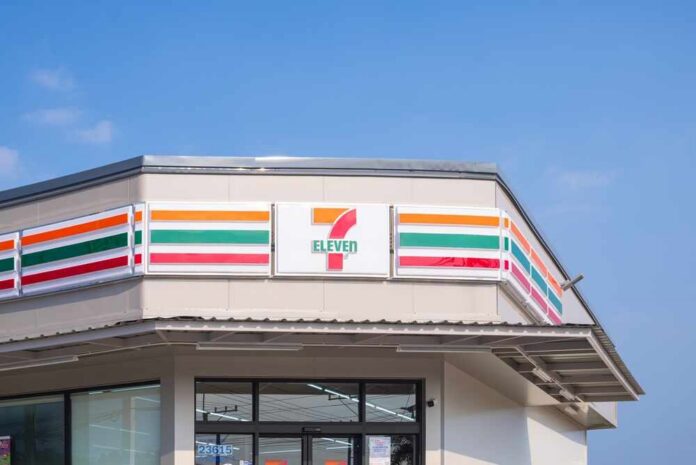
The most famous convenience store in America is quietly preparing to shut 645 doors so it can sell you dinner instead of cigarettes.
Story Snapshot
- Parent company Seven & i Holdings plans to close or convert 645 North American 7-Eleven stores in fiscal 2026.
- The chain is shifting hard toward larger, food-focused stores and away from small fuel-and-cigarette outposts.
- Falling cigarette sales, higher operating costs, and weaker traffic are driving the move.
- Hundreds of locations will be converted into wholesale fuel sites or franchises rather than remaining company-run.
645 store closures are a pivot, not a death notice
Seven & i Holdings, the Japanese owner of 7-Eleven, has confirmed that 645 North American convenience stores will be removed from its count during fiscal 2026, which runs from March 1, 2026 to February 28, 2027.
This is not a random slash-and-burn. It is a planned reset of the business before a possible stock market listing of the North American arm. The company will also open about 205 new stores in the same period, but those will look very different from your old corner 7-Eleven.
7-ELEVEN TO CLOSE HUNDREDS OF U.S. STORES: Convenience store giant 7-Eleven plans to close hundreds of locations across the United States as part of a sweeping restructuring effort.
Full Story: https://t.co/MHACg6KY6t pic.twitter.com/KSbftxLiKD
— The Dallas Express News (@DallasExpress) July 19, 2026
Company filings and follow-up reporting show how the 645 sites break down. About 200 stores will close due to underperformance. Another 350 will be converted into wholesale fuel locations, where outside operators run the pumps and basic retail operations instead of 7-Eleven itself.
The remaining 95 are expected to close for other business reasons such as contract endings or franchise terminations. So “645 closures” means a mix of shutdowns and quiet conversions, not 645 boarded-up buildings overnight.
The Food Forward model: trading Marlboros for meatballs
The closures are tied directly to a new “food forward” strategy. 7-Eleven wants fewer tiny boxes and more large, bright stores that feel more like fast-casual restaurants with attached gas pumps.
Prepared meals, fresh food, and better coffee are the center of this model, not lottery tickets and cigarette racks. Internal numbers and outside analysis show why.
Fuel is still about 65 percent of sales but only around 11 percent of gross profit, while foodservice has grown to roughly 30 percent of in-store sales and carries much richer margins.
In simple terms, gas brings people in but does not make much money. Food does. That is why 7-Eleven plans to remodel over 7,000 North American stores with upgraded equipment and new layouts that spotlight fresh and prepared items.
Chains like Wawa, Sheetz, and Buc-ee’s proved that Americans will happily buy real meals at “gas stations” if the food is good and the store feels safe and modern. 7-Eleven, the original convenience icon, is late to that game and is now racing to catch up before rival formats lock in the next generation of customers.
Declining cigarettes, rising costs, and the squeeze on old stores
Older 7-Eleven stores were built around a different consumer. Cigarettes, soda, and snack sales carried the economics of many small sites. That world is fading.
Smoking rates are down, and the company has seen cigarette sales fall sharply since 2019, a drop that hits revenue from legacy locations hardest.
At the same time, labor costs, insurance, security, and rent have climbed, especially in dense urban markets. The parent company has bluntly described many North American stores as having “higher costs than competitors.”
When you mix weaker traffic, lower tobacco sales, and higher costs, you get bad unit economics. That is corporate speak for “this store does not pay its bills.”
Rather than keep thousands of tiny outlets limping along, 7-Eleven is doing what many large chains are doing in 2026: closing or converting low-return units and funneling capital into modern formats. This matches a broader wave of retail consolidation in which brands like GameStop and Jack in the Box are pruning store counts while investors push them to show real profits instead of just big footprints.
Wholesale fuel and franchises: less risk, more control
One of the less noticed changes in this plan is the push toward wholesale fuel operations. When a company-owned store becomes a wholesale fuel site, 7-Eleven often keeps supply and branding but sheds the direct burden of wages, shrink, and day-to-day headaches.
Independent operators assume local risk, while the corporation focuses on fuel supply and brand standards. Company filings show there were already more than 900 wholesale fuel locations in North America by the end of 2025.
Seven & i Holdings (parent of 7‑Eleven North America) is executing a major reshaping of its U.S. store footprint in fiscal year 2026. An earlier filing said 645 7‑Eleven stores would be closed; the company’s latest quarterly presentation broke that down: plans to permanently c…
— MarketMoodz Sentinel (@MM_Sentinel) July 20, 2026
Alongside wholesale, 7-Eleven continues a long-running effort to convert more locations into franchises. It shifts risk and responsibility closer to the local level, opens doors for entrepreneurs, and lets the parent company focus on strategy and systems.
Critics argue that franchise conversions can also be used to push out existing operators who invested years of work, especially when terms are strict.
But in the United States, courts have recently upheld 7-Eleven’s franchise framework against major legal challenges, which supports the company’s view that these contracts are lawful and enforceable.
Who feels the pain when local stores go dark
The human impact of these 645 changes is the biggest unanswered piece of the story. The company has not disclosed how many jobs will be lost or shifted into franchise or wholesale roles. That silence invites speculation.
What we do know from broader research is that store closures tend to hit working-class areas hardest, reduce competition, and can nudge fuel and basic goods prices higher.
For families who depend on a nearby 7-Eleven for late-night basics, “portfolio optimization” is not a buzzword. It is a darkened corner on the way home.
Australian franchisees have described 7-Eleven’s handling of similar restructurings there as “theft” and “absolute rip-off,” and their stories of forced sales and blocked deals raise real questions about how much power big brands should wield over small operators.
Those cases do not directly refute the financial logic of closing underperforming U.S. stores, and no independent audit has emerged to prove the 645 locations are secretly healthy.
But they do highlight a tension that matters: a company can be financially rational and still treat people poorly. The facts on closures are clear; the verdict on fairness depends on what 7-Eleven reveals next about jobs, local impact, and how it handles the owners on the other side of those locked doors.
Sources:
foxbusiness.com, finance.yahoo.com, nypost.com, govinfo.gov, abc.net.au, bostonbar.org, seyfarth.com, vettedbiz.com, academic.oup.com