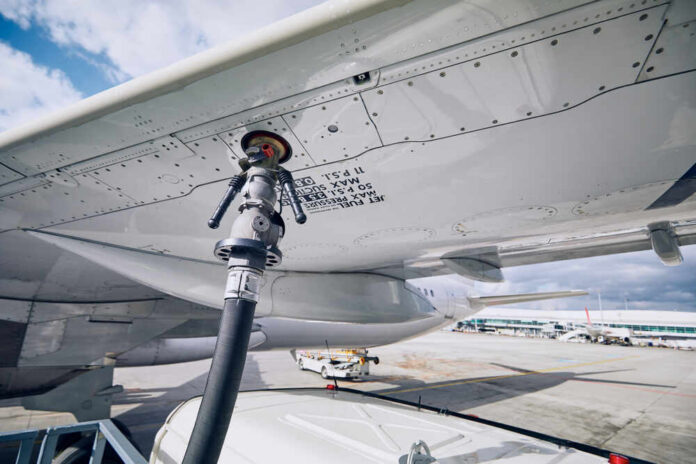
Americans planning spring and summer trips are about to get hit with fast-rising airfares as the Iran war drives jet-fuel prices sharply higher.
Quick Take
- United Airlines CEO Scott Kirby said higher fuel costs will likely push ticket prices up “quick,” with a meaningful hit to airline finances this quarter.
- Jet fuel surged from about $2.50 per gallon before the conflict to roughly $3.88–$3.95 per gallon after the war began—about a 50%–56% jump.
- Oil benchmarks jumped to around $91–$92 per barrel as markets reacted to Middle East disruption risks tied to the Strait of Hormuz.
- Experts warned travelers to expect fare increases and possible added fees or surcharges, especially on longer international routes.
United’s CEO: Fuel Shock Will Reach Your Wallet Fast
Scott Kirby, United Airlines’ CEO, told an industry audience on March 5 that the airline is staring at a “meaningful” impact from the jet-fuel spike and that airfare increases will likely arrive quickly.
Airlines can’t absorb a sudden fuel jump of this size for long, especially when fuel represents a major operating cost. United later confirmed the surge would affect travelers, signaling that pricing changes could start showing up in near-term bookings.
The numbers behind the warning are straightforward. Jet fuel was near $2.50 per gallon in late February, before the conflict escalated, and then leapt to about $3.95 per gallon after the war began.
Reports the next day put jet fuel near $3.88 per gallon, still roughly 50% higher week over week. That kind of spike tends to move through airline pricing systems rapidly, because carriers update fares frequently as costs and demand shift.
War Disruption, Strait of Hormuz Risk, and Oil’s Rapid Climb
Energy markets reacted as the U.S.-Israel strike on Iran triggered open conflict and raised fears of broader disruptions. The Strait of Hormuz matters because it is a critical chokepoint for global energy flows, and any sustained threat there tends to push crude prices higher.
By March 6, West Texas Intermediate crude was reported up about 11% to roughly $91 per barrel, while Brent crude approached about $92.47 per barrel, reinforcing the fuel-cost pressure facing airlines.
Plane ticket prices likely to soar as Iran war brings huge fuel price surge: United CEO says impact will 'probably start quick' https://t.co/LMe1ngfl8r pic.twitter.com/3GkXx6Ej5L
— New York Post (@nypost) March 7, 2026
The conflict also disrupted aviation operations across the region. Reports described more than 20,000 flights canceled in the Middle East, forcing reroutes, longer flight times, and additional fuel burn—exactly the kind of compounding effect that drives costs up even further.
For U.S. travelers, that can translate into higher base fares, new surcharges on certain routes, and fewer discount seats as airlines protect margins and manage operational uncertainty.
What Fare Hikes Could Look Like for Families and Retirees
Industry analysts warned that even modest per-ticket increases add up quickly for households, especially for family travel and fixed-income retirees budgeting months ahead. One estimate cited fare increases in the range of a few dollars up to around $10, depending on route and timing, with the potential for additional fees.
Reports also suggested premium cabins could see sharper increases, a sign airlines may try to capture revenue where demand is less price-sensitive.
Budget carriers are not immune, either. Low-cost airlines rely on lean margins and high aircraft utilization, so abrupt fuel spikes can squeeze them hard.
When carriers face that kind of cost shock, they typically respond through a mix of fare increases, tighter seat availability at the lowest price points, and selective schedule adjustments. Travelers who remember how quickly prices moved after earlier global shocks will recognize the pattern: the “deal” inventory disappears first.
Inflation Pressure Meets a Travel Market That Can’t Ignore Fuel Reality
For many conservative Americans, this story lands in a familiar place: everyday costs rising because global instability hits energy first, and energy hits everything else next. If the conflict drags on for weeks or months, experts cautioned that supply-chain effects could compound inflationary pressure beyond airfare alone.
Airlines also face operational costs tied to rerouting and disruptions, and ratings analysts have emphasized that the duration of the conflict is a key variable in how severe the revenue and cost impacts become.
Practical advice in the coverage focused on flexibility and watching price changes closely. Travel agents urged flyers to consider flexible bookings and to monitor frequent adjustments, because fares can change multiple times per day as airlines respond to fuel costs and capacity constraints.
For travelers trying to protect family budgets, the core takeaway is simple: when jet fuel jumps this much this fast, the airline industry passes those costs through, and the consumer feels it at checkout.
Sources:
Iran conflict: Higher fuel prices could mean plane ticket additional fees, expert says
Iran war: Experts warn airfares may increase as jet fuel prices surge
Iran war drives up oil prices and could soon lead to higher airfares, United CEO says
Oil and gas prices rapidly rise as Iran war shows no signs of letting up