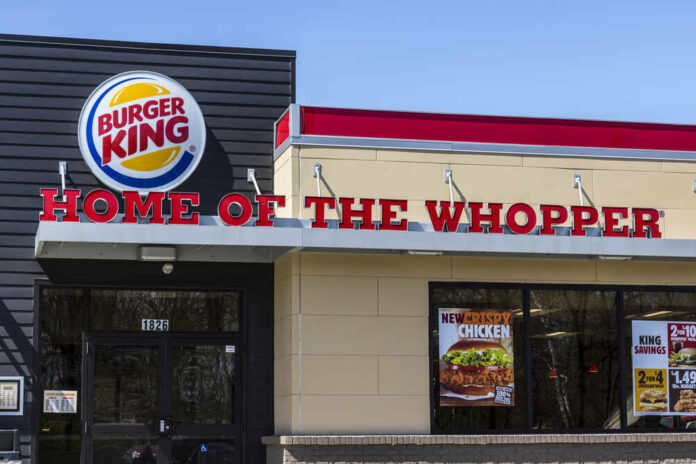
Wendy’s lost a bragging right it held for six years, and Burger King took it back with sales momentum that finally made the numbers match the noise.
Quick Take
- Burger King is again the second-largest burger chain in the United States by systemwide sales.
- The shift came after Burger King’s turnaround and Wendy’s six straight quarters of domestic same-store sales declines.
- Reporting placed Burger King’s second-quarter system sales at $3.2 billion and Wendy’s at $2.9 billion.
- McDonald’s still leads the category by a wide margin.
The Rank Flip That Ended Wendy’s Run
Burger King’s move into the No. 2 spot is a clean, simple story on the surface. CNBC reported that Burger King overtook Wendy’s in U.S. systemwide sales and called it a return to the second-largest burger chain for the first time in six years.
Nation’s Restaurant News put the second-quarter figures side by side, saying Burger King reached $3.2 billion in system sales while Wendy’s came in at $2.9 billion. That gap is enough to change the headline, even if it does not settle every metric question.
Burger King dethrones struggling Wendy's 6-year run as America's 2nd-largest burger chain https://t.co/vjjlNF61Ss pic.twitter.com/MnYCFGzRxs
— New York Post (@nypost) August 10, 2026
The change did not happen in a vacuum. Burger King’s sales have been climbing for several quarters, and CNBC said U.S. same-store sales rose 8.5% in the second quarter.
TheStreet also described five straight quarters of U.S. same-store sales growth, which matters because sustained growth usually signals more than a one-off bounce.
Burger King’s parent company has leaned hard into a turnaround story, and the latest ranking gives that story a sharp, easy-to-understand payoff.
Why Wendy’s Slid Out of Second Place
Wendy’s problem was not one bad quarter. CNBC said the chain had reported shrinking U.S. same-store sales for six straight quarters, including a 7% drop in the latest quarter.
Nation’s Restaurant News added more weight to that decline, saying Wendy’s system sales fell 8.2% in the second quarter and that traffic dropped 12.5%.
MarketWatch and other outlets framed the slide the same way: Wendy’s lost ground because the brand kept losing momentum while rivals moved the other way.
Those numbers matter because restaurant rankings often hinge on tiny shifts in sales and store mix. A chain can fall behind another one without collapsing in public view.
That is what makes this story interesting: Wendy’s is not disappearing, but it is clearly running in the wrong direction while Burger King has found its stride. For readers used to thinking of burger wars as static, this is a reminder that the middle of the pack can move fast.
The Bigger Meaning Behind the Headline
This ranking flip is stronger as a sales story than as a full market audit. The available reports agree on the direction of travel, but they do not lay out every detail of the systemwide-sales method in one primary source.
That leaves some room for argument about what exactly is included in the comparison. Even so, the broad conclusion is hard to miss: Burger King is gaining, Wendy’s is losing, and the No. 2 slot followed the trend rather than the other way around.
For Burger King, the timing is useful. A return to second place helps a turnaround look real, not rhetorical. It gives franchisees, investors, and executives a simple proof point they can point to when they talk about momentum.
For Wendy’s, the blow is symbolic as well as financial. Losing the spot adds another public sign that the brand still has work to do, and that the fixes cannot wait for a better quarter.
The cleanest reading is also the most common one in the coverage: Burger King’s rise and Wendy’s slide met at the same moment, and the rankings changed because the numbers said they should.
Fox Business, TheStreet, TipRanks, and CNBC all echoed the same basic result, which suggests the market has already accepted the shift as the new order. The only real question now is whether Burger King can stay there long enough to make this feel like a reset instead of a brief handoff.
Sources:
foxbusiness.com, nrn.com, marketwatch.com, cnbc.com, finance.yahoo.com, thestreet.com, en.oninvest.com