
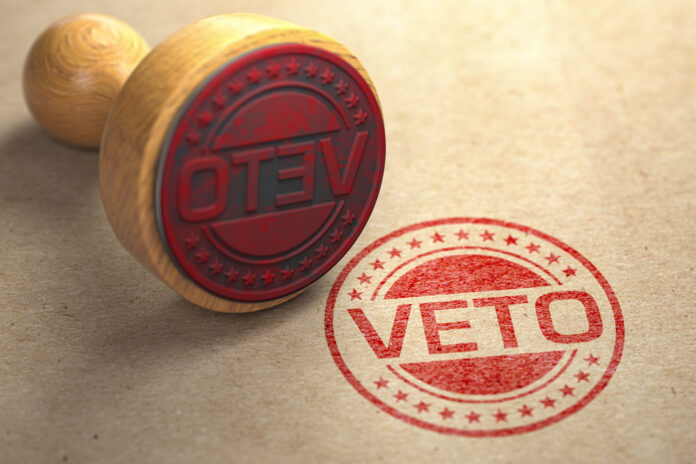
Trump says he can force Democrats to the table with one blunt tool: the veto.
Story Snapshot
- Trump pledged to veto Democratic bills and use the standoff to cut deals.
- The Constitution makes a veto hard to override without two-thirds votes.
- Gridlock can be leverage; Trump says “veto, veto, veto” leads to talks.
- Democrats may answer with must-pass spending bills to gain leverage.
Trump’s Plan: Use The Veto To Set The Price Of A Deal
President Trump told voters he would “probably become Mr. Veto” if Democrats win Congress. He laid out a simple loop: Democrats pass bills, he vetoes, then they negotiate after a few rounds of dead ends. He described the path as “veto, veto, veto,” then a deal once the pain of wasted floor time sets in. This is not a mystery tactic. It is the presidency’s brake pedal, pressed hard to define what is acceptable on spending, borders, energy, and national security.
That threat only works because the Constitution gives presidents a strong backstop. Article I, Section 7 says a vetoed bill does not become law unless two-thirds of both chambers vote to override after reconsidering it. The Congressional Research Service explains that most bills need a simple majority, but overrides demand a supermajority, which is rare in a polarized Congress. A Democratic majority short of two-thirds cannot pass its wish list over a determined president.
Why The Math Favors A Hard-Nosed Bargain
Congress almost never musters enough votes to beat a veto. Since the founding, overrides have occurred in only a small fraction of cases, which is why the veto remains one of the most reliable tools any president has to stop bad bills cold. That base rate matters. If Democrats lack two-thirds in either chamber, their path goes through the Oval Office. Trump’s read is straightforward: block first, then demand policy concessions in return for a signature.
Conservatives should see the appeal. The veto can wall off tax hikes, open-border riders, and green mandates while steering talks toward border security, energy abundance, and peace through strength. It pushes Congress to put real trade-offs on paper. If leaders want something signed, they must include something the White House can accept. That is not brinkmanship for its own sake. That is how leverage creates clarity in divided government.
Where The Friction Will Move: Spending Deadlines And Must-Pass Bills
Democratic strategists are not blind to this. Some argue they should still pass messaging bills and build pressure, but they also point to the real leverage point: spending. Keeping the government open still needs a bill the president will sign. That means annual funding and related vehicles become the main battlefield. Expect Democrats to attach policy asks to appropriations. Expect Trump to rip them out or demand offsets before he inks the deal.
🚨 BREAKING: President Trump announces his plans if Democrats win the midterms
"I'll become — MR. VETO."
"They will send stuff up?"
"And I'll VETO IT."
"But hopefully, we don't have to worry about that!" 🔥
Vote red anyway so it doesn't happen!
A Democrat House means two… pic.twitter.com/q7PgoCaqfu
— Eric Daugherty (@EricLDaugh) November 1, 2026
This is where Trump’s vow meets reality. A promise to “veto everything” sounds absolute, yet he also says deals will follow. Both can be true if the White House separates ideological bills from the few must-pass items. The test is discipline. Use vetoes to stop partisan packages. Use negotiations on deadlines to secure concrete wins—border enforcement, permitting reform, pro-growth tax clarity, and defense priorities. That play honors common-sense limits and conservative goals.
The Limits And The Upside, Stated Plainly
Vetoes block laws; they do not pass the president’s own bills. Trump’s plan protects the status quo from a leftward lurch, but it needs swaps to move policy forward. The facts support the defensive power of the veto far more than any guarantee that Democrats will fold after “a month or two”. But defense matters. Stopping bad law in a storm is not nothing. It buys time, channels urgency, and sets the price of admission for any bipartisan deal.
How This Likely Plays Out If Democrats Win
Expect a surge of partisan bills sent to the White House, followed by vetoes. Expect Democrats to pivot to spending bills loaded with policy riders. Expect the White House to strip those riders, demand border and energy provisions, and force narrower compromises. Overrides will be long shots due to the two-thirds hurdle. The outcome is messy but legible: fewer sweeping laws, more targeted trades, and a governing center pulled right by a credible veto threat.
Sources:
nypost.com, bloomberg.com, senate.gov, constitution.congress.gov, congress.gov, archives.gov, forbes.com, politicalwire.com, thestatesman.com