A security guard survived 8 days buried alive under a collapsed shopping mall in Venezuela — kept breathing through a rubber tube while seven nations raced to dig him out.
Story Snapshot
- Hernan Alberto Gil Flores, a 43-year-old security guard, was pulled alive from rubble 8 days after twin earthquakes struck Venezuela on June 24, 2026.
- His small security booth in the mall basement created a survivable air pocket that shielded him from crushing debris.
- Rescue teams from seven countries worked more than 100 hours to reach him, using cameras, oxygen tubes, and water hoses to keep him alive.
- He emerged conscious, able to move his arm, and was transferred to a hospital in good condition.
The Moment Two Earthquakes Changed Everything
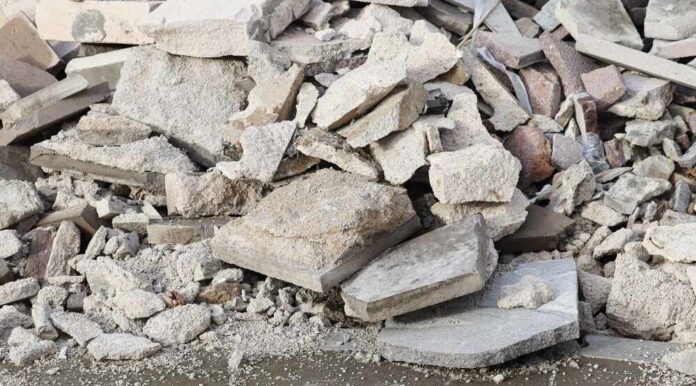
On June 24, 2026, two massive earthquakes — measuring 7.2 and 7.5 in magnitude — struck Venezuela within hours of each other. The Galerias Playa Grande shopping center in La Guaira collapsed. Most people inside had no chance.
But deep in the basement, Gil Flores was on duty at his security post when the building came down around him. He did not die. And that fact alone set off one of the most remarkable rescue missions in recent memory.
The earthquakes killed more than 2,000 people and left roughly 50,000 others still missing. In that kind of disaster, finding one man alive after eight days sounds impossible. But survival science says otherwise.
Medical research across 34 major earthquake events shows that rescues beyond 48 hours happen regularly, and verified survival has stretched as long as 14 days in extreme cases. Gil Flores was not a miracle. He was a man in the right spot at the right moment — and the right people came for him.
Why the Security Booth Saved His Life
The small cabin where Gil Flores worked became his lifeline. When the building fell, that reinforced booth held. It did not crush him. It created what earthquake survival experts call a “survivable void space” — a debris-free pocket that keeps a trapped person from being buried under direct weight.
Staying still in that space was critical too. A motionless body needs far less water than one that is active, which is why people can survive days longer than most expect. Gil Flores stayed calm. He stayed put. That discipline kept him alive.
A security guard was pulled out of the rubble alive on Thursday, more than one week after twin earthquakes devastated Venezuela. Rescuers first made contact with the man four days ago and fed him through a syringe as they worked tirelessly to free him. @CamiloReports has more… pic.twitter.com/T5BUhH9DNl
— CBS Evening News with Tony Dokoupil (@CBSEveningNews) July 3, 2026
Seven Nations, One Mission, Over 100 Hours of Work
Chile’s fire brigade led the rescue operation, coordinating teams from the United States, Portugal, Mexico, Costa Rica, El Salvador, and Venezuela. Together they worked for more than 100 hours to reach one man. Rescuers used a telescopic camera to see him and speak with him. They threaded a hose through the rubble to deliver water.
They pushed an oxygen tube into the debris to keep his air supply steady. The operation was precise, patient, and relentless. El Salvador sent specialists despite ongoing political tensions with Venezuela — a detail that says something real about what human beings will do for a stranger in crisis.
“Hernán, I need you to look at the camera”: follow the rescue of the survivor holding on beneath the rubble in Venezuela
The footage, recorded from an opening amidst the debris, shows the Venezuelan security guard—conscious but with an eye injury—as a hundred experts from various… pic.twitter.com/x4L1aJI5GG— VIVERO del bosque (@viverodelbosque) July 2, 2026
When Gil Flores finally came out, he was conscious and could move his arm. He was taken directly to a hospital and listed in good condition.
His first reported words — “Don’t tell my wife” — spread across social media within hours, turning a technical rescue into a human story the whole world wanted to share. That instinct to protect his family, even after 8 days in the dark, says everything about the man who survived.
What the “Miracle” Label Gets Wrong
Nearly every major outlet called this a miracle. CNN used the word. So did the Christian Post, Instagram accounts, and TikTok videos. The emotional pull is understandable — but the miracle framing does a disservice to the teams who made it happen.
This rescue worked because trained professionals from seven countries showed up with the right tools and refused to quit. Calling it a miracle lets everyone off the hook. The real story is operational excellence under the worst possible conditions, and that story deserves to be told straight.
A Disaster Still Far From Over
The rescue of one man should not overshadow what Venezuela still faces. More than 2,000 confirmed deaths. Around 20,000 people displaced. Roughly 50,000 still missing. Reports describe a shortage of fuel that has left heavy machinery, including cranes, sitting idle — a stunning failure in a country that sits on the world’s largest oil reserves.
Bob Kitchen of the International Rescue Committee noted that humanitarian funding had already been cut in the year before the disaster, leaving response systems weakened before the first tremor hit. One rescue, however extraordinary, does not fix a broken system.
Sources:
apnews.com, timesofindia.indiatimes.com, instagram.com, dw.com, news.un.org, youtube.com