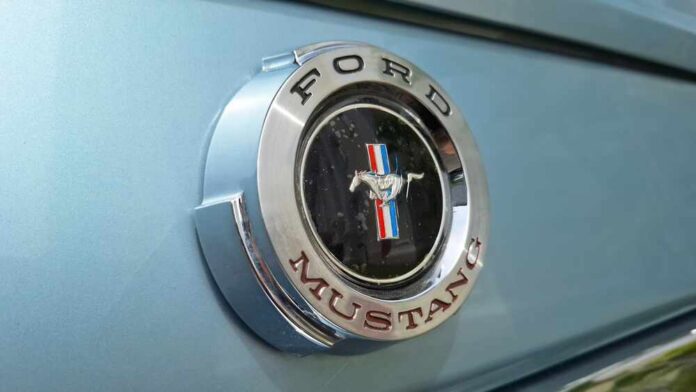
Ford just admitted that more than 110,000 modern Mustangs left the factory with defects that could rob you of vision or power at the worst possible moment.
Story Snapshot
- Over 110,000 Mustang, Mustang GTD, and Mustang Mach-E vehicles are subject to two separate safety recalls.
- One defect can cripple your windshield wipers and washer system in cold, wet weather.
- The other involves a rear drivetrain component that can break, killing power or causing the car to roll.
- Ford will repair affected cars free of charge, but regulators and the media say the company moved only under pressure.
Two recalls, one message about modern car safety
Ford told federal regulators it is recalling 110,626 Mustang vehicles because of two distinct safety problems that hit drivers where it hurts most: seeing the road and staying in control of the car.
The first recall covers 67,842 Mustang and Mustang GTD cars with windshield wipers that may only work at high speeds in cold weather, and washer systems that can fail when you need them.
The second recall targets 42,784 Mustang Mach-E sport utility vehicles in which a rear differential pinion shaft can fracture, cutting off drive power or allowing unintended movement.
Federal safety officials say both flaws raise the risk of a crash, either by blinding drivers in poor visibility or by reducing the vehicle’s stability.
Ford recalls over 110,000 Mustang vehicles over potentially dangerous defects https://t.co/5yNQfO89eh pic.twitter.com/K2sc2APnFv
— New York Post (@nypost) July 7, 2026
Ford’s official recall notice for the wiper problem points to something that may seem small but carries big consequences: a missing seal between the windshield wiper motor gear cover and the gear housing. That missing sealer allows water to get inside where it does not belong, especially when seams near the base of the windshield let moisture leak in.
Over time, that moisture can damage the motor and electronics, causing the wipers to behave erratically or fail, and the washer pump to give up as well.
Media reports focus on cold-weather use because ice, slush, and road grime demand constant wiping, and any sudden loss then can turn a safe drive into a white-knuckle slide.
What the drivetrain issue means for Mustang Mach-E owners
The separate recall for the Mustang Mach-E focuses on the rear differential pinion shaft, a part deep in the electric vehicle’s drivetrain that helps transfer power to the rear wheels.
Ford and federal regulators warn that this shaft can fracture under certain conditions, which might suddenly cut drive power while the vehicle is in motion or allow it to roll when parked if the parking pawl cannot hold as designed.
That risk matters in real-world terms: think about pulling into traffic, changing lanes on a highway, or parking on a sloped driveway. Any surprise loss of power or unintended roll is more than a nuisance; it is a direct safety threat that forces drivers and bystanders to react in seconds.
Ford’s remedy for both recalls sounds reassuring on paper. Dealers will inspect affected vehicles and repair or replace the faulty parts at no cost to owners.
For the wiper issue, that means swapping out the motor assembly and properly sealing the unit to keep water out going forward. For the Mach-E drivetrain problem, technicians will address the rear differential pinion shaft and related hardware to ensure they can withstand normal loads without fracturing.
This is how recalls should work: the company fixes its own mistakes, owners are not charged, and cars go back on the road safer than before. But the timing of these actions raises fair questions about whether Ford acted early or only responded when regulators leaned in.
Regulators led, Ford followed, and the media wrote the script
Reports on the recall stress that the National Highway Traffic Safety Administration, the federal safety watchdog, played the key role in opening investigations and pushing for action. That matters, because when a company steps up on its own, the story often becomes “proactive safety.” When a regulator has to nudge, or shove, the story shifts to “company caught off guard.”
Fox Business, the New York Post, and other outlets framed these defects as “potentially dangerous” and highlighted crash risks rather than engineering nuances.
That framing shapes how everyday owners see Ford: not as a proud builder of American muscle, but as a giant that needs a referee to do the right thing.
There is still a lot we do not know, and that gap should bother anyone who cares about accountability. Ford has not publicly shared internal quality-control logs showing when engineers first spotted the wiper-sealing problem or the pinion-shaft risk.
No named engineer or executive has stepped forward to explain how these parts passed testing and how long complaints had been accumulating before the recall.
Regulators and media outlets have not released clear numbers on how many drivers actually lost wipers in storms or experienced drivetrain failures on the road before Ford acted. Without those details, we see the size of the recall, but not the true scale of real-world harm or near misses.
What this means for owners and for trust in the Mustang badge
Recent history shows these recalls are not a fluke for the modern Mustang. Earlier campaigns have addressed lighting that could fail, seat belt anchors that might corrode, and other defects in both gas-powered and electric models.
Safety advocates point out that when these patterns recur, they signal deeper quality-control issues, not one-off supplier mistakes.
Ford recalls more than 110,000 Mustang vehicles over windshield wiper, drivetrain defects
Ford's 2 separate recalls affect Mustang, Mustang GTD and Mustang Mach-E vehiclesFord is recalling more than 110,000 vehicles in the U.S. across two separate safety campaigns after… pic.twitter.com/MkYD3dQQI9
— News News News (@NewsNew97351204) July 7, 2026
Owners, though, do not live in Ford’s boardroom or in a Washington agency. They live in the real world where a car is both a major purchase and a symbol.
The Mustang name still means freedom to many drivers, especially those who remember V8 rumble on open roads. That is why this recall cuts deeper than a simple trip to the dealer. When a car that stands for power and control is recalled because you might not see the road or keep it moving safely, trust takes a hit.
The smart move now is simple: check your vehicle identification number, schedule the free fix, and keep driving—but keep watching how often the Mustang name ends up in recall headlines. Companies earn back trust not with slogans, but with a track record of building machines that are safe the first time, not only after regulators call them out.
Sources:
foxbusiness.com, facebook.com, ford.com, butzel.com, motorsafety.org