The Trump administration is asking the Supreme Court to let a new federal election order reshape who gets a mail ballot before voters ever see a single envelope.
Story Snapshot
- President Trump’s 2026 executive order ties mail voting to federal citizenship lists and stricter ballot controls.
- The Justice Department now wants the Supreme Court to lift lower-court limits before the November midterms.
- Supporters call it common-sense election integrity; critics say it is illegal federal overreach that could block eligible voters.
- The fight tests how far a president can push federal power into what states see as their turf.
The executive order that lit the fuse
On March 31, 2026, President Trump signed an order titled “Ensuring Citizenship Verification and Integrity in Federal Elections,” aimed squarely at mail-in voting and voter eligibility for federal races.
The order tells the Department of Homeland Security and the Social Security Administration to build state-by-state lists of voting-age citizens, using federal data on citizenship, birth dates, and residence. States are expected to match these lists against their voter rolls and use them to decide who may get a mail ballot in federal elections.
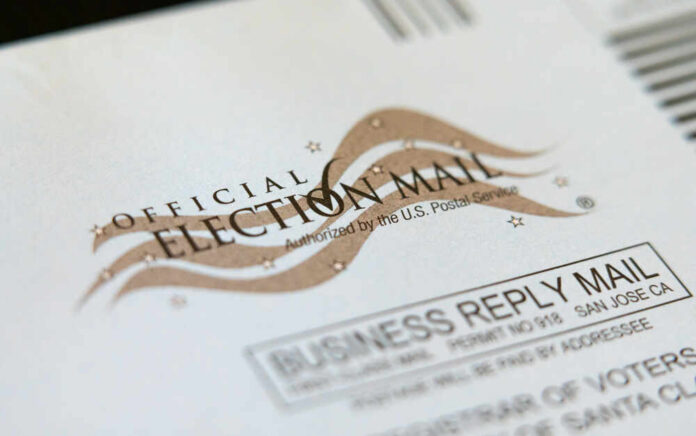
The order also pulls the United States Postal Service into a new gatekeeper role. It directs the Postal Service to send or process mail ballots only for voters who appear on “approved” lists supplied by states in advance.
In practice, that means if a voter is not on the federal-linked list, the ballot may never be mailed or delivered. The order further requires states to keep election records for five years, a move the administration frames as a way to allow deeper audits and fraud investigations.
How the administration defends the plan
Administration officials sell the order as basic election housekeeping: verify citizenship using the best nationwide data, then make sure mail ballots only go to those who are truly eligible. They argue that federal agencies are uniquely positioned to see cross-state moves, naturalizations, and immigration records, and can help states catch errors that local offices miss.
Justice Department lawyers have described the dispute as premature in some courts, stressing that agencies are still building systems and that final rules can be refined before votes are cast.
The Trump administration on Monday asked the Supreme Court to allow it to fully implement an executive order signed by President Donald Trump that seeks to impose additional restrictions on mail-in voting.https://t.co/ZKlX2ZorM5
— SCOTUSblog (@SCOTUSblog) July 27, 2026
The legal filings lean on broad constitutional phrases about guaranteeing a “republican form of government” and managing federal elections.
From a rule-of-law viewpoint, the core idea has appeal: national citizenship records should help keep noncitizens off federal voter rolls, and mail voting should not operate on an honor system. Supporters see a president using existing executive powers to tighten a system they believe is too loose and too vulnerable to abuse.
Why states and advocates are pushing back
Twenty-three states, the District of Columbia, and multiple voting-rights groups are suing to stop or narrow the order. Their main argument is simple and sharp: the Constitution gives states the primary power to run elections, set eligibility rules, and manage ballot procedures, and a president cannot rewrite those systems by executive order alone. They say the order tries to turn the Postal Service from a neutral carrier into an arbiter of who may vote by mail, and that crosses a line.
Critics also attack the data behind the plan. Legal filings and policy analyses say federal immigration and Social Security records were never designed to act as a master voter list and have “well-documented accuracy issues,” including outdated status flags and missing records for naturalized citizens.
Justice Department lawyers have admitted in court that the planned citizenship lists will be incomplete, which means some eligible voters will not appear. From a common-sense standpoint, this is the biggest red flag: when government knows its list is wrong, using that list to decide who gets a ballot is risky at best.
Court battles and the sprint toward the midterms
The order’s path through the courts has been messy. One federal judge refused an early request to block the order nationwide, agreeing with the administration that it was too soon to judge full effects while agencies were still drafting rules.
That ruling gave the White House a short-term win and allowed some implementation work to continue in states that did not yet have injunctions. But it did not bless the order as constitutional; it only said challengers jumped the gun.
Later cases cut the other way. A federal appeals court and other judges have blocked key parts of the Postal Service rule in dozens of states, finding that the order likely clashes with state ma
il-voting laws and could illegally deny ballots to eligible voters.
These rulings feed a public sense that the policy rests on shaky ground. They also create a patchwork map: some states operate under the order’s rules, some do not, and all of this is unfolding with midterm primaries already underway and November looming.
The Supreme Court’s role and what is at stake
The Trump administration has now gone to the Supreme Court, asking the justices to lift those lower-court blocks and let the order operate fully before the midterms.
If the Court grants that request, federal citizenship lists and Postal Service ballot filters could shape who gets a mail ballot in much of the country within months. If the Court refuses, the president’s vision for a more centralized, federally guided mail-voting system might stall for this election cycle and possibly longer.
This case sits inside a bigger, long-running clash over elections: should Washington set firm national guardrails in the name of integrity, or should states keep wide freedom to tailor voting rules, even if that sometimes means looser controls?
Many voters want tighter checks on citizenship and mail ballots, but they also distrust big federal systems that can misfire and block law-abiding citizens.
Sources:
apnews.com, abcnews.com, aclum.org, scotusblog.com, votingaccessforall.org, npr.org, washingtonpost.com, bipartisanpolicy.org, reuters.com, issueone.org, archive.org, whitehouse.gov