The Supreme Court’s quiet refusal to touch President Trump’s E. Jean Carroll verdict tells you everything about where the real power sits now: not in tweets, but in juries and judges who are done looking the other way.
Story Snapshot
- Federal jury found Trump liable for sexually abusing and defaming E. Jean Carroll, awarding $5 million.
- Appeals court upheld the verdict and the use of other-accuser testimony and the Access Hollywood tape.
- Supreme Court refused to hear Trump’s appeal, leaving the judgment and the “sexual abuser” label in place.
- The case shows how defamation law can hold powerful public figures accountable even decades after alleged abuse.
The verdict that locked in a damaging label
A New York federal jury heard E. Jean Carroll’s story of a 1996 encounter at Bergdorf Goodman and decided Donald Trump crossed the line from crude flirting into sexual abuse and defamation. Carroll said Trump pinned her in a dressing room, forced kisses, and digitally penetrated her as she tried to fight him off.
Jurors did not find rape under New York’s narrow criminal definition, but they did find sexual abuse and forcible touching and awarded $5 million in damages. That verdict did more than cost Trump money. It gave Carroll, and the public, a legal finding that a president sexually abused a woman and then lied about it with malice.[1][4]
Trump chose not to show up at the civil trial. Jurors saw Carroll, other accusers, and the infamous Access Hollywood recording where Trump bragged about grabbing women “by the genitals” without consent. His lawyers attacked the case from the sidelines, calling it a political hit and arguing the evidence was stacked to make him look like a serial predator.
Many notice a simple, concrete fact: the jury still had to apply real legal standards, not feelings. They saw a pattern of behavior, weighed credibility, and ruled that Carroll met the burden of proof for sexual abuse and defamation in a courtroom, not on cable news.[1][5]
How judges translated a messy story into legal truth
After the verdict, Trump’s team moved to chip away at the result. They claimed the damages were excessive and the evidence unfair. Judge Lewis A. Kaplan went through the record and rejected that claim, explaining that the award was supported by testimony about Carroll’s physical and emotional trauma.
He also held that her description of rape was “substantially true” under the everyday meaning of the word, even if it did not match New York’s technical statute. From a rule-of-law standpoint, that matters.
The judge did not invent a new narrative; he anchored his reasoning in the jury’s finding that Trump forcibly penetrated Carroll with his fingers and in long-standing defamation standards.[4]
President Donald Trump said he will continue fighting what he called a fake case after the Supreme Court declined to hear his appeal of a $5 million civil judgment in favor of writer E. Jean Carroll. https://t.co/rQYRblYY1y
— NEWSMAX (@NEWSMAX) June 29, 2026
On appeal, Trump’s lawyers pressed a different angle. They argued that letting two other women testify about alleged assaults and playing the Access Hollywood tape turned the trial into a character assassination. The United States Court of Appeals for the Second Circuit was not persuaded.
It held the evidence fit within rules that allow prior sexual misconduct in sexual assault cases and that any possible error did not affect Trump’s substantial rights. Their message, boiled down, was this: you cannot call every unfavorable ruling “bias.”
Here, judges said the rules were followed and the jury’s reasoning stayed within the lane of accepted law.[5]
What the Supreme Court’s silence really says
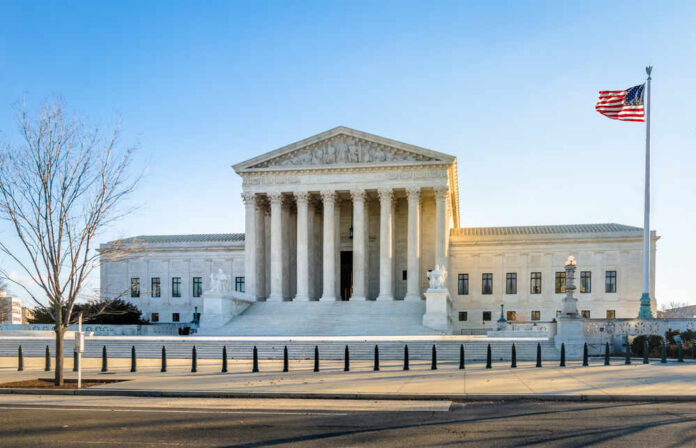
The last stop was the United States Supreme Court. Trump asked the justices to review the Second Circuit’s decision, warning that the case opened the door for “propensity” evidence to swamp fair trials. On June 29, the Court simply declined to take the case. No opinion. No breakdown.
Just a one-line order letting the $5 million verdict stand. For someone used to dominating the news cycle, that kind of institutional silence is brutal. It means at least four justices did not see a big constitutional question worth their time.[3][6]
From a common-sense perspective, this is where the Carroll saga hits larger concerns. Many worry about weaponized courts and politically charged cases.
That concern is real. But here, three different levels of federal courts looked at the same facts and applied old-school standards: evidence rules, jury deference, the actual malice requirement in defamation, and the high bar for Supreme Court review.
The system did not say Trump is guilty of every accusation ever thrown at him. It said, in this specific case, with this specific record, Carroll proved sexual abuse and defamation well enough to survive every legal test.[4][5][15][16][17]
Defamation as the back door to accountability
The deeper story is how defamation law has become the main way to address alleged sexual misconduct by powerful men when criminal charges are off the table. Statutes of limitation and lack of physical evidence often block prosecution decades later. Defamation suits flip the script.
When a public figure calls an accuser a liar, the accuser can force a courtroom test of who is telling the truth, but only if they prove actual malice. Carroll did that.
The jury found Trump’s 2022 social media denial was not a simple disagreement. It was a false statement made with reckless disregard for the truth that damaged her reputation.[4][5][14][15][16][17][21]
That standard protects rough political talk while punishing targeted false attacks. It also puts responsibility where many argue it belongs: on the individual speaker, not on vague “systems.” Trump is free to keep saying the case is a hoax.
The courts, speaking through verdicts and orders, have answered back with something more durable than a post: a final judgment that can be enforced.
Sources:
[1] Web – Supreme Court rejects Trump’s push to toss $5 million verdict in E. …
[3] Web – Supreme Court Lets $5 Million Sex Abuse Verdict Against Trump …
[4] Web – E. Jean Carroll v. Donald J. Trump – Wikipedia
[5] Web – Judge clarifies: Yes, Trump was found to have raped E. Jean Carroll
[6] Web – CARROLL v. TRUMP (2023) – FindLaw Caselaw
[14] Web – The Supreme Court declined to hear President Donald Trump’s …
[15] Web – Defamation – First Amendment Watch
[16] Web – Public Officials in Defamation Legal Claims – Justia
[17] Web – Defamation of a Public Figure vs. Private Figure
[21] Web – Defamation Law for Public Figures and Politicians – Facebook