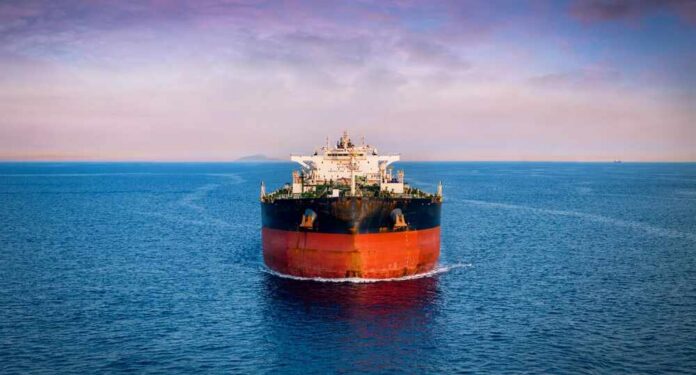
Oil did not just creep past $90 a barrel — it jumped there on a wave of missiles, burning tankers, and a showdown over one narrow strip of water that carries a fifth of the world’s oil.
Story Snapshot
- U.S. crude and Brent oil have spiked above $90 as war with Iran hits shipping lanes.
- Repeated U.S. strikes target Iranian forces that Central Command says are attacking commercial vessels.
- Tanker attacks off Saudi Arabia and turmoil in the Strait of Hormuz are choking global oil flows.
- Investors now talk openly about $100 oil and renewed inflation pressure around the world.
Oil prices jump as war at sea spills into your wallet
U.S. crude oil just closed above $90 a barrel for the first time in years, and it did not happen quietly. West Texas Intermediate, the main American benchmark, has surged more than 12 percent in a single day and over 35 percent in a week in some recent trading, the largest weekly jump on record since futures began in 1983.
Brent crude, the main global benchmark, has been trading in the low to upper $90s after fresh attacks and military strikes rattled traders.
Oil nears $100 a barrel after Houthis claim strikes on Saudi Arabian tankers https://t.co/Mrdb0AKjZZ
— MarketWatch (@MarketWatch) July 23, 2026
This spike ties directly to the shooting war between the United States and Iran and a string of attacks on tankers near Saudi Arabia and in the Strait of Hormuz.
Reporters and traders link each fresh round of strikes to another leg higher in crude prices, as markets suddenly re-price the risk that oil supplies through the Gulf could be disrupted for weeks or longer. That kind of fear premium gets baked into every barrel, fast.
Strait of Hormuz: one narrow choke point, huge global risk
The Strait of Hormuz is a narrow waterway that connects the Persian Gulf to the open ocean, and it carries roughly 20 percent of global oil supply.
With tanker traffic slowed or halted after Iranian attacks and U.S. retaliation, about 140 million barrels of oil were stuck for roughly a week in one recent shutdown, equal to about 1.4 days of world demand. When you choke off flows in a system that tight, prices do not drift; they jump.
Iran has asserted control over shipping in and around Hormuz, while U.S. forces insist the strait must stay open to civilian mariners and commercial vessels.
Central Command describes repeated strikes on Iranian coastal surveillance systems, fast attack boats, missile sites, and drone storage facilities as necessary to protect tankers and cargo ships. From a security-first view, letting a hostile regime freely threaten shipping in that chokepoint is simply not acceptable.
U.S. strikes framed as defense of civilian shipping
U.S. Central Command has been blunt: American forces are striking Iran “to degrade” its ability to attack commercial vessels and civilian mariners transiting the Strait of Hormuz.
In official statements, the targets include military command centers, air defense and coastal radar sites, missile and drone launch facilities, and fleets of small boats that can swarm tankers. These operations are presented as direct responses to Iranian attacks on tankers and cargo ships that were operating in international waters.
This framing fits values of protecting free commerce and deterring aggression. A basic rule of thumb says: when a regime uses drones and naval units to hit civilian shipping, you impose high costs until it stops.
That is exactly how Central Command describes the mission, stressing the goal of making it too painful for Iran to keep targeting commercial vessels. There is no hint in mainstream reporting that these facts are in serious dispute.
Tankers struck, markets on edge, inflation fears rising
Attacks on oil tankers off Saudi Arabia and throughout the Gulf region have turned a regional conflict into a global pocketbook issue.
News that three tankers were hit in or near the Strait of Hormuz triggered “powerful” U.S. strikes on more than 80 Iranian targets, including over 60 small boats and key radar systems used to threaten vessels. Each hit on a tanker means lost cargo now and higher risk priced into every future voyage.
Investors have responded by pushing both U.S. and Brent crude above $90 and, at times, toward the upper $90s. Analysts warn that if fighting escalates or the strait remains partially closed, triple-digit oil prices are “not that far” away.
That would not stay confined to the energy sector. Higher crude costs flow straight into gasoline prices, shipping bills, airline tickets, and food costs, reigniting inflation at a time when central banks have already raised interest rates sharply.
What this standoff means for energy security and policy
The clash over Hormuz is not just another headline about faraway ships. It reveals how fragile the global energy system remains when so much supply depends on one contested route.
For decades, conservatives have argued that U.S. power must keep key sea lanes open and that relying on hostile or unstable regions for vital resources brings real danger. The current crisis is a living case study.
Central Command’s campaign also highlights a pattern: quick military action to defend commercial traffic, with slower and more limited public evidence about each attack’s details.
Responsible citizens can support firm defense of civilian shipping while still demanding transparency about war aims and endgames. But as long as Iran or its partners fire on tankers and cargo ships, expect U.S. strikes to continue—and expect oil prices to keep reacting in real time.
Sources:
cnbc.com, aljazeera.com, reuters.com, youtube.com, bbc.com, nytimes.com, cnn.com, theguardian.com, centcom.mil, facebook.com