The most unsettling detail of the Bakersfield hostage crisis is not that the FBI killed the gunman, but how little the public actually knows about the split-second decision that decided who lived and who died.
Story Snapshot
- Ten hostages walked out alive after a 12–15 hour standoff in a California office building.
- The FBI says the suspect had explosives on himself and attached to some hostages.
- Negotiations freed two hostages before talks stalled and the hostage rescue team moved in.
- Key evidence about the final shooting moment and the explosives remains undisclosed.
A long night inside a locked California office tower
Police in Bakersfield say the crisis started with a bomb threat call to a downtown building that houses a Chase Bank branch and the Kern County Superintendent of Schools offices.[1][2]
Officers arrived to find a man barricaded inside with multiple people and quickly treated the scene as both a hostage situation and a potential bombing. Reports from local and national outlets describe a tense, grinding standoff that stretched from Tuesday afternoon into the early hours of the next morning.[1][2][3]
Authorities say the suspect eventually held ten hostages, most of them school district employees on the second floor.[2][3][4] Federal agents and local police established a perimeter, evacuated or locked down nearby buildings, and called in specialized crisis negotiators and bomb technicians.[1][3][4]
Two hostages were released during the night after negotiations by phone, a classic sign that law enforcement hoped to talk the man out rather than storm in immediately.[1][2][4]
Why the FBI says it had to shoot
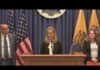
The Federal Bureau of Investigation’s on-scene leaders later told reporters that the suspect claimed to have explosives strapped to his body, and that agents could see those devices with their own eyes.[3][4]
Officials further said he told them additional explosives were attached to some hostages, and that agents believed they could also see those.[3] Five of the hostages, they said, were bound during the ordeal, increasing concern that they could not easily escape if the suspect detonated anything.[2][4]
#Breaking FBI kills man holding hostages in California. @WKRN pic.twitter.com/B8bKEa4bRs
— Megan Fee (@meganfeetv) June 3, 2026
Negotiators worked throughout the night, but by around 4:30 a.m., officials say talks had stalled and the calculus changed.[3][4] The FBI’s elite hostage rescue team then “neutralized” the suspect in what Bakersfield police described as an officer-involved shooting involving federal personnel.[1][3]
Authorities reported that all ten hostages were recovered safely and that none suffered physical injuries, an outcome that predictably anchors news coverage as a story of successful rescue.[1][2][3]
The missing pages in the public record
For anyone who cares about both public safety and accountable government, the gaps in the story matter as much as the dramatic headline. No agency has yet released body-worn camera video, tactical footage, or a detailed incident timeline that shows exactly what the suspect did in the seconds before agents opened fire.[1][2]
The public has only broad statements about stalled negotiations and a generalized fear of an imminent explosion, not a granular reconstruction of the final moment.
🚨🇺🇸 FBI Hostage Rescue Team ended a 15-hr standoff in Bakersfield, California, by fatally shooting hostage-taker Anthony Scott Searles-Harris
-10 hostages held captive
-All rescued unharmed
Suspect claimed to have explosives strapped to himself & some hostages#California #sstvi pic.twitter.com/A1IpKYmnPE— GlobeUpdate (@Globupdate) June 4, 2026
Officials have also not published bomb squad or explosives forensics reports confirming whether the visible devices were real, inert, or some mix of both.[1][2] That silence leaves the public in a familiar bind: either trust the narrative that agents faced a real, immediate threat, or withhold judgment until hard evidence emerges.
From a common-sense perspective, that is precisely why after-action reviews, radio traffic logs, and 911 audio should see daylight once a case is closed.
Threat, restraint, and the question of justified force
Law enforcement says the suspect was a forty-one-year-old white male, a former United States Army soldier, with a criminal history that included sex crimes and weapons offenses.[3][4] That background understandably shaped the risk assessment; a repeat violent offender claiming to have bombs inside a building full of school employees is not a profile any serious person shrugs off.
An outcome where all hostages survive does not, on its own, prove that no other option existed.
Without primary documents, the public cannot know whether agents saw a clear move toward detonation, heard a countdown, or concluded that continued negotiation risked a mass casualty event. Responsible citizens can support decisive action against genuine threats and still insist on verifiable evidence afterward.
Why this case fits a larger pattern of opaque crises
The Bakersfield standoff follows a pattern seen in many modern hostage and barricade incidents: rapid deployment, a flood of official statements, dramatic footage of tactical vehicles, and then a long quiet period where the most important details remain locked in internal files.[1][2][3][4]
Media coverage, pressured by time and attention spans, naturally centers the simple frame—hostages rescued, suspect killed—while complex tactical questions slide to the background until or unless watchdogs push harder.
That pattern carries a risk on both sides. If later evidence, whenever it emerges, supports the FBI’s account, early skepticism can harden into unwarranted distrust.
If the evidence instead undercuts parts of the initial story, the lack of early transparency fuels the belief that agencies only share what flatters them. The healthiest posture is not automatic suspicion or blind faith, but a steady insistence that when government agents use deadly force in our name, the documentation must eventually match the rhetoric.
Sources:
[1] Web – FBI fatally shoots a man holding hostages in a California office …
[2] Web – Suspect in Bakersfield standoff shot and killed by … – ABC7 Chicago
[3] Web – FBI fatally shoots suspect holding hostages after standoff at … – …
[4] Web – Suspect who took 10 people hostage in California standoff has been …