
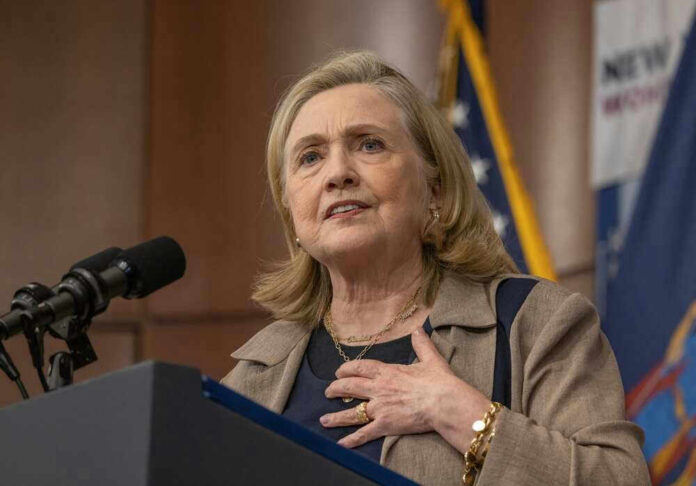
Hillary Clinton’s conditional promise to nominate Trump for the Nobel Peace Prize if he delivers real peace in Europe exposes just how high—and politically charged—the bar is for any victory in the Russia-Ukraine conflict.
Story Snapshot
- Hillary Clinton vows Nobel nomination for Trump—only if he secures Ukraine peace without conceding territory to Russia.
- Trump and Putin in Alaska for historic summit as global attention focuses on potential breakthrough.
- Clinton’s statement marks a rare moment of bipartisan acknowledgment but sets stringent conditions.
- The outcome of peace talks could reshape U.S. politics, European security, and Trump’s legacy.
Clinton’s Challenge: Nobel Prize Only for Real Victory
On August 15, 2025, Hillary Clinton publicly stated she would nominate Donald Trump for the Nobel Peace Prize if he negotiates a settlement to the Russia-Ukraine war that denies Russia any territorial gains. Clinton’s remarks, made on the “Raging Moderates” podcast and echoed on social media, coincide with Trump’s high-stakes summit with Vladimir Putin in Anchorage, Alaska. This conditional offer—coming from Trump’s fiercest political rival—sets a sharply defined standard that leaves no room for compromise on Ukraine’s sovereignty. Her challenge highlights the symbolic power of the Nobel Prize in U.S. political discourse and the gravity of the moment for Trump’s presidency.
Clinton’s statement is both a challenge and a rare bipartisan gesture, underscoring the extraordinary nature of the current diplomatic push. Trump, now in his second term, is positioning himself as a global peacemaker, drawing on his earlier efforts with the Abraham Accords. However, the bar Clinton sets—a peace settlement with no territorial concessions to Russia—reflects deep skepticism about Russian intentions and a demand for a principled, not merely transactional, resolution. This approach resonates with many Americans who are wary of appeasement and who value strong, uncompromising diplomacy on the world stage.
Summit Stakes: Trump, Putin, and the Quest for Peace
As Trump meets Putin in Alaska, the world watches for signs of genuine progress toward ending a brutal conflict that has raged since 2022. The war’s toll—tens of thousands dead, millions displaced, and Europe destabilized—has increased pressure on the U.S. and its allies to broker a legitimate peace. Trump has voiced optimism, estimating a 75% chance of success, while Putin has praised his “energetic” diplomacy. Yet, with Russia’s ongoing occupation of Ukrainian territory and Zelensky’s government insisting on full restoration of sovereignty, the odds remain steep. The summit’s outcome will test Trump’s negotiating skill and the willingness of all sides to accept a settlement that meets Clinton’s criteria.
Clinton’s public challenge injects a new dynamic into the talks, raising the stakes for both Trump and Putin. The Nobel Peace Prize, awarded in the past to figures like Barack Obama for diplomatic efforts, now serves as a benchmark for substantive achievement rather than symbolic gestures. For Trump, winning Clinton’s endorsement—and potentially the Nobel itself—would represent a remarkable political reversal and a validation of his approach to foreign policy, which has often prioritized deal-making over ideology. For conservative Americans, this is a chance to see constitutional strength, traditional diplomacy, and American leadership put to the test.
Bipartisan Politics and the Limits of Diplomacy
The Clinton-Trump dynamic captures the complexity of modern U.S. politics, where even rare moments of acknowledgment are freighted with conditions. Clinton’s insistence on no territorial concessions is a clear stand against rewarding aggression, echoing a broader conservative concern about the dangers of appeasement and the erosion of Western resolve. Trump’s willingness to engage with Putin while holding the line on American and allied interests taps into frustration over past administrations’ globalist failures and the need for real, enforceable peace—not just empty promises. If Trump succeeds, it could reshape not only the balance of power in Europe but also the trajectory of American politics and international relations for years to come.
Should the talks fail, the result could embolden Russia and weaken Western unity, with ripple effects felt in energy markets, refugee flows, and political debates from Washington to Warsaw. For American families and communities already weary from years of global instability and political gridlock, the stakes could not be higher. The outcome will shape not just Trump’s legacy but the credibility of American leadership and the enduring values of constitutional government and principled diplomacy—values under constant threat from both foreign adversaries and domestic overreach.
Sources:
Hillary Clinton Reveals Reason For Possible Trump Nobel Peace Prize Nod | iHeart