A government rule built for emergencies collided with a football game Saturday—and the optics hit harder than any tackle.
Story Snapshot
- Homeland Security said Markwayne Mullin had to use a government plane to keep secure communications active.
- Mullin said the nationwide ground stop had ended nearly a day before his flight.
- He said he reimbursed or would reimburse costs for the personal trip.
- Critics slammed the timing and luxury-suite optics as tone-deaf during travel chaos.
What Homeland Security Says Was Required And Why
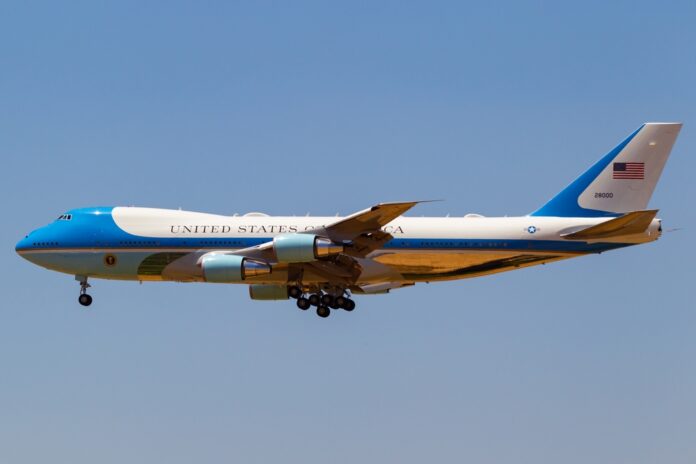
The Department of Homeland Security said Mullin was required by law to use a government aircraft so he could access secure communications and meet his continuity-of-government duties. The agency framed this as a standing obligation, not a one-off favor. That claim fits a long-running federal policy pattern. Senior officials sometimes must use government planes, even for personal trips, to stay reachable and protected. Federal rules also expect reimbursement for personal segments, which Mullin said he would provide.
Mullin said the job does not stop for weekends or ballgames. He told a CNBC audience he must be in touch “24/7, seven days a week, 365 days a year.” That line explains why staff kept him on a secure-capable aircraft while he traveled. It also anchors the department’s logic: when the person in charge of homeland security moves, the communications gear and security bubble move with him.
The Clock, The Ground Stop, And The Plane
Mullin’s team drew a bright line around the timeline. He said the nationwide ground stop had lifted about 21 hours before his flight. Major outlets also described the trip as after, not during, the stop. That matters because it separates the flight from claims of blowing past an active restriction. It does not erase the frustration of stranded travelers still digging out of cascading delays, but it corrects the charge that he flew through a closed sky.
DHS and Mullin also emphasized who paid. On air and in statements, they said he reimbursed personal travel. That answers the basic taxpayer question, at least in principle. The open question is paperwork: how much, when, and by what method did he pay. That detail sits in agency records not yet public, but the duty to reimburse for personal use tracks the federal travel rules.
Optics, Luxury Suites, And The Trust Gap
The setting turned a policy footnote into a headline. Critics blasted the image of the homeland security chief flying to a marquee game as millions dealt with fallout. Commentators called it out of touch and a very bad look. Some focused on reports that he watched from a luxury box linked to a shipbuilding executive whose firm held a major icebreaker contract with the government. That allegation feeds suspicion even without proof of a meeting or favor.
DHS HEARING: Ranking member Rep. Bennie Thompson says DHS Sec. Mullin is not "serious" after taking a government plane to Baton Rouge to watch the LSU-Texas college football game just 24 hours after a nationwide FAA ground stop.
"While Americans were stranded in airports across… pic.twitter.com/jyocApXq1n
— Marisela Ramirez (@mariselapenny) November 18, 2026
Fair minds can hold two thoughts. First, the duty to stay connected and secure is real. Federal guidance has long recognized required-use travel for certain leaders when communications and security demand it. Second, leaders should still avoid situations that look like special treatment. Conservative readers value rules that apply to everyone and spending that respects taxpayers. The policy can be right while the venue and company still raise eyebrows.
What Would Close The Books Cleanly
Three disclosures would settle most of this. First, the specific legal memo or directive that names the Homeland Security chief as required use for all travel. Agencies often rely on such documents, and releasing it would backstop the “required by law” claim. Second, the reimbursement record: amount, method, and timing. Federal rules spell out how to calculate personal-use costs; showing the math ends doubt. Third, a basic timeline of the flight legs once the ground stop ended.
One more step would help on the ethics angle. A brief note from the department ethics office stating whether any contact with contractors occurred, and whether any hospitality was accepted or reimbursed, would calm the pay-to-play talk. If the suite access was paid at fair value or treated as a personal expense, say so, and post the receipt. Sunshine keeps rumors from filling the silence.
The Bottom Line For Voters
Here is the common-sense read. Homeland security needs its chief on-call with secure lines. That can mean a government plane, even on a Saturday. But power also means extra care. When everyday people are sleeping on airport floors, a luxury-suite snapshot hits a nerve. The right fix is not outrage theater or denial. It is simple proof: the rule that required the plane, the receipt that paid for the trip, and a clean ethics check. Then get back to work.
Sources:
yahoo.com, abcnews.com, apnews.com, rawstory.com, irishstar.com