
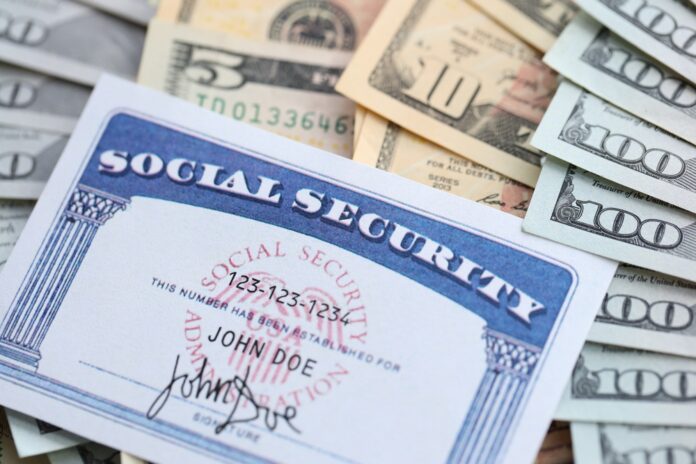
Social Security’s own trustees say the program’s main trust fund runs dry in late 2032, and a top senator says Americans have been lied to about how that money was ever handled in the first place.
Quick Take
- Sen. Ron Johnson calls Social Security a “legal Ponzi scheme” in a formal Senate Budget Committee hearing memo.
- The Social Security Trustees project the Old-Age and Survivors Insurance trust fund pays full benefits only until the fourth quarter of 2032.
- After that date, payroll taxes alone would cover roughly 78% of scheduled benefits, not zero.
- Congress has faced and fixed a similar crisis before, in 1983, through a bipartisan deal.
- Critics say Johnson’s “cannot be fixed” claim ignores the Social Security Administration’s own solvency options.
A Senator Puts a Harsh Label on a Familiar Problem
Senator Ron Johnson released a Chairman’s Hearing Memo titled “Social Security: The Reality… a Legal Ponzi Scheme.” He wrote that once a Ponzi scheme starts to collapse, “it can’t be fixed.” His memo argues politicians sold Americans a myth for decades: that payroll taxes were being invested like a personal retirement account rather than spent right away on current retirees’ checks.
FIRST ON FOX: Senate Budget Committee Chair Ron Johnson rips Social Security in an explosive new report, warning Americans have been "scammed" for decades by how the government handles the program.
Johnson's report, first obtained by Fox News Digital, lays out a blunt case: the… pic.twitter.com/2wKTGWzvrR
— Fox News Politics (@foxnewspolitics) November 18, 2026
Johnson’s memo describes the trust fund as a pile of Treasury securities, not a stock portfolio sitting in each worker’s name. That part lines up with how Social Security has always worked. Today’s payroll taxes pay today’s retirees. Leftover money buys government bonds. It is not a 401k, and it was never built to be one.
What the Numbers Actually Say
The 2026 Trustees Report summary projects the Old-Age and Survivors Insurance trust fund will pay 100% of scheduled benefits only through the fourth quarter of 2032. After that, without a fix, benefits would drop to about 78% of what was promised, according to reporting on the same projection. That is a serious cut. It is not, however, the total shutdown some headlines imply.
The American Academy of Actuaries reached a similar warning using the combined Old-Age, Survivors, and Disability Insurance funds, projecting depletion and about 81% of scheduled benefits payable under its 2025 estimate. The exact year shifts depending on which fund analysts measure, OASI alone or the combined program, and the date has moved by a quarter or more between annual reports. That wobble gives critics an opening to question precision, even though the underlying shortfall itself is not seriously disputed.
Is “Ponzi Scheme” the Right Word, or Just the Loudest One?
A true Ponzi scheme is illegal fraud where early investors get paid with new investors’ money while someone running it profits off the deception. Social Security is a public program, debated openly in Congress every year, with its finances published annually for anyone to read. No court, statute, or independent legal analysis has found that Social Security meets the legal definition of a Ponzi scheme. Johnson’s phrase is a political argument, not a legal verdict.
That distinction matters for how seriously Americans should take the claim that they were “misled.” Johnson’s memo does not name specific officials, dates, or government publications that falsely promised individually invested retirement accounts. The financing structure he describes is real and well documented. Whether it amounts to a decades-long cover-up, or simply a program most people never fully understood, is a separate question his memo does not fully answer.
Congress Has Walked This Road Before
In 1981, officials warned the trust fund could run dry by August 1983. President Reagan created a bipartisan commission led by Alan Greenspan, and Congress passed the Social Security Amendments of 1983 within months. That law raised the retirement age gradually, taxed some benefits for the first time, delayed cost-of-living increases, and sped up scheduled payroll tax hikes. The fix held for decades.
The Social Security Administration’s own actuaries list concrete options right now: raising the taxable earnings cap, adjusting the benefit formula, or combining smaller changes. One proposal studied by the agency’s Office of the Chief Actuary, applying payroll tax to earnings above $400,000 with a small benefit credit, would push depletion out to 2066. That directly challenges Johnson’s claim that the system “can’t be fixed.” Fixing it may be politically hard. Actuarially, options clearly exist.
What This Means for Americans Nearing Retirement
Nobody collecting benefits today faces an abrupt cutoff. The real risk sits with workers now in their 40s and 50s who are counting on full checks decades from now. Lawmakers have roughly six years before the 2032 marker arrives, based on current projections. History suggests Congress tends to act only when the deadline gets uncomfortably close, as it did in 1983, not years ahead of time.
Johnson deserves credit for forcing blunt language into a debate usually buried in actuarial jargon nobody reads. Calling it a “Ponzi scheme” grabs attention Americans need to pay attention to. But the honest fix requires Congress to legislate, the way it did before, not to declare the program unfixable and walk away from the table.
Sources:
foxnews.com, spectrumlocalnews.com, cbs8.com, pbs.org