
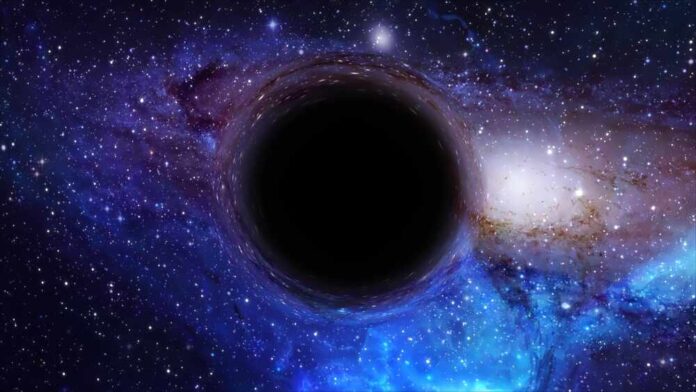
A mysterious new map of dark matter reveals potential cosmic secrets, challenging previous assumptions about the universe’s structure.
Story Snapshot
- The James Webb Space Telescope (JWST) unveils the most detailed map of dark matter yet.
- The map covers a patch of sky in the Sextans constellation and identifies nearly 800,000 galaxies.
- New findings reveal dark matter’s gravitational effects, enhancing our understanding of cosmic structures.
- This map doubles the resolution of previous Hubble maps, marking a significant leap in space research.
The JWST’s Groundbreaking Achievement
The James Webb Space Telescope has achieved a milestone by producing the most detailed dark matter map ever seen. This map focuses on a section of the Sextans constellation, identifying nearly 800,000 galaxies, many of which were previously unknown.
Using weak gravitational lensing, scientists have revealed the gravitational effects of dark matter, revealing unseen clumps and filaments that contribute to the universe’s architecture. This effort doubles the resolution achieved by the Hubble Space Telescope, offering unprecedented insights into the universe’s fabric.
Researchers dedicated approximately 255 hours of JWST observations to achieve this feat, incorporating data from NASA’s Mid-Infrared Instrument for refined distance measurements.
The resulting map, published in *Nature Astronomy*, marks a leap from previous, less detailed maps and advances our understanding of cosmic structures formed over 10 billion years.
The detailed insights this map provides are crucial for understanding the role of dark matter, which constitutes roughly 27% of the universe.
.@DurhamPhysics astronomers have helped create the highest resolution map of the dark matter that threads through our Universe – showing the mysterious substance’s influence on the formation of stars, galaxies and planets.
👉 https://t.co/eFetqUWmFp@NASAJPL @EPFL_en pic.twitter.com/LvTocQlLzH
— Durham University (@durham_uni) January 26, 2026
Implications of the New Dark Matter Map
This map’s implications are profound for both short-term and long-term cosmic research. In the short term, the map validates the precision of the JWST’s lensing capabilities, refining galaxy shape catalogs for further studies.
Over the long term, it promises to deepen our understanding of dark matter evolution, galaxy formation, and the universe’s expansion history. The enhanced resolution achieved by this map will serve as a reference for future space surveys, potentially informing new cosmological models.
As space agencies like NASA and the European Space Agency (ESA) continue to invest in such endeavors, this achievement further justifies funding and support.
Additionally, the map serves as a benchmark for upcoming telescopes such as Euclid and Roman, which will further explore dark matter’s mysteries and its role in the universe’s expansion.
Stakeholder Contributions and Future Directions
The creation of this map involved a collaborative effort from multiple stakeholders, including NASA’s Jet Propulsion Laboratory, Durham University, and École Polytechnique Fédérale de Lausanne. Lead scientists Diana Scognamiglio and Jacqueline McCleary played pivotal roles in the map’s development, highlighting its significance.
With the map complete, future directions include expanding research with upcoming telescopes to probe deeper into dark matter’s properties and its influence on the cosmos.
Mysterious dark matter seen in new high-resolution map of distant galaxies https://t.co/WGEFzYgtH1
— CBS Evening News with Tony Dokoupil (@CBSEveningNews) January 26, 2026
While the map’s immediate impacts may primarily interest the scientific community, its broader societal implications cannot be overlooked. By advancing our understanding of the universe, such endeavors inspire educational pursuits and public interest in space exploration, fostering a deeper appreciation for the complexities of our cosmos.
Sources:
Mysterious dark matter seen in new high-resolution map of distant galaxies
Astronomers reveal new details about dark matter’s influence on universe
High-resolution dark matter map reveals gravity’s grip on galaxies
NASA reveals new details about dark matter’s influence on universe