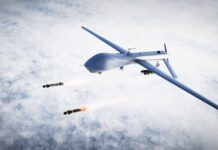

Iran’s IRGC declares American universities in the Middle East “legitimate targets,” putting thousands of U.S. students and faculty directly in the crosshairs of Tehran’s terror regime.
Story Highlights
- IRGC threatens strikes on all U.S. and Israeli universities across West Asia until two are hit in retaliation for airstrikes on Iranian campuses.
- US-Israeli forces struck Isfahan University of Technology and Tehran University of Science and Technology over the March 29-30 weekend, damaging buildings with no reported casualties.
- Iran set a noon Tehran time deadline on March 30 for U.S. condemnation, which passed without reported compliance, leaving threats active.
- American University of Beirut shifts to remote learning; U.S. Embassy in Baghdad warns of attacks on specific Iraqi campuses and urges citizens to leave Iraq immediately.
- Hundreds of thousands of students and staff are now evacuating 1km from campuses amid this unprecedented targeting of civilian education sites.
IRGC Issues Direct Threat to American Institutions
Iran’s Islamic Revolutionary Guard Corps issued a statement titled “Warning to the Criminal Rulers of the US” on March 29-30, 2026.
The IRGC accused American-Zionist forces of bombing Iranian universities, including Isfahan University of Technology and Tehran University of Science and Technology.
Tehran declared all U.S. and Israeli universities in the West Asia region legitimate targets until they suffer equivalent destruction.
The regime advised staff, students, and nearby residents to stay at least one kilometer away to protect their lives. This marks the first explicit Iranian policy targeting civilian educational facilities in the ongoing regional war.
Iran threatens to bomb US and Israeli universities in Middle East https://t.co/VGHfNPi4Zr
— The Denver Gazette (@DenverGazette) March 30, 2026
US-Israeli Strikes Trigger Retaliatory Escalation
US and Israeli forces conducted airstrikes over the March 29-30 weekend, damaging key Iranian academic buildings without reported casualties.
Iranian Foreign Ministry spokesman Esmail Baghaei confirmed the hits on these science and technology universities, rejecting nuclear pretext claims.
Tehran framed the attacks as deliberate assaults on Iran’s scientific foundation and cultural heritage.
Officials stated retaliation continues until two universities face strikes in kind. This cycle broadens a conflict already spanning weeks of missile exchanges, drone attacks on U.S. bases, and involvement of Iran-backed militias across the Gulf.
Universities and U.S. Embassies Respond to Imminent Dangers
The American University of Beirut transitioned to remote learning for two days as a precaution against IRGC threats.
Institutions such as Texas A&M University at Qatar and NYU Abu Dhabi have heightened security measures.
The U.S. Embassy in Baghdad warned that Iran and its terrorist militias may target American universities in Baghdad, Sulaymaniyah, and Dohuk.
Embassy statements characterized Iranian actions as part of widespread attacks on U.S. citizens and interests.
Officials urged all U.S. citizens to leave Iraq immediately due to the volatile threat environment. Regional governments issued similar alerts to their populations.
University leaders face direct pressures from the escalating war. Many faculty and staff hail from conflict zones, amplifying personal risks.
Campuses implemented evacuations and remote operations rather than full closures, balancing safety with continuity.
This defensive posture reflects the vulnerability of American educational outposts amid Iran’s willingness to strike symbolic targets.
Dangerous Precedent Challenges Civilian Protections
Experts describe Iran’s threat as a qualitative shift, treating primarily civilian sites as legitimate military objectives.
Ciruce Movahedi-Lankarani, the Iranian Studies chair, noted that the conflict was expanding well beyond traditional bounds.
Iran’s justification links U.S. universities to Israel’s military-industrial complex, claiming proportional response. This echoes prior Israeli actions in Gaza but originates from Tehran here.
The move erodes longstanding norms shielding educational institutions, raising risks for international higher education in volatile regions. In the long term, it prompts reassessments of American campus presences abroad.
Short-term disruptions include operational halts, psychological strain on thousands of students and faculty, and market uncertainty from mixed U.S. messaging. Broader implications threaten educational continuity, institutional finances, and regional stability.
The precedent encourages targeting civilian infrastructure, straining U.S. relations with host nations unable to fully protect foreign assets.
As President Trump’s administration navigates this aggression, protecting American lives and interests remains paramount against Iranian overreach.
Sources:
New Arab: Iran threatens strikes on US-linked universities in Middle East
Jerusalem Post: IRGC threatens US, Israel-linked universities
USC Annenberg Media: Iran expands threats to American universities
Poets & Quants: Iran warns U.S.-linked universities could be targets
Times Higher Education: Iran attack threat prompts US universities to take precautions
Inside Higher Ed: Iran targets US universities in Middle East