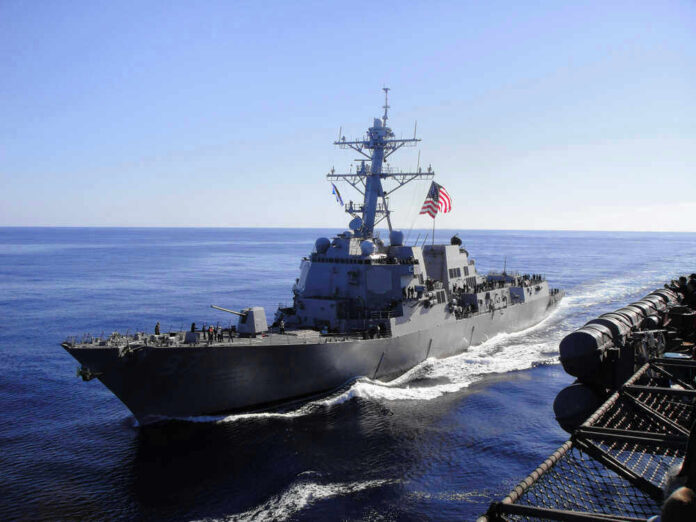
America’s most advanced aircraft carrier strike group is steaming toward Latin America, signaling a dramatic escalation that puts Venezuela—and every threat to our borders—on notice.
Story Snapshot
- The Gerald R. Ford Carrier Strike Group is deployed to Latin America, marking a major increase in US military presence.
- The move is framed as a crackdown on narcotics trafficking and criminal organizations, but signals broader strategic interests and heightened tensions with Venezuela.
- US officials confirm consideration of direct action against Venezuelan facilities and trafficking routes, with bombers flying near Venezuela as a show of force.
- This is the first deployment of the Navy’s most advanced carrier group to the region in recent years, coinciding with a broader military buildup.
Ford Carrier Strike Group Arrival Raises Stakes in Latin America
On October 24, 2025, US Defense Secretary Pete Hegseth announced the deployment of the Gerald R. Ford Carrier Strike Group to Latin America. This marks the largest escalation of American military firepower in the region in years.
The official rationale is to disrupt narcotics trafficking and transnational crime, but the timing and scale of the deployment highlight deeper strategic interests, especially as tensions with Venezuela—and hostile actors like Russia and China—continue to mount.
The Ford carrier group’s arrival is just the tip of the spear. The US presence now includes eight warships, advanced aircraft, drones, and at least one submarine operating in the Caribbean and off the Venezuelan coast.
In the days leading up to the announcement, the US conducted a series of strikes on alleged drug vessels, resulting in significant casualties. Supersonic bombers flew near Venezuela as a show of force, underscoring the seriousness of the US commitment to regional security and deterrence.
Counter-Narcotics or Strategic Power Projection?
The Pentagon claims the mission is to “detect, monitor, and disrupt illicit actors,” focusing on traffickers and criminal organizations. However, the context reveals broader ambitions.
The deployment coincides with explicit White House consideration of direct action against Venezuelan drug facilities and trafficking routes, moves that could push the region toward direct military confrontation.
The Ford’s deployment follows a series of US strikes in September and October, killing at least 43 people tied to alleged drug operations. These actions reflect a renewed, aggressive stance on border security and national sovereignty that many conservatives have long demanded.
Historically, US military operations in Latin America have targeted drugs, terrorism, and instability. Yet this escalation comes amid ongoing humanitarian crises in Venezuela, persistent US accusations of government involvement in trafficking, and increased Russian and Chinese engagement in the region.
The Ford’s arrival signals that the US will no longer tolerate threats—or chaos—at its doorstep, and is prepared to defend its interests with overwhelming force.
US is sending an aircraft carrier to Latin America in major escalation of military buildup: https://t.co/a1IOqbZr3b pic.twitter.com/uji9bf6snY
— WAVE (@wave3news) October 25, 2025
Regional Power Dynamics and Stakeholder Motivations
The US holds undeniable military superiority in the region, while Venezuela relies on asymmetric tactics and support from external actors like Russia and Iran. Regional governments remain divided—some back US actions as necessary for stability, while others warn of escalation and urge restraint.
President Trump and Defense Secretary Hegseth are driving a policy shift that prioritizes assertive action and direct confrontation with actors undermining US security.
These moves align with conservative priorities: protecting American sovereignty, upholding constitutional authority, and rejecting the flawed diplomatic approaches of the previous administration.
Transnational criminal organizations remain the stated targets, but the broader message is clear—the US is prepared to counter any force that threatens its borders or allies.
The deployment also puts pressure on regional governments to choose sides, potentially isolating hostile regimes and strengthening alliances with those committed to the rule of law and stability.
Impact, Risks, and Conservative Values at Stake
The short-term impact is unmistakable: a major US military presence deters criminal networks and signals resolve to adversaries.
However, risks of confrontation with Venezuelan forces or proxies have increased, as have tensions with regional actors wary of US intervention. Long-term, the US may be drawn into prolonged engagement, facing possible retaliation from Venezuela or its allies.
Economic and social consequences include disruption of maritime trade and potential humanitarian fallout if conflict escalates. But for many conservatives, the Ford’s deployment reflects long-awaited leadership—defending borders, confronting lawlessness, and restoring American strength abroad.
Industry experts see the move as a clear signal of US resolve to protect Western Hemisphere interests. Critics question the efficacy of force in tackling drug trafficking, but most agree that years of weak policies have emboldened adversaries and undermined security.
Sources:
Stars and Stripes, October 24, 2025